Emergency River Engineering Aims to Keep Paks Nuclear Power Plant Operating as Historic Drought Pushes Water Levels to Record Lows
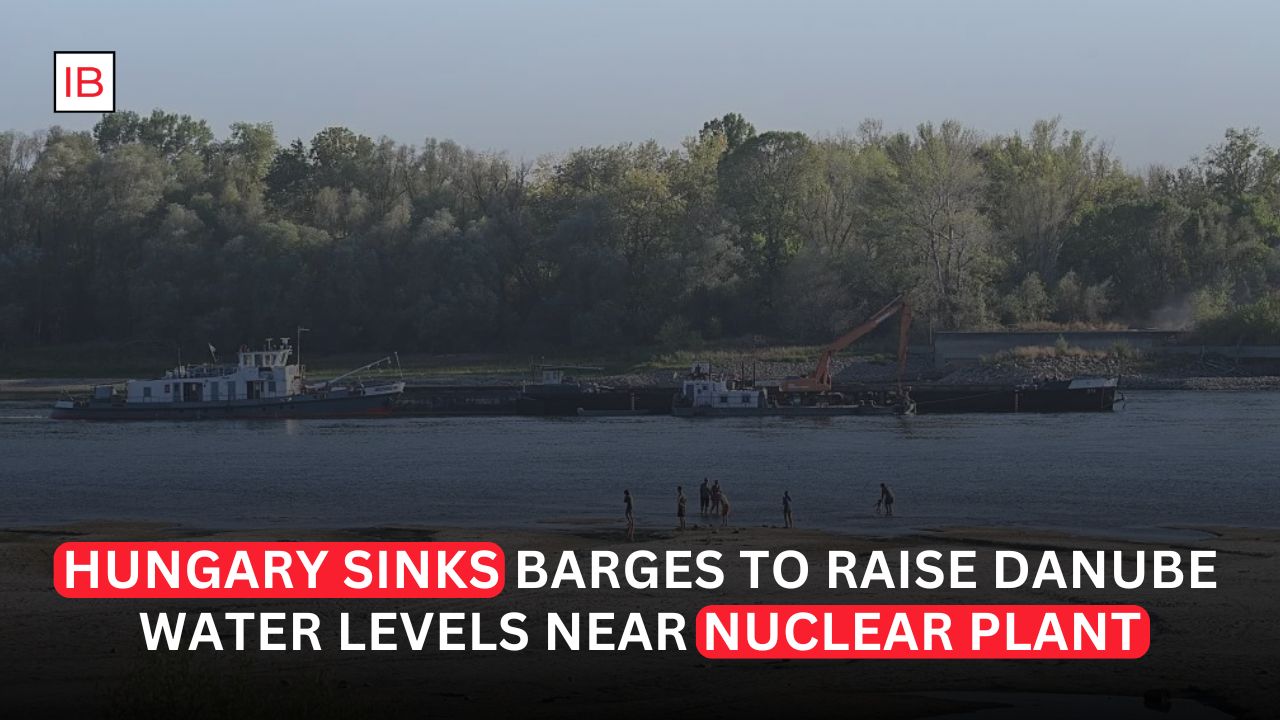
Hungary is sinking two large barges into the Danube River near its Paks nuclear power plant in an emergency effort to raise water levels and prevent one of the facility’s remaining operating turbines from being shut down.
The unusual intervention comes as an extreme drought and prolonged heatwave have pushed the Danube to historically low levels across Central Europe. The Paks plant relies on river water to cool its reactors, making the falling water level an immediate threat to electricity generation.
Prime Minister Péter Magyar announced that the two 80-meter barges would be sunk near the plant, creating a temporary obstruction intended to raise the river level around the cooling-water intake. Officials are racing against forecasts that water levels could reach a critical threshold as early as Monday.
Paks Faces Severe Operating Restrictions
The Paks nuclear plant normally has a capacity of around 2,000 megawatts, making it one of Hungary’s most important sources of electricity.
But the historic drought has sharply reduced its ability to operate.
The facility’s output fell to roughly 10% of normal capacity earlier this month before recovering to around 25%, according to Reuters. The plant is now operating under severe restrictions because insufficient river water is available for cooling.
The latest emergency measures are designed to prevent the remaining operating turbine from being forced offline.
A complete shutdown would represent an unprecedented event for Paks during its 44-year operating history.
Barges Designed to Raise Water Levels
The government plans to sink two barges, each approximately 80 meters long, in the Danube near the nuclear facility.
The submerged vessels are expected to temporarily raise water levels around the plant’s cooling-water intake by approximately 20 centimeters.
The objective is not to block the entire river but to create a temporary hydraulic effect that provides additional water depth where the nuclear facility needs it most.
Officials are treating the measure as an emergency solution while a larger engineering project is developed.
The barges are expected to provide valuable time as Hungary works on a more permanent intervention.
A Larger Riverbed Project Is Underway
Hungary is also preparing to construct a submerged riverbed sill, effectively creating a low barrier within the Danube.
The structure is designed to raise upstream water levels by substantially more than the barges.
Authorities expect the longer-term project to increase water levels by as much as one meter, although construction will take considerably longer than the emergency barge operation.
Around 145,000 cubic meters of rock are expected to be used for the river engineering project, according to the Associated Press.
The government has therefore adopted a two-stage strategy: use the barges to buy time while building the permanent riverbed structure.
Historic Drought Creates Energy Crisis
The situation at Paks is part of a much larger drought crisis affecting the Danube basin.
The river has experienced exceptionally low flows following prolonged heat and a lack of rainfall across Central Europe.
The consequences extend beyond Hungary’s nuclear power system.
The Danube is an important transportation route, supports agriculture and industry, and provides water resources to millions of people across several European countries.
Its falling levels are now also threatening electricity generation at multiple nuclear facilities.
Romania Faces an Even More Severe Crisis
Hungary’s emergency measures come after neighboring Romania was forced to shut down its entire Cernavoda nuclear power plant because of insufficient cooling water.
Romania’s plant normally supplies approximately 20% of the country’s electricity, but record-low Danube levels forced the shutdown of its second and final operating reactor.
Romanian authorities had previously attempted several emergency measures, including redirecting river flows and sinking barges, but water levels eventually fell below the threshold required for safe operation.
The developments in both countries demonstrate how severe drought can affect even large nuclear power facilities.
Nuclear Plants Depend on Reliable Cooling
Nuclear reactors generate enormous amounts of heat.
Even when electricity production is reduced or a reactor is shut down, cooling systems remain essential.
Plants located along major rivers therefore depend on sufficient water flow and depth to maintain their cooling systems.
That creates an unusual vulnerability.
Nuclear energy is often viewed as a reliable source of electricity because reactors can operate continuously regardless of sunlight or wind. But river-dependent facilities can face operational problems when extreme drought reduces their access to cooling water.
The current Danube crisis is highlighting that vulnerability across Europe.
Climate Change Raises Long-Term Questions
The drought is also prompting questions about the resilience of Europe’s existing nuclear infrastructure.
Scientists and energy experts have increasingly warned that rising temperatures and changing precipitation patterns could make extreme droughts more frequent or severe.
The current situation in Hungary and Romania provides a real-world example of how climate extremes can affect power generation.
Reuters reported that both countries are considering how future nuclear projects can better cope with low-water conditions. Hungary is reconsidering aspects of the design of its planned Paks 2 expansion, while Romania has been working on river engineering solutions for Cernavoda.
Hungary Wants to Avoid a Full Shutdown
For the Hungarian government, maintaining Paks is an urgent economic priority.
The plant provides a significant share of the country’s electricity under normal conditions.
A prolonged shutdown would force Hungary to compensate through increased electricity imports and greater use of other generation sources.
That could become particularly expensive during a period when extreme heat is already increasing electricity demand for cooling.
The government has estimated that reduced Paks output can cost the economy roughly 50 billion forints ($158 million) per month, while the emergency river intervention is expected to cost around 6 billion forints ($19 million).
The Danube’s Importance Extends Beyond Energy
The crisis is not limited to Hungary’s electricity system.
The Danube is one of Europe’s most important inland waterways, connecting multiple countries and supporting large volumes of commercial transportation.
Extremely low water levels can force vessels to reduce their cargo loads or prevent them from navigating certain sections altogether.
That creates additional pressure on regional supply chains at a time when Europe is already dealing with energy and transportation challenges.
The same drought affecting nuclear cooling is therefore also creating problems for agriculture, shipping and other industries.
Emergency Measures May Only Buy Time
The biggest uncertainty is how long the emergency measures can remain effective.
Sinking the barges can raise water levels temporarily, but it cannot solve the underlying shortage of water.
If rainfall remains low and temperatures remain high, the Danube could continue falling.
That means Hungary may need additional interventions if the drought persists.
The longer-term riverbed sill is intended to provide greater protection, but officials must complete the project before conditions deteriorate beyond the plant’s operating limits.
Europe Faces Growing Energy Resilience Challenge
The developments around Paks and Cernavoda are forcing policymakers to rethink the relationship between nuclear power and climate resilience.
Nuclear energy can reduce dependence on fossil fuels and provide large amounts of low-carbon electricity.
But plants that depend heavily on rivers for cooling remain exposed to drought.
Experts have suggested alternatives including hybrid cooling systems and cooling towers, although retrofitting existing nuclear plants can be expensive and technically difficult.
Future nuclear projects may therefore need to account more carefully for water availability under extreme climate scenarios.
Looking Ahead
Hungary’s decision to sink two barges into the Danube illustrates just how serious the region’s water crisis has become.
The government is using an unusual piece of river engineering to gain additional water depth near the Paks nuclear plant and prevent another reduction in electricity production.
The timing is critical.
Water levels are forecast to approach a dangerous threshold, while Paks is already operating at only around 25% of its normal capacity.
The barges are expected to raise water levels temporarily, but Hungary is also constructing a much larger submerged sill that could raise the river by as much as one meter.
The crisis demonstrates the growing importance of water security to Europe’s energy system.
Hungary’s experience is particularly significant because Paks supplies a large share of the country’s electricity under normal conditions. Losing the plant’s remaining generation capacity would increase reliance on imports and alternative power sources.
Romania’s recent shutdown of its entire Cernavoda nuclear plant shows what could happen if water levels continue to fall.
The situation also raises broader questions about the future of nuclear power in a warming climate.
As droughts and heatwaves become more severe, nuclear facilities that depend on rivers for cooling may require additional engineering, alternative cooling systems or different plant designs.
For Hungary, however, the immediate objective is much simpler: keep enough water flowing through the Danube to keep Paks operating.
The two sunken barges may provide a temporary solution, but they are also a powerful symbol of how extreme weather is forcing governments to rethink critical infrastructure.
The success of the emergency operation will depend not only on the engineering but also on whether the Danube’s water levels stabilize.
If the drought continues, Hungary could face an increasingly difficult choice between expensive emergency interventions, reduced nuclear generation and greater reliance on imported electricity.
The Paks crisis therefore extends far beyond one power plant.
It is becoming a test of whether Europe’s energy infrastructure is prepared for a future in which extreme heat and water shortages increasingly arrive together.