Massive Reconstruction Costs Threaten New President’s Spending Cuts as Deadly Quake Forces Bogotá to Find Billions for Recovery
Colombia’s devastating earthquake has created a potentially $10 billion reconstruction challenge, putting newly inaugurated President Abelardo de la Espriella’s ambitious austerity agenda under severe pressure.
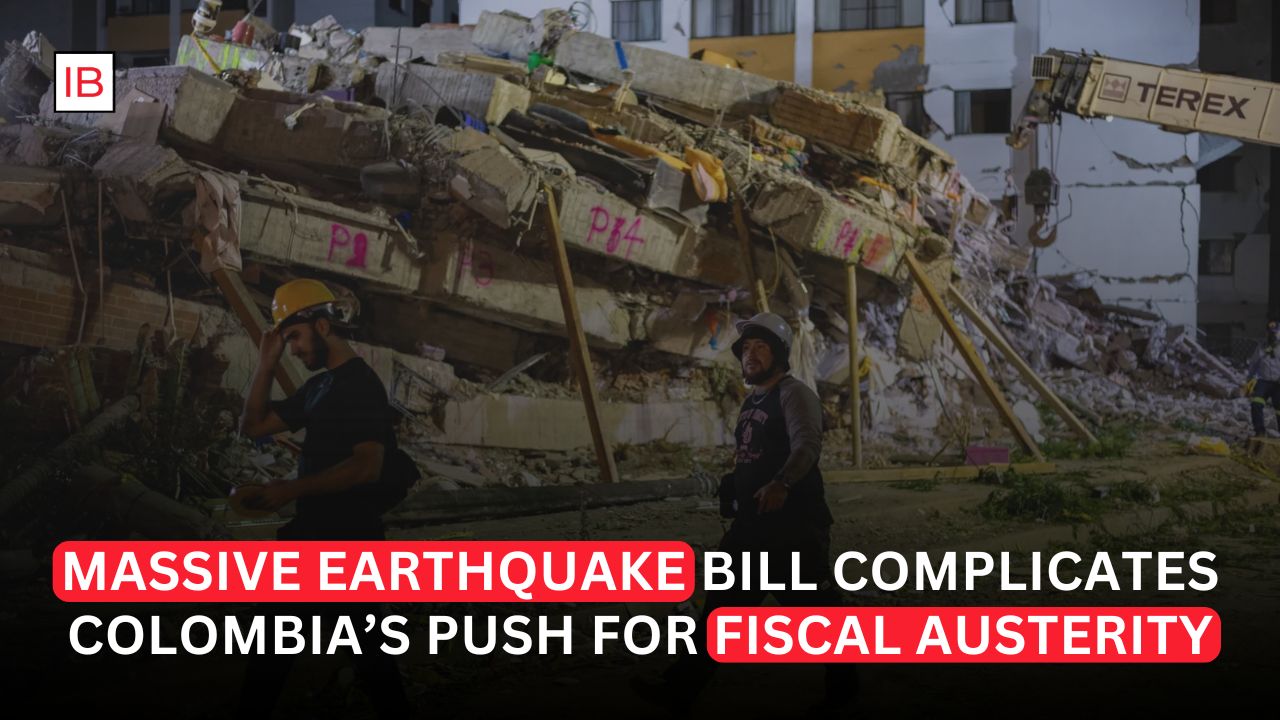
The magnitude-7.4 earthquake that struck western Colombia on August 10 has killed hundreds of people, injured thousands and destroyed homes, schools, hospitals and other critical infrastructure. The disaster arrived just days after de la Espriella took office promising to reduce government spending and restore fiscal discipline.
The president now faces a difficult choice: maintain spending cuts and risk slowing reconstruction, or increase government spending and borrowing at a time when Colombia’s public finances are already under strain.
Earthquake Creates Huge Reconstruction Need
The earthquake was the strongest to hit Colombia in more than a century, causing widespread destruction across the western part of the country.
By August 14, authorities had reported around 285 deaths, nearly 4,000 injuries and roughly 400 people still missing. Thousands of homes and other buildings were damaged, while hospitals, schools and transportation infrastructure were also affected.
The World Bank has already provided $200 million to support Colombia’s immediate response and recovery efforts.
But the international assistance represents only a small portion of the potential reconstruction bill.
Estimates cited in reporting around the disaster suggest the overall economic impact could approach $10 billion, creating a major fiscal challenge for the government.
De la Espriella Promised Austerity
The timing of the disaster is particularly difficult for the new administration.
De la Espriella entered office promising to cut government spending by roughly 20 trillion pesos as part of a broader effort to reduce Colombia’s fiscal deficit.
Before the earthquake, his government was already facing a difficult financial situation.
Public debt was projected to reach approximately 66% of GDP by the end of 2026, according to Colombia Risk, while the country was already under pressure to contain spending and improve its fiscal position.
The earthquake now creates an unavoidable need for additional expenditure.
Rebuilding hospitals, schools, housing, roads and public infrastructure cannot easily be postponed.
Emergency Spending Could Reverse Fiscal Plans
The government’s austerity campaign was designed to reassure investors that Colombia could regain control over its finances.
The earthquake threatens to move policy in the opposite direction.
Emergency reconstruction requires large amounts of money, and much of that spending will have to come from the public sector.
The government could redirect funds from other programs, increase borrowing or seek additional assistance from international institutions.
Each option carries economic and political consequences.
Cutting other government programs could undermine de la Espriella’s broader agenda, while increased borrowing could make it harder to reduce debt.
Article 215 Could Give Government More Power
Colombia’s constitution provides the government with an emergency mechanism that could become central to the reconstruction effort.
Under Article 215, the president can declare an economic and social emergency, allowing the government to take extraordinary measures and increase spending without waiting for normal congressional approval in certain circumstances.
The mechanism was used after a major earthquake in Colombia’s coffee-growing region in 1999, when the disaster killed nearly 1,200 people and generated economic losses equivalent to around 2.2% of GDP.
Some political allies have already urged the new administration to consider similar powers.
Using Article 215 would allow the government to respond more quickly, but it could also intensify concerns about fiscal discipline and executive power.
Colombia Already Faces Heavy Debt
The reconstruction challenge is arriving at a particularly difficult moment for Colombia’s finances.
The International Monetary Fund has previously warned that Colombia’s fiscal consolidation plans face significant implementation risks and that sustained fiscal restraint will be necessary to bring public debt toward its medium-term target.
The IMF also projected a 6.2% overall fiscal deficit for 2026 under its previous assessment, highlighting the scale of the government’s existing fiscal challenge.
A multibillion-dollar reconstruction program could therefore make it substantially harder for Bogotá to meet its fiscal objectives.
International Aid Provides Some Relief
Colombia is already receiving assistance from international institutions and governments.
The World Bank has committed $200 million for emergency response, recovery and reconstruction-related needs, including support for public health, housing and small businesses.
The European Union has also pledged €2 million in emergency aid for affected communities.
Other countries and humanitarian organizations have offered assistance as rescue and relief operations continue.
However, international aid is unlikely to cover anything close to the total cost of rebuilding the affected regions.
Private Investment Could Become Important
The scale of the reconstruction bill could force the government to look beyond traditional public spending.
Public-private partnerships could play a greater role in rebuilding infrastructure, particularly housing, transportation and commercial facilities.
Private companies may also be encouraged to participate through tax incentives or investment programs.
Such measures could reduce the immediate burden on the government’s budget, although they would not eliminate the need for substantial public resources.
The Disaster Hits Poorer Regions Hard
The earthquake has caused particularly severe damage in western regions that already face economic and infrastructure challenges.
The Chocó area around the epicenter is remote, heavily forested and difficult to reach, complicating both rescue and reconstruction operations. The region also has a significant presence of criminal groups, creating additional logistical and security challenges for aid organizations.
Hospitals and clinics have also suffered damage.
That means reconstruction will involve much more than repairing buildings.
The government must restore healthcare, electricity, water supplies, transportation and other basic services while helping displaced families return to normal life.
Economic Costs Could Extend Beyond Reconstruction
The direct cost of rebuilding is only part of the economic impact.
Businesses have been disrupted, agricultural production has been affected and transportation networks have suffered damage.
Thousands of people have lost homes or livelihoods.
The earthquake could therefore reduce economic activity in affected areas at the same time that reconstruction spending pushes government demand higher.
That creates a complicated fiscal picture.
Markets Will Watch Colombia’s Response
Investors are likely to pay close attention to how the government finances the reconstruction effort.
Colombia already faces elevated borrowing costs and concerns about its fiscal trajectory.
If investors believe the government is abandoning its fiscal consolidation plans, borrowing costs could rise further.
But if the government prioritizes austerity too aggressively during a humanitarian crisis, it could face political criticism and potentially slow the recovery.
The credibility of the government’s response will therefore be crucial.
A Major Test for the New President
The earthquake represents the first major crisis of de la Espriella’s presidency.
He had been in office for only a few days when the disaster struck.
His original political agenda focused heavily on reducing government spending, improving security and addressing Colombia’s fiscal problems.
The earthquake has suddenly forced reconstruction and emergency relief to the top of the national agenda.
His ability to balance those competing priorities could shape the early years of his administration.
Looking Ahead
Colombia’s devastating earthquake has transformed a fiscal challenge into a national reconstruction emergency.
The government is facing a potential $10 billion economic bill while simultaneously attempting to reduce spending and stabilize public finances.
The timing could hardly be worse for President Abelardo de la Espriella.
He entered office promising austerity, but the earthquake requires billions of dollars in emergency relief and reconstruction spending.
The government must rebuild homes, hospitals, schools and infrastructure while supporting communities that have lost their livelihoods. The World Bank has already provided $200 million, but the scale of the damage means much more financing will be required.
The central question is how Colombia can finance the reconstruction without abandoning its fiscal consolidation plans.
The government could borrow more, redirect existing spending, seek international assistance or encourage greater private-sector participation.
Each option carries risks.
More borrowing could increase debt and pressure financial markets, while aggressive spending cuts could delay reconstruction and deepen the social consequences of the disaster.
Article 215 provides another possible route.
The emergency provision could allow de la Espriella’s government to take extraordinary fiscal measures and accelerate spending without waiting for normal congressional approval. Colombia used similar powers following the devastating 1999 earthquake.
But relying on emergency powers would also demonstrate just how dramatically the earthquake has altered the government’s original economic plans.
The disaster is particularly damaging because Colombia entered the crisis with limited fiscal room.
The IMF has already highlighted the need for continued fiscal consolidation and warned about risks surrounding Colombia’s budget and deficit targets.
A major reconstruction program could make those targets considerably harder to achieve.
At the same time, delaying reconstruction is not a realistic option.
Thousands of families need housing, damaged hospitals need to reopen and critical infrastructure must be restored.
The government will therefore have to find a balance between fiscal discipline and the immediate needs of earthquake victims.
International assistance can help reduce the burden. The World Bank’s $200 million package and additional aid from the European Union provide important early support, but they represent only a fraction of the potential reconstruction requirement.
The crisis could also accelerate the use of public-private partnerships and other financing mechanisms that allow private capital to participate in rebuilding.
For de la Espriella, the earthquake is more than a natural disaster.
It is an immediate test of whether his government can maintain fiscal credibility while responding to one of the largest emergencies Colombia has faced in decades.
If reconstruction spending becomes too large, the president’s austerity campaign could be delayed or significantly weakened.
If the government cuts spending too aggressively, the economic and humanitarian recovery could suffer.
The $10 billion price tag therefore represents more than a reconstruction estimate. It is a direct challenge to Colombia’s economic strategy.
How Bogotá chooses to pay for the recovery could determine whether the country’s new government manages to preserve its austerity agenda or is forced to abandon it in the face of an unprecedented national emergency.