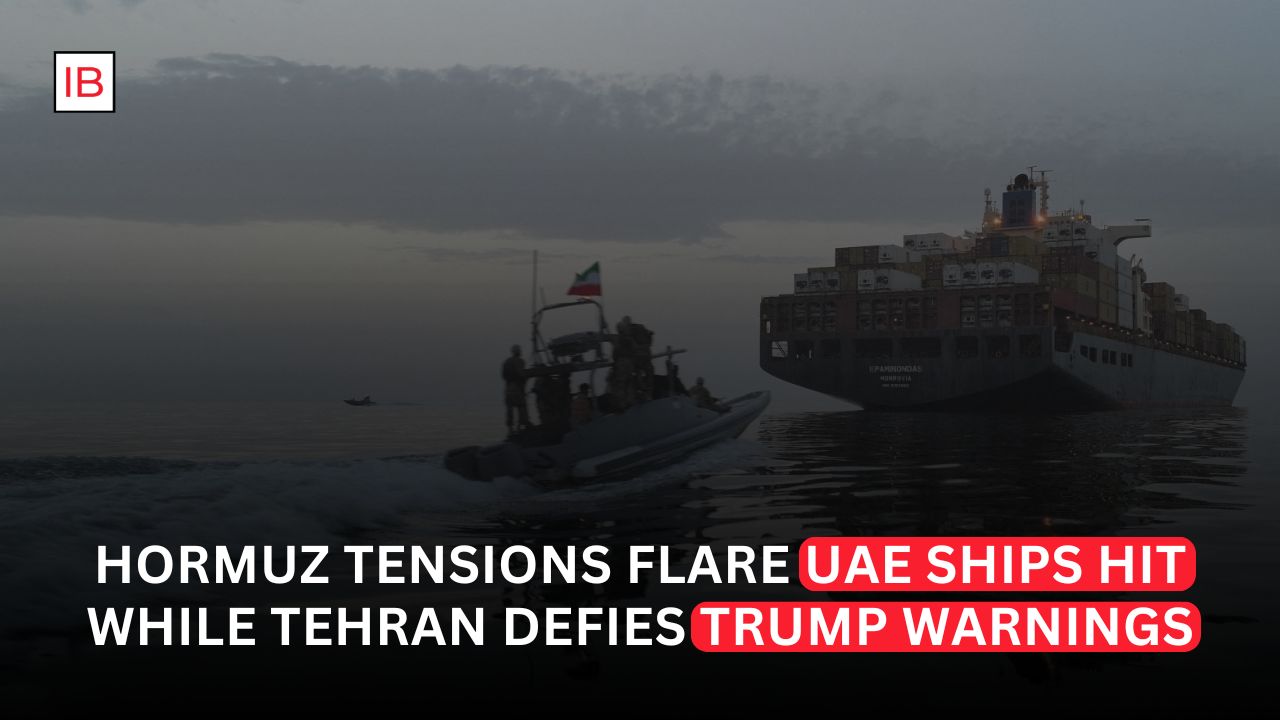
The latest attack on a UAE-linked oil vessel shows that the Strait of Hormuz is becoming more than a military flashpoint—it is now the central economic pressure point of the Iran war.
The UAE says an ADNOC vessel was attacked while transiting the strait, with no injuries reported. It is at least the third reported incident involving ADNOC vessels in less than a week. The UAE has condemned the attacks and called for the waterway to be fully reopened.
At the same time, Iran has rejected President Donald Trump’s claim that the US will soon declare the Strait of Hormuz American territory.
Iranian Deputy Foreign Minister Kazem Gharibabadi said the strait cannot be seized “by a tweet,” an aircraft carrier, an order or an election speech.
The Vessel Attack Raises the Stakes
The important development isn’t simply that another tanker was attacked.
It’s who was targeted.
ADNOC is the UAE’s state-owned oil company. An attack on its vessels directly affects one of the region’s major energy producers and puts the UAE in an increasingly difficult position.
The UAE has tried to avoid becoming a direct participant in the war while maintaining close relations with Washington.
Repeated attacks on UAE-linked shipping make that balancing act harder.
The UAE has described the attacks as a threat to regional stability and global energy security.
Hormuz Is Effectively Becoming a Contested Zone
The fundamental dispute is now straightforward:
Iran: The waterway is under Iranian control and ships must comply with Iranian rules.
US: Iran cannot use Hormuz to control international energy flows, and Washington says it is prepared to maintain pressure on Tehran.
UAE and other Gulf states: They need the waterway open because their economies depend heavily on energy exports.
That creates three overlapping interests that are increasingly difficult to reconcile.
Trump’s “US Territory” Claim Makes the Dispute More Dangerous
Trump’s statement that the US will declare Hormuz American territory is politically dramatic, but it doesn’t by itself change the legal or physical reality.
Iran understands that.
That’s why Tehran’s response focused on the distinction between declaring control and actually exercising control.
Iran’s message is essentially:
You can announce sovereignty. You still have to enforce it.
That is the real strategic challenge for Washington.
The US Has the Military Power. Iran Has Geographic Leverage.
The United States has overwhelming military superiority.
But Iran sits directly alongside the waterway.
That gives Tehran an asymmetric advantage.
Iran doesn’t need to defeat the US Navy in a conventional battle. It can instead make commercial shipping sufficiently dangerous that insurers, shipowners and energy companies decide the route isn’t worth the risk.
That distinction is critical.
Control of a waterway isn’t only about who has more missiles or warships. It’s about who can make commercial traffic move—or stop.
Shipping Is Already Being Disrupted
Reuters reports that commodity-vessel traffic through Hormuz has fallen below the August average, with only nine commodity vessels transiting on Thursday compared with five the previous day and an August average of 12 per day. Most were using Iranian routes.
The numbers may look small, but the underlying signal is more important:
Commercial operators are becoming increasingly reluctant to use the strait.
That can create a self-reinforcing problem.
More attacks
↓
Higher insurance costs
↓
Fewer ships willing to transit
↓
Lower oil and LNG flows
↓
Higher energy prices
↓
Greater pressure on governments to intervene
That is how a regional military conflict becomes a global economic problem.
Iran Is Also Applying Pressure Economically
Iran has been enforcing what amounts to a blockade while seeking greater control over who can pass through the strait.
The UAE argues that using Hormuz as economic leverage amounts to piracy.
Iran, meanwhile, portrays the restrictions as part of its resistance to the US and Israeli military campaign.
Both sides therefore see the maritime confrontation as part of the broader war rather than a separate shipping dispute.
The UAE Has a Serious Dilemma
Abu Dhabi has several options, none particularly attractive.
1. Keep relying on diplomacy
This avoids direct escalation but leaves UAE shipping vulnerable.
2. Increase naval protection
That could improve shipping security but risks bringing UAE forces closer to direct confrontation with Iran.
3. Reroute more exports
The UAE has pipelines and alternative infrastructure that can bypass some Hormuz exposure, but these cannot completely replace the strait’s capacity.
4. Coordinate more closely with the US
This would strengthen protection but could make the UAE a more explicit Iranian target.
The UAE therefore has every incentive to push for an agreement that restores commercial traffic without turning the country into another battlefield.
Oman Could Become Crucial
Oman is one of the few regional actors capable of maintaining communication with both Washington and Tehran.
Iran is reportedly discussing possible arrangements for the future management of the strait with Oman.
That makes Oman’s diplomatic role disproportionately important.
A workable deal could involve some form of:
safe-passage mechanism + vessel identification + deconfliction + monitoring.
That would allow Iran to claim it has not surrendered control while allowing international shipping to resume.
But Iran and the US Are Still Far Apart
Iran has also indicated that it isn’t ready simply to return to negotiations on US terms.
Reports say Qatar and Pakistan are helping facilitate messages between Washington and Tehran, but Iranian officials stress that these communications do not necessarily constitute formal negotiations.
That distinction matters.
Back-channel communication can prevent accidental escalation without meaning that a peace agreement is close.
The Oil Market Is the Bigger Battlefield
The immediate victim isn’t necessarily a particular tanker.
It’s the assumption that Middle Eastern energy can move freely through Hormuz.
If that assumption disappears, markets have to price in:
- Higher crude prices
- Higher LNG prices
- More expensive shipping
- Higher insurance premiums
- Longer delivery times
- Greater inflation risk
Reuters reports gasoline prices in the US have already risen sharply during the conflict, while Trump has urged Americans to accept higher fuel prices as a cost of confronting Iran.
That creates a political vulnerability for Trump.
Trump Needs a Quick Resolution More Than Iran Does
This is the uncomfortable strategic reality.
Iran can potentially tolerate a prolonged confrontation if it believes the economic and political costs to the US eventually become greater than the benefits of continuing.
Trump has a different constraint.
He has to deal with:
Oil prices + inflation + public opinion + military deployments + the 2026 midterms.
A prolonged Hormuz crisis therefore creates pressure inside the US even if American forces maintain military superiority.
The Biggest Risk Is Miscalculation
The most dangerous scenario isn’t necessarily a deliberate decision to start a wider war.
It could be a chain reaction:
UAE vessel attacked
→ US or Gulf forces respond
→ Iran retaliates
→ another commercial vessel is hit
→ shipping traffic collapses further
→ oil prices spike
→ Washington increases military pressure
→ Iran expands the conflict geographically.
At that point, restoring commercial shipping becomes much harder.
What to Watch Next
ADNOC shipping: More attacks would indicate Iran is willing to directly pressure Gulf energy producers.
US naval deployments: A larger US escort operation would increase protection but also escalation risk.
Oil prices: Sustained gains would reveal whether markets expect the disruption to persist.
Oman diplomacy: Any concrete safe-passage arrangement would be the clearest sign of de-escalation.
Commercial traffic: Ultimately, the number of vessels actually willing to transit Hormuz matters more than political statements.
The Bigger Picture
The UAE vessel attack exposes the weakness in both sides’ current positions.
Iran can disrupt shipping, but doing so risks alienating Gulf states whose cooperation it may eventually need.
The US can deploy overwhelming military force, but military power alone cannot instantly make commercial operators willing to sail through a contested chokepoint.
And Trump’s claim that Hormuz can become US territory does not solve the underlying problem.
The real contest isn’t over who can make the strongest statement about Hormuz. It’s over who can make the waterway safe enough for the world’s ships to use again.
Until that happens, every tanker attack is potentially an oil-market event—and every oil-market shock makes the political cost of the war higher.