Fresh violence in Lebanon and continued Israeli strikes in Gaza are threatening to undermine renewed diplomatic efforts across the Middle East, just as US-led negotiators are trying to turn fragile ceasefires and tentative agreements into a broader regional settlement.
The timing is particularly damaging. US President Donald Trump’s envoys have been meeting Egyptian, Qatari and Turkish mediators in Cairo to advance a Gaza peace proposal, while separate efforts have sought to stabilize the Israel-Lebanon front. But renewed military action is making it increasingly difficult for negotiators to build the trust required for a lasting agreement.
Lebanon’s Truce Is Under Pressure
The latest escalation in southern Lebanon is one of the clearest signs that the region’s diplomatic progress remains fragile.
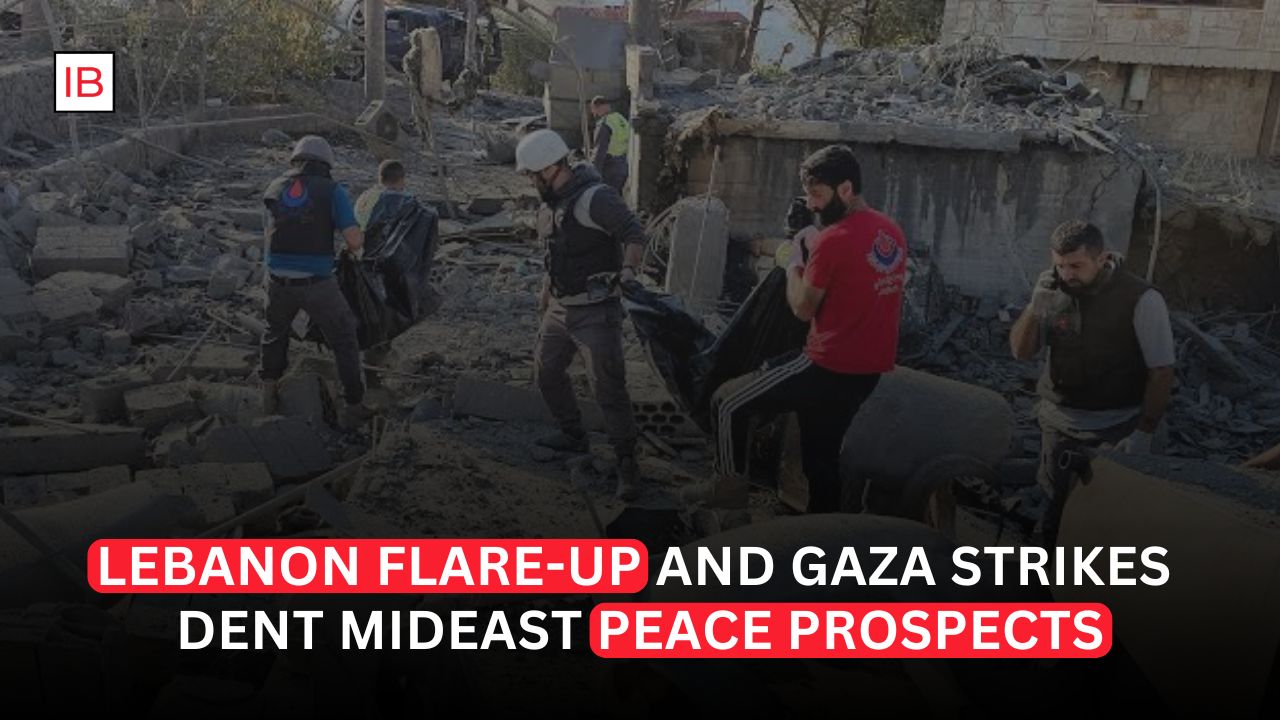
Israeli airstrikes on Aug. 15 killed at least 11 people in southern Lebanon, according to Associated Press, making it the deadliest escalation since the June 20 truce between Israel and Hezbollah. Israel said it was responding to a Hezbollah drone attack that injured three Israeli soldiers and that the strikes targeted a Hezbollah commander.
Lebanese officials have condemned the attacks and warned that they threaten the country’s attempts to move toward a more stable relationship with Israel.
That creates a serious diplomatic problem.
A ceasefire can exist on paper while negotiations continue, but every new strike makes political compromise harder.
Gaza Is Creating a Second Obstacle
The situation in Gaza is equally complicated.
Trump’s diplomatic team has been pressing for a peace framework that would include an end to hostilities, Hamas disarmament, an Israeli military withdrawal and a civilian Palestinian administration responsible for governing Gaza. Hamas has engaged with mediators, but Israel has rejected important elements of the proposal.
Israeli forces have also continued carrying out strikes in Gaza.
That combination—negotiations on one side and continued military operations on the other—makes it difficult to establish the confidence necessary for a durable agreement.
Hamas argues that Israel must first halt attacks and withdraw before it gives up its weapons.
Israel’s position is essentially the reverse: Hamas must fully disarm before Israel accepts a meaningful withdrawal.
That sequencing dispute is one of the central obstacles to the peace process.
The Diplomatic Window Is Narrow
The current negotiations represent a potentially important opening, but the window is narrow.
Regional governments including Saudi Arabia, the United Arab Emirates, Egypt, Qatar and Turkey have supported the US-backed diplomatic push and criticized Israel’s rejection of parts of the proposed framework.
The involvement of multiple Arab states matters because a Gaza settlement cannot easily be separated from the wider regional order.
Any durable agreement would have implications for:
- Israeli-Arab relations
- Palestinian governance
- Hezbollah’s role in Lebanon
- Iranian influence
- Gulf security
- Reconstruction financing
- Regional trade and investment
That makes the current violence more consequential than a series of isolated military incidents.
Lebanon Could Become the Bigger Test
Lebanon may ultimately prove to be one of the most important tests of whether the region can move from temporary ceasefires toward lasting political agreements.
Earlier negotiations have focused on Israeli security concerns, Lebanese sovereignty and the future of Hezbollah’s weapons.
The Lebanese government wants the state to have exclusive authority over national security, while Hezbollah has resisted arrangements that would require it to surrender its military capabilities.
The June framework was intended to move those issues toward a political solution, but Hezbollah was not a formal signatory, leaving a fundamental weakness in the process.
That makes every new confrontation potentially dangerous.
Israel Faces a Difficult Balancing Act
For Israel, the diplomatic challenge is balancing military security with political negotiations.
Israeli officials argue that continued strikes are necessary to prevent Hezbollah from rebuilding military infrastructure and to respond to attacks.
But continued operations also create pressure from Lebanon and international mediators.
The same problem exists in Gaza.
Israel wants guarantees that Hamas cannot rebuild its military capabilities, while the United States and regional governments are pushing for a ceasefire and political transition.
The disagreement is therefore not simply over whether there should be peace.
It is over what conditions must exist before peace becomes possible.
Trump’s Peace Strategy Faces Its Biggest Test
The developments also put Trump’s Middle East strategy under pressure.
The administration is attempting to convert military and diplomatic leverage into a broader political settlement.
But the Gaza negotiations demonstrate how difficult that transition can be.
A peace plan can be negotiated between governments and mediators, yet implementation ultimately depends on armed groups and political leaders accepting compromises that may be deeply unpopular with their domestic constituencies.
Recent talks in Cairo involving Jared Kushner and Trump’s envoy Nickolay Mladenov show that Washington is still actively pursuing the agreement.
But Israeli Prime Minister Benjamin Netanyahu has rejected key elements of the proposal, particularly the sequencing around Hamas disarmament and Israeli withdrawal.
The Regional Conflict Is Becoming More Interconnected
The biggest risk is that separate conflicts begin reinforcing one another.
Violence in Gaza can increase pressure on Hezbollah.
Fighting in Lebanon can complicate Israeli political calculations in Gaza.
Iran’s confrontation with the US and Israel adds another layer.
Attacks affecting shipping through the Strait of Hormuz and Red Sea have already demonstrated how quickly regional instability can spread into energy and global trade markets.
That means the economic consequences of failed diplomacy could extend well beyond the Middle East.
Markets Are Watching the Same Risk
Oil markets are particularly sensitive to developments across the region.
Any major escalation involving Lebanon, Gaza, Iran or Gulf shipping routes could raise concerns about supply disruptions and transportation costs.
Higher energy prices would then create inflationary pressure for economies around the world.
For investors, the Middle East is therefore no longer simply a geopolitical story.
It is also an issue involving:
Oil prices, shipping costs, inflation, insurance premiums, trade routes and global economic growth.
The Bigger Problem Is Trust
The immediate military flare-ups are serious, but the deeper problem is the lack of trust between the parties.
A peace agreement requires each side to believe that the other will honor its commitments.
Right now, that confidence remains extremely weak.
Hamas fears that disarmament could leave it vulnerable if Israel does not withdraw.
Israel fears that withdrawing before Hamas is fully disarmed could allow the group to rebuild.
Lebanon wants greater sovereignty but faces the unresolved question of Hezbollah’s military power.
And regional governments want stability without allowing another conflict to reshape the balance of power.
What Comes Next
The most important signals will be whether Israel and Hamas can agree on the sequencing of a ceasefire, whether Hezbollah and Lebanon can prevent another escalation, and whether US mediators can persuade the parties to accept reciprocal concessions.
A sustained reduction in violence would strengthen the diplomatic process.
Another major escalation could push negotiations back to the starting point.
For now, the peace process remains alive—but increasingly fragile.
The latest violence does not prove that diplomacy has failed. It does show that diplomacy has very little margin for error.
If negotiators cannot stop the cycle of strikes and retaliation, the prospect of a wider Middle East settlement will become increasingly difficult to sustain.