Heatwave Conditions and Reduced Generation Push French Electricity Prices Higher
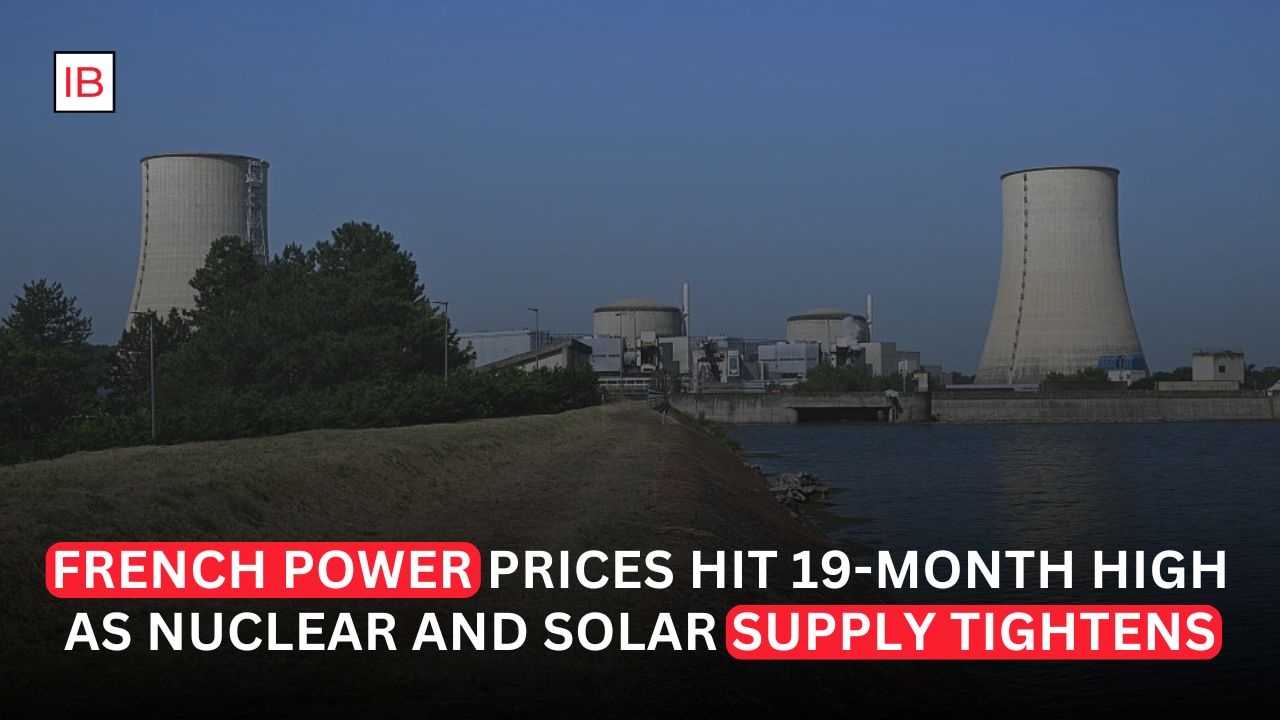
French electricity prices have climbed to their highest level in 19 months as a combination of nuclear-power constraints and weaker solar generation tightens supply across the country’s power market.
The move highlights the vulnerability of Europe’s electricity system during periods of extreme summer weather. France relies heavily on nuclear power, which normally provides roughly 70% of its electricity, making changes in reactor availability particularly important for prices and regional power flows.
The latest price surge comes after a summer marked by repeated heatwaves, high electricity demand and difficult operating conditions for power producers.
Nuclear Supply Under Pressure
France’s nuclear fleet has been particularly affected by the extreme temperatures.
High temperatures can make it harder for nuclear plants to operate at full capacity because reactors require large quantities of water for cooling. Environmental rules can also restrict the amount of heated water that plants discharge into rivers.
During the latest heatwave, EDF was forced to reduce output at several reactors and take others offline. Reuters reported that nuclear production could be reduced by around 15% during the peak of the latest heatwave, with total unavailable nuclear capacity reaching levels not seen since 2023.
That matters enormously for France because nuclear generation normally provides the backbone of its electricity system.
When several reactors simultaneously reduce production, electricity traders have to find alternative sources of supply.
Heat Is Increasing Electricity Demand
The supply problem is occurring at the same time that temperatures are increasing electricity consumption.
Air-conditioning demand rises sharply during periods of extreme heat, adding pressure to the grid.
France experienced a significant increase in electricity demand during the summer heatwave, with daily consumption rising by almost 20% during a two-week period in June, according to Carbon Brief.
That combination creates a difficult market environment.
Higher demand is occurring precisely when part of the country’s traditional baseload supply is becoming less available.
The result is upward pressure on wholesale electricity prices.
Solar Power Is Also Part of the Equation
Solar generation has provided an important counterbalance during Europe’s heatwaves, but solar production does not necessarily solve the entire supply problem.
Solar panels produce their maximum output during daylight hours.
Electricity demand, however, can remain high into the evening when solar production falls sharply.
Recent analysis from Ember found that solar output was as much as 17% higher on European heatwave days during June and July than on other days, helping stabilize electricity systems during periods of elevated daytime demand.
But the timing of generation matters.
Strong daytime solar output cannot completely compensate for declining production after sunset, particularly when nuclear availability is constrained and demand remains elevated.
That creates additional volatility in wholesale markets.
France Remains a Major Power Exporter
Despite the nuclear disruptions, France continues to have an important role in Europe’s electricity system.
The country has historically produced more electricity than it consumes and exports surplus power to neighboring countries.
But when French nuclear production falls, the amount available for export declines.
Reuters reported that French electricity exports had already fallen about 20% from July levels during the latest period of nuclear disruption.
That affects neighboring countries such as Germany and the UK.
When French electricity becomes less available, other European markets may need to rely more heavily on gas, coal or other generation sources.
The effect therefore extends beyond France’s borders.
Germany Is Facing Its Own Supply Problems
The latest European power-price surge is not exclusively a French story.
Germany has also experienced unfavorable conditions, including weaker wind generation during the heatwave.
Reuters reported that German wind output was expected to fall by about 8.1 gigawatts, roughly 60% below seasonal averages.
This leaves European electricity markets facing simultaneous pressures.
France has reduced nuclear availability.
Germany has weaker wind production.
Solar generation is strong during the day but declines in the evening.
And high temperatures are increasing demand.
The combination can produce sharp price movements.
Gas Is Becoming More Important
When nuclear and renewable generation are insufficient, gas-fired power plants can help balance the electricity system.
But gas prices have also been affected by geopolitical tensions, particularly disruptions surrounding the Strait of Hormuz.
That makes replacing lost nuclear generation more expensive.
Higher gas costs can therefore feed directly into European electricity prices.
The situation illustrates the interconnected nature of Europe’s energy markets.
Even countries with large amounts of low-carbon generation remain exposed to international fuel markets when renewable or nuclear output is temporarily constrained.
Climate Risks Are Becoming More Important
The latest disruption also raises questions about the long-term resilience of France’s nuclear fleet.
Nuclear power is a major source of low-carbon electricity, but reactors depend on reliable cooling systems.
More frequent heatwaves and droughts could make those operating conditions increasingly difficult.
France has already experienced similar problems in previous summers.
During the latest heatwave, six reactors were taken offline and other units reduced output because of high river temperatures and low water levels.
EDF has acknowledged the need to adapt its nuclear fleet to changing climate conditions and announced plans for major investment in plant resilience.
EDF Faces a Difficult Balancing Act
For EDF, the situation creates a complicated financial and operational challenge.
The company needs to maximize nuclear production because electricity prices can become extremely attractive when supply is tight.
But reactor safety and environmental restrictions limit how much output can be maintained during extreme weather.
EDF must therefore balance electricity-market opportunities against technical and regulatory constraints.
The company’s nuclear fleet has also been undergoing maintenance and modernization, creating additional fluctuations in available capacity.
Why the Price Surge Matters
Higher wholesale electricity prices can eventually affect households and businesses, although the relationship between wholesale and retail prices is not immediate.
Energy suppliers typically hedge electricity purchases months or years in advance.
That means a short-term spike in wholesale prices does not necessarily translate directly into an immediate increase in household electricity bills.
For industrial users and large commercial consumers, however, sustained high wholesale prices can increase operating costs.
Energy-intensive sectors such as chemicals, metals and manufacturing are particularly exposed.
Europe’s Energy Transition Faces a New Challenge
The French power-price surge highlights an important challenge for Europe’s energy transition.
The continent is rapidly increasing renewable generation, while maintaining nuclear capacity and reducing fossil-fuel dependence.
But each source has different characteristics.
Nuclear provides relatively stable output but can be affected by maintenance, heat and water availability.
Solar provides abundant daytime electricity but declines rapidly after sunset.
Wind generation varies with weather conditions.
Gas can provide flexibility but exposes Europe to international fuel prices and geopolitical risks.
The challenge is not simply building more generation. It is ensuring that different sources can work together when weather and demand change quickly.
Storage Could Become More Important
The latest price volatility also reinforces the case for energy storage.
Large batteries can absorb surplus solar generation during the middle of the day and release electricity during evening demand peaks.
That can reduce dependence on gas-fired generation and limit price volatility.
However, batteries cannot replace all forms of electricity generation.
Long periods of low renewable output require other forms of flexibility, including nuclear, hydroelectricity, gas, demand response and potentially longer-duration storage.
The Broader European Market
France’s price increase is part of a broader European power-market problem.
Extreme weather has affected generation and consumption simultaneously across the continent.
Ember’s analysis found that solar power played a significant role in preventing even greater stress during recent heatwaves, but evening supply remained a major concern.
The experience demonstrates that Europe’s electricity transition is increasingly influenced by weather patterns.
The more extreme the conditions become, the more important flexibility and grid connections will be.
Looking Ahead
French electricity prices reaching a 19-month high is a warning about how quickly power markets can tighten when several supply and demand factors move in the wrong direction at the same time.
The immediate catalyst is the combination of extreme heat, reduced nuclear availability and changes in renewable generation.
France’s dependence on nuclear power means reactor outages have an unusually large impact on the country’s electricity market.
At the same time, high temperatures are increasing demand for cooling.
That creates a classic supply squeeze: less electricity is available from nuclear plants precisely when consumers need more power.
Solar generation has helped ease the pressure during daylight hours, but its output falls as the sun sets. Recent European data show that solar production has actually been exceptionally strong during heatwaves, demonstrating its growing importance to grid stability.
The problem is therefore not simply a shortage of renewable energy.
It is a problem of timing, flexibility and reliability.
France’s nuclear fleet remains one of Europe’s most important sources of dependable low-carbon electricity. But the summer disruptions show that even nuclear-heavy systems are vulnerable to extreme weather and water constraints.
The implications extend beyond France.
Lower French exports can force neighboring countries to rely more heavily on gas and coal, while weaker German wind production adds another layer of pressure to the European market.
For energy traders, the result is greater price volatility. For consumers and industry, sustained high prices could eventually increase costs. For policymakers, the episode highlights the need for a more flexible and resilient electricity system.
Europe’s energy transition is therefore entering a new phase.
Adding solar and wind capacity remains important, but so are nuclear reliability, battery storage, transmission networks and flexible generation.
The French power-price surge demonstrates that abundant clean-energy capacity on paper does not automatically guarantee cheap electricity when extreme weather disrupts both supply and demand.
As heatwaves become more frequent and electricity consumption becomes increasingly sensitive to temperature, Europe’s ability to balance its grid will become just as important as the amount of electricity it can generate.