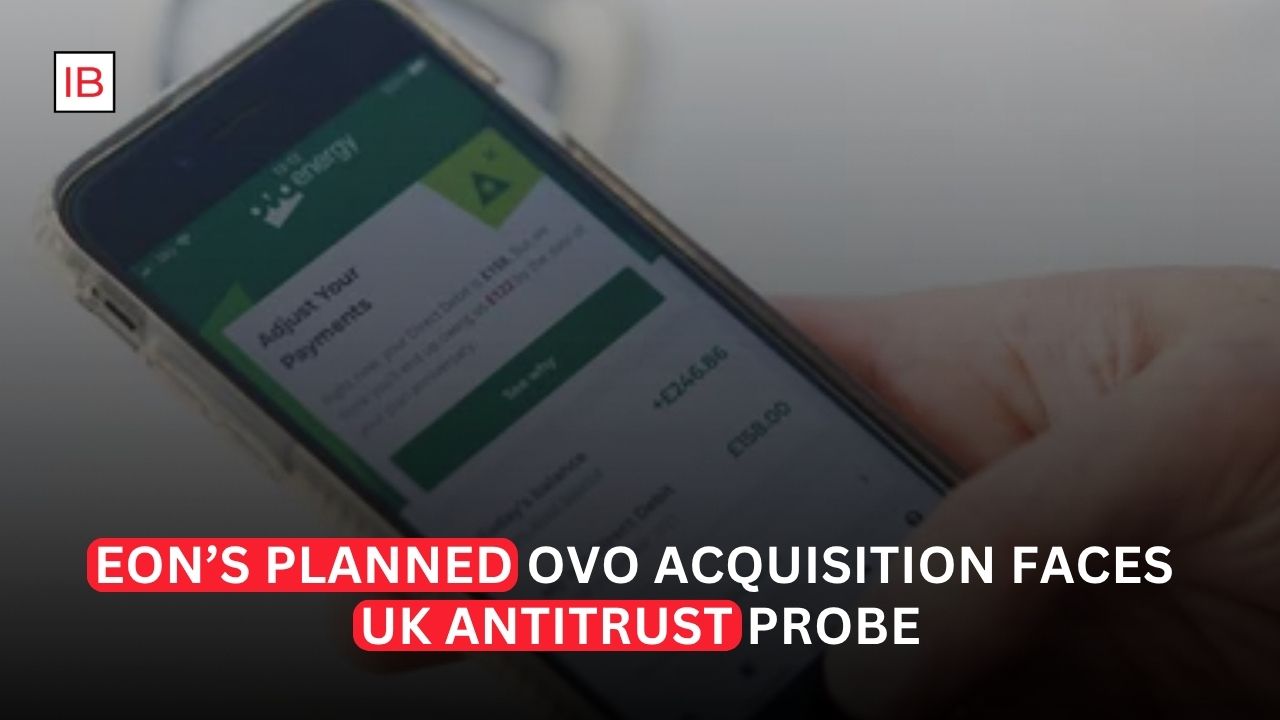
E.ON’s planned acquisition of British energy supplier OVO Energy is facing a formal antitrust investigation in the UK, putting regulatory scrutiny around a deal that would create the country’s largest energy supplier. The Competition and Markets Authority has opened a merger inquiry into E.ON’s proposed purchase of OVO, examining whether the transaction could reduce competition in Britain’s energy market.
E.ON agreed in May to acquire OVO, a major challenger in the UK residential energy market. The companies have not disclosed the purchase price, although reports have valued the transaction at as much as £600 million. The deal is expected to close in the second half of 2026 if it receives the necessary regulatory approvals.
The combination would bring together about 9.6 million customers, with E.ON contributing roughly 5.6 million and OVO around 4 million. That would push the combined company ahead of Octopus Energy and make it the largest energy supplier in Britain by customer numbers. The deal would also further consolidate a market that has already experienced substantial changes following the collapse and exit of numerous smaller suppliers.
The CMA’s investigation reflects concerns that greater concentration could affect competition, pricing and the range of services available to households. The regulator is seeking information and views as it assesses the potential impact of the transaction. The inquiry is focused on the competitive effects of E.ON acquiring OVO rather than the financial condition of either company.
E.ON has argued that greater scale could benefit customers by allowing the combined business to invest more efficiently and offer a broader range of products. The company has pointed to opportunities to reduce duplicated costs, improve technology and create a stronger platform for innovation in the increasingly complex UK energy market.
The companies may also face difficult decisions over technology and staffing as they integrate their operations. E.ON UK has acknowledged that the merger could generate efficiencies, including potential savings from removing duplicated roles and consolidating technology systems. E.ON is also considering how OVO’s Kaluza software platform could fit into the combined business.
For consumers, the regulatory review is particularly important because the UK energy market has a history of consolidation. The sector was once dominated by a small group of major suppliers, but the expansion of smaller companies created more competition before the energy-price crisis exposed weaknesses in several suppliers’ business models. Many smaller firms subsequently failed or were absorbed by larger rivals.
The current market is therefore considerably more concentrated than it was several years ago. The E.ON-OVO combination would reduce the number of major suppliers and strengthen the position of one of the largest players. That makes the CMA’s assessment significant for competitors as well as millions of households.
OVO’s financial position also provides context for the transaction. The company has faced financial pressure in recent years, reporting a pre-tax loss of £71 million in 2025, compared with a £61 million loss a year earlier. Before agreeing to the E.ON deal, OVO had been seeking additional funding to strengthen its balance sheet.
The acquisition could provide OVO with access to the resources and scale of a much larger European utility. For E.ON, meanwhile, acquiring OVO would strengthen its customer base and expand its ability to compete with Octopus and other major suppliers.
The central question for regulators will be whether those potential efficiencies outweigh the risks created by reduced competition. If the CMA concludes that the deal could harm consumers, it could seek remedies or impose conditions before allowing the transaction to proceed. A lengthy review could also delay E.ON’s planned integration.
For E.ON and OVO, the outcome will determine how quickly they can combine their operations and pursue expected efficiencies. For Britain’s energy market, the decision could establish how much consolidation regulators are willing to accept as suppliers seek greater scale in a sector facing high investment requirements, tighter financial rules and rapidly changing customer expectations.