Warning Comes as Oman and Iran Work on a Commercial Shipping Arrangement for the Strait of Hormuz
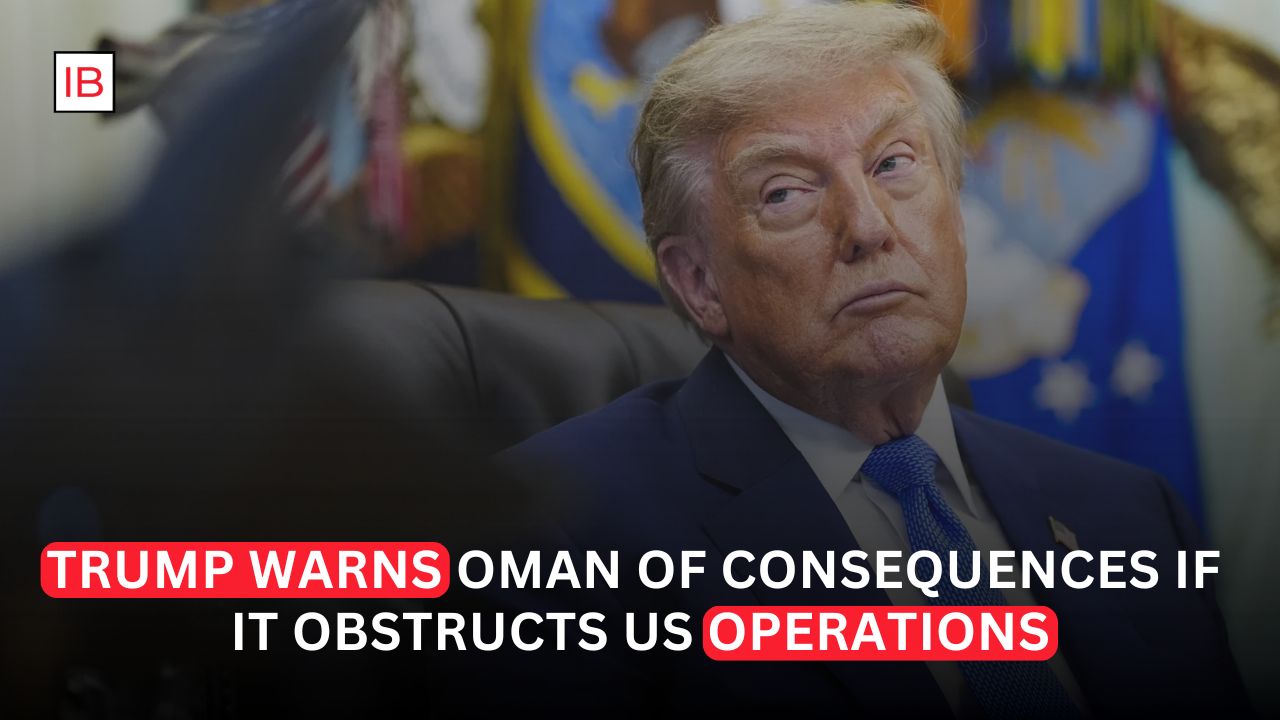
President Donald Trump has threatened military action against Oman if the Gulf state interferes with US efforts involving Iran and the strategically vital Strait of Hormuz, sharply escalating tensions between Washington and one of its longtime regional partners.
Trump made the warning in comments to Fox News on Monday, saying that if Oman “gets in the way,” the US would respond forcefully. The remarks came as Oman and Iran continue discussions over arrangements for commercial shipping through the Strait of Hormuz.
The comments add another layer of uncertainty to a confrontation that has already disrupted one of the world’s most important energy corridors.
Oman Caught Between Washington and Tehran
Oman has traditionally maintained a neutral diplomatic position in Middle Eastern conflicts and has frequently acted as a channel between the United States and Iran.
That role has become increasingly difficult as Washington and Tehran clash over control of the Strait of Hormuz.
Iran and Oman have been working toward an agreement intended to establish routes for commercial vessels through the waterway. Iran says negotiations have made significant progress and that an agreement on a shipping-route map has been reached.
Washington, however, has been pursuing its own strategy for keeping the strategic waterway open while maintaining pressure on Tehran.
That creates a potentially serious conflict between two different approaches to managing shipping through Hormuz.
The Strait of Hormuz Is at the Center of the Dispute
The Strait of Hormuz is one of the world’s most important maritime chokepoints.
It connects the Persian Gulf with the Gulf of Oman and the wider Arabian Sea, making it a crucial route for global oil and gas shipments.
The conflict has already caused a dramatic reduction in maritime traffic.
Reuters reported that only a small number of vessels were passing through the strait on a recent day, compared with more than 130 daily crossings before the war.
That disruption has increased concerns about energy supplies, shipping costs and global inflation.
Trump Says He Is in No Hurry
Trump’s warning to Oman came alongside another notable statement about negotiations with Iran.
The president said he was “in no hurry” to reach a deal with Tehran.
He also confirmed that Washington has a backchannel for communicating with officials connected to Iran’s Islamic Revolutionary Guard Corps.
The combination of those comments suggests that the administration believes it has considerable leverage and is prepared to maintain pressure rather than immediately seek a compromise.
That approach could make negotiations over Hormuz more difficult.
Oman Has a Unique Diplomatic Position
Oman’s role is particularly sensitive because the country has historically maintained working relationships with both Washington and Tehran.
The country has previously served as an intermediary in US-Iranian diplomacy.
Its geographic position also gives it a direct interest in the Strait of Hormuz.
Shipping lanes run through Omani territorial waters, while Iran controls the opposite side of the strait.
That means any long-term arrangement for commercial shipping is likely to require cooperation from multiple parties.
Washington’s Position Has Hardened
Trump’s latest comments follow increasingly strong statements about the future of the waterway.
Earlier this month, Trump suggested that the Strait of Hormuz could eventually become US territory following the conflict with Iran.
He argued that the US Navy effectively controls passage through the strait.
Shipping data, however, indicate that traffic remains severely disrupted and that many vessels continue to avoid routes perceived as dangerous.
The gap between Washington’s claims of control and actual commercial traffic illustrates the difficulty of restoring normal shipping conditions.
Iran Continues to Use Hormuz as Leverage
For Tehran, the strait represents one of its most important strategic advantages.
Iran has used control over access to the waterway as leverage in its confrontation with Washington.
Recent attacks and threats against commercial vessels have contributed to a collapse in traffic.
Reuters reported that Iran had resumed attacks on ships it accused of passing through the strait without permission, while Washington has reinforced its naval blockade and threatened additional economic pressure.
That creates a dangerous cycle.
The more the US attempts to enforce open shipping, the more Iran may seek to demonstrate its ability to disrupt traffic.
Oil Markets Are Watching Closely
Any further escalation around Hormuz could have major consequences for global energy markets.
The waterway is central to oil exports from the Persian Gulf, meaning prolonged disruption could push up crude prices and transportation costs.
Higher energy prices could also complicate efforts by governments to control inflation.
For the United States, that creates a particularly difficult political problem.
Trump has defended his Iran strategy despite the impact of the conflict on fuel prices.
A prolonged disruption could therefore create economic pressure at home while Washington is attempting to maintain maximum pressure on Tehran.
A Threat Against Oman Would Be a Major Escalation
Oman is not Iran.
The Gulf state has traditionally been viewed as a US partner and a diplomatic bridge to Tehran.
A direct military threat against Muscat therefore represents an extraordinary escalation in rhetoric.
It could also complicate US relations with other Gulf states.
Regional governments may become more cautious about cooperating with Washington if they believe diplomatic disagreements could trigger threats of military action.
At the same time, Oman’s strategic importance means Washington has strong incentives to avoid an actual confrontation.
Diplomacy Becomes More Difficult
The comments could also undermine Oman’s ability to act as a mediator.
If Muscat believes that Washington might punish it for pursuing an independent agreement with Tehran, Omani officials could become more cautious.
Iran, meanwhile, may interpret the threat as evidence that the United States intends to dominate the shipping arrangements rather than negotiate them.
That could make a broader diplomatic settlement harder to achieve.
The Risk of Miscalculation
The most immediate concern is not necessarily that the United States will attack Oman.
Instead, the danger could come from miscalculation.
With US forces operating around the region, Iranian forces active around the strait and commercial vessels attempting to navigate the waterway, even a relatively small incident could trigger a wider confrontation.
The threat against Oman introduces another potential actor into an already crowded security environment.
Global Shipping Faces Continued Uncertainty
Shipping companies are likely to remain cautious as long as the situation remains unresolved.
The sharp reduction in vessel traffic through Hormuz has already demonstrated how quickly geopolitical risks can alter global trade routes.
Higher insurance costs, longer voyages and the need for alternative routes can increase the cost of transporting energy and other goods.
Those costs ultimately filter through global supply chains.
The Bigger Geopolitical Picture
Trump’s comments reflect a broader struggle over who will control access to the Strait of Hormuz after the conflict.
Washington wants to prevent Iran from using the waterway as a strategic weapon.
Tehran wants to retain influence over shipping through waters adjacent to its territory.
Oman wants to preserve its role as a regional mediator while protecting its own territorial interests.
Commercial shipping companies simply want predictable and safe passage.
Those objectives do not naturally align.
Looking Ahead
Trump’s threat against Oman represents a dramatic escalation in the increasingly complicated struggle over the Strait of Hormuz.
The immediate dispute centers on commercial shipping arrangements being negotiated by Oman and Iran, but the underlying issue is much larger.
It concerns control of one of the world’s most important energy corridors and the balance of power between Washington and Tehran.
Oman has traditionally played the role of mediator, maintaining relationships with both sides.
The latest US warning puts that role under enormous pressure.
If Oman proceeds with an arrangement that Washington considers unacceptable, the dispute could become a serious test of US-Omani relations.
At the same time, an agreement between Oman and Iran could potentially help restore some commercial traffic through the strait and reduce pressure on global energy markets. Iran has said that talks have produced an agreement on shipping routes, while the United States continues to pursue a different approach.
The stakes are particularly high because shipping through Hormuz has already fallen dramatically.
Reuters reported that traffic has dropped far below prewar levels as attacks, threats and the US blockade discourage vessels from using the waterway.
For global markets, the key question is whether the latest confrontation produces another escalation or eventually creates pressure for a negotiated solution.
For Oman, the challenge is even more delicate.
It must balance its relationship with the United States against its geographic proximity to Iran and its long-standing diplomatic role.
For Iran, maintaining influence over Hormuz remains an important source of leverage.
And for Washington, demonstrating control over the waterway has become central to its broader strategy toward Tehran.
The threat against Oman therefore goes well beyond a single presidential statement. It underscores how rapidly the struggle over Hormuz is expanding from a US-Iran confrontation into a wider regional and global economic risk.
If tensions continue, the consequences could reach far beyond the Gulf—from oil prices and shipping insurance to inflation, international trade and relations between the United States and its Middle Eastern partners.