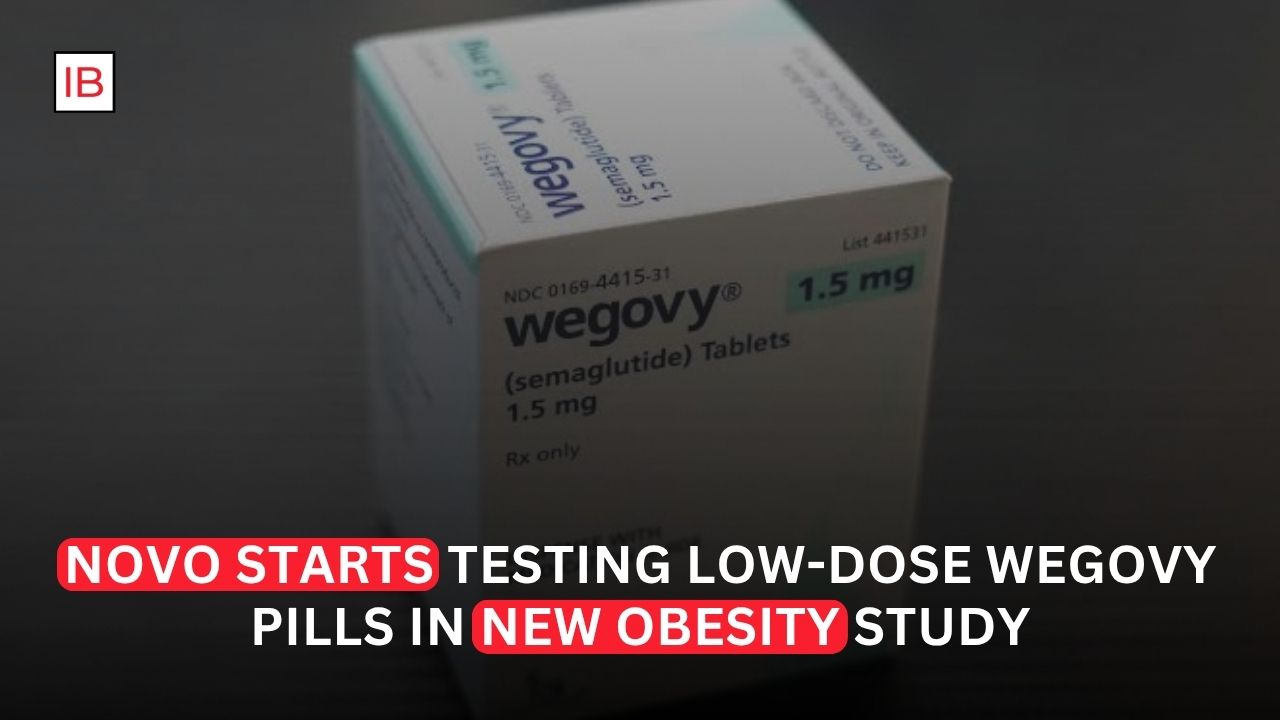
Novo Nordisk is expanding its efforts to reshape the weight-loss drug market by testing a lower-dose version of its Wegovy pill, a move that could open another path for patients who want the benefits of semaglutide while potentially using less medication.
The Danish drugmaker has started a new study examining whether a lower dose of oral Wegovy can provide meaningful weight loss while improving tolerability and potentially making treatment easier for a broader group of patients. The research comes as Novo faces increasingly intense competition in the rapidly expanding obesity-drug market, particularly from Eli Lilly.
Novo’s oral Wegovy was approved in the United States in late 2025 and launched in early 2026, giving the company an important advantage in the race to bring GLP-1 weight-loss medicines to patients who prefer tablets over injections. The pill contains semaglutide, the same active ingredient used in injectable Wegovy, but oral treatment requires a substantially higher milligram dose because only a fraction of the medicine is absorbed through the digestive system.
The currently approved Wegovy tablet uses a maintenance dose of 25 milligrams. In clinical testing, that dose produced significant weight loss. Patients taking the pill in a Phase 3 study achieved an average weight reduction of about 13.6% after 64 weeks, compared with roughly 2.4% for people receiving placebo. When the analysis included only patients who remained on treatment, average weight loss was about 16.6%.
The new research is important because the obesity-drug market is moving beyond a simple question of whether patients can lose weight. Drugmakers are increasingly competing on convenience, tolerability, pricing and the ability to tailor treatment to different patients.
A lower-dose pill could potentially address some of those issues.
GLP-1 medicines such as semaglutide commonly cause gastrointestinal side effects, including nausea, vomiting, diarrhea and constipation. These effects are often most noticeable when patients begin treatment or increase their dose. Lowering exposure could potentially make treatment more tolerable for some patients, although whether that happens will have to be demonstrated in clinical testing.
Novo’s existing prescribing approach already involves starting patients on a much lower dose before gradually increasing the amount. The purpose is to help the body adjust to treatment and reduce gastrointestinal problems. The new study goes further by examining whether patients might be able to achieve useful results while remaining on a lower dose rather than progressing toward the highest maintenance level.
That could also have major commercial implications.
The obesity-drug market is becoming increasingly price-sensitive. Novo’s oral Wegovy initially generated strong demand, but investors have been watching closely to determine whether patients remain on inexpensive starter doses or move toward higher doses that generate more revenue for the company.
The company faces a particularly strong challenge from Eli Lilly, which launched its competing oral obesity medicine Foundayo in 2026. Early data show that Novo’s pill has maintained a significant lead in the oral GLP-1 market, but Lilly’s product is growing quickly and could narrow that gap.
The competitive pressure means Novo needs to find additional ways to make Wegovy attractive. A lower-dose option could potentially give doctors greater flexibility and allow patients to use treatment at different levels depending on their individual response.
It could also broaden the market beyond patients seeking maximum weight reduction.
Not every person with obesity needs or wants the largest possible reduction in body weight. Some may be looking for a more moderate improvement in weight, blood pressure or metabolic health. Others may be particularly concerned about side effects. A lower-dose strategy could potentially appeal to those groups if clinical results support the approach.
The concept also fits into a broader change taking place in obesity treatment. Drugmakers are increasingly exploring personalized dosing rather than treating all patients with a single target dose. The goal is to find the smallest amount of medicine capable of delivering an acceptable benefit for a particular patient.
That could become especially important as GLP-1 treatments move into mainstream healthcare.
Novo has already demonstrated that oral semaglutide can deliver substantial weight loss. The FDA approved the Wegovy pill based on Phase 3 evidence showing clinically meaningful reductions in body weight, while also recognizing cardiovascular benefits associated with semaglutide treatment in appropriate patients.
But the company’s next challenge is making oral treatment commercially sustainable.
Novo’s obesity franchise has faced increasing pressure from Lilly, whose injectable Zepbound has gained substantial market share against Wegovy. Lilly’s experimental next-generation drug retatrutide has also produced exceptionally strong weight-loss results in clinical trials, raising the competitive bar even further.
That means Novo cannot rely solely on the success of the original Wegovy franchise.
The company is developing several next-generation medicines, including CagriSema and amycretin, while continuing to expand the use of semaglutide. Lower-dose Wegovy research represents another way of extending the life and reach of an established product.
For investors, the study will be closely watched because a successful lower-dose formulation could potentially increase the number of patients able to remain on treatment. However, there is an obvious trade-off: lower doses could mean lower revenue per patient if patients remain on them for extended periods.
Novo would therefore need to determine whether increased patient numbers and longer treatment duration can compensate for lower drug consumption.
The research also carries scientific uncertainty. A lower dose may improve tolerability, but it could also reduce weight-loss effectiveness. The key question is whether there is a dose level that provides a sufficiently strong benefit without requiring patients to reach the highest currently approved dose.
That balance could become one of the most important areas of competition in the obesity market.
The broader opportunity is enormous. Analysts expect the global obesity-drug market to become one of the largest areas of pharmaceutical spending over the next decade, with demand extending well beyond the relatively small group of patients currently using GLP-1 medicines.
Convenient oral treatments could help expand that market because some people are unwilling or unable to use injections. Novo’s pill has already demonstrated that there is substantial demand for a tablet-based alternative.
The lower-dose study could take that concept one step further by attempting to make oral treatment more flexible and potentially more tolerable.
Still, investors should not interpret the start of a study as evidence that the lower dose will work. Clinical trials exist precisely because the effectiveness and safety of a new dosing strategy cannot be assumed.
For Novo Nordisk, however, the research reflects a clear strategic priority: keep Wegovy relevant as the obesity market becomes more competitive and more sophisticated.
The company was an early leader in modern obesity treatment, but that advantage is no longer secure. Lilly is closing gaps, new medicines are entering development and patients are gaining more choices.
A successful lower-dose Wegovy pill could give Novo another tool to defend its position. It could offer doctors more flexibility, patients another treatment option and the company a way to expand the reach of its most important obesity medicine.
The challenge will be proving that lower exposure can still deliver meaningful results. If Novo succeeds, the next stage of the obesity-drug battle may not be about who can produce the strongest medicine, but who can provide the right dose for the widest range of patients.