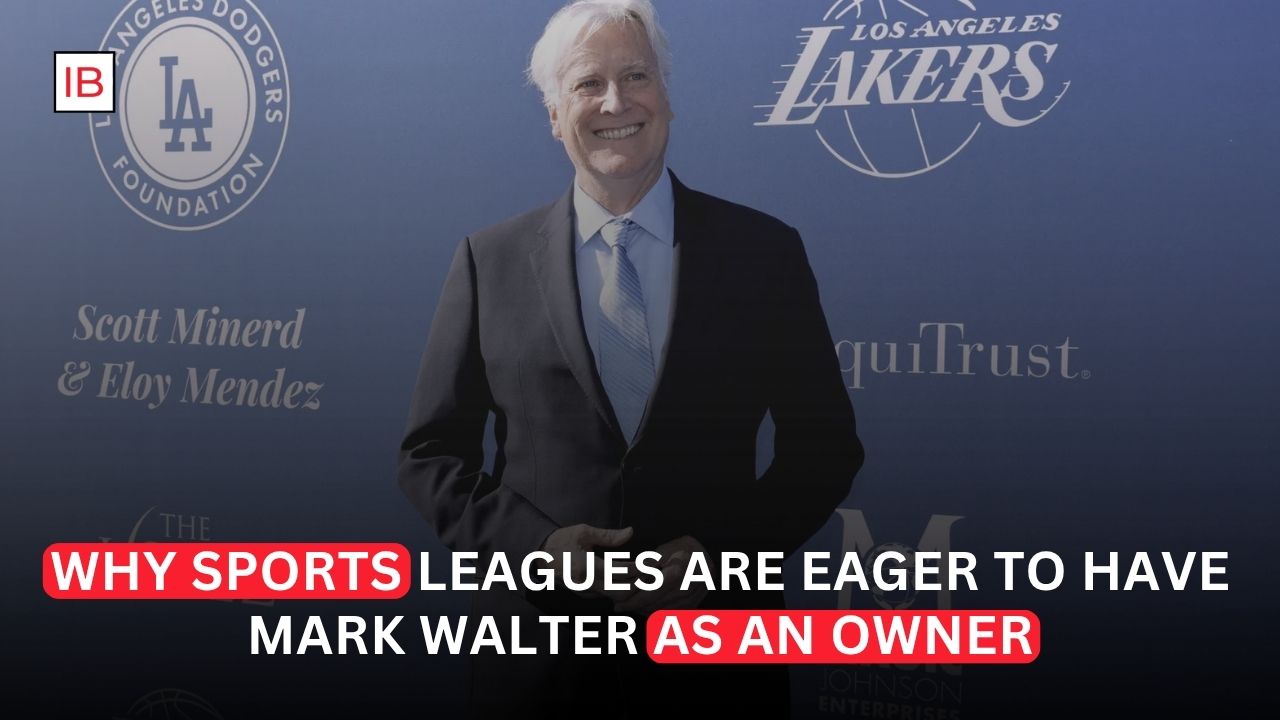
A Record Sale Comes Just Months After a Record Purchase
The Los Angeles Lakers have become a striking example of how quickly professional sports ownership is changing. Billionaire Mark Walter acquired control of the franchise in 2025 at a valuation of about $10 billion, only to agree to sell it less than a year later to a group led by former Disney CEO Bob Iger and investor Josh Kushner for a record $12.5 billion.
The extraordinary speed of the transaction has raised questions that go well beyond the Lakers. It highlights how America’s most valuable sports franchises are increasingly becoming financial assets within much larger investment empires, rather than businesses owned primarily for their sporting or cultural identity.
Walter’s brief tenure also demonstrates the risks that can emerge when sports ownership becomes intertwined with complicated financial structures, borrowing and other investments.
Walter’s Rapid Exit Raises Questions
Walter’s acquisition of the Lakers was initially presented as the beginning of a new era for one of the world’s most recognizable sports franchises.
The NBA approved his majority ownership in October 2025, while longtime Lakers governor Jeanie Buss was expected to remain involved in the team’s operations. The arrangement was intended to combine Walter’s financial resources with the continuity of the Buss family’s connection to the franchise.
Instead, the relationship lasted only months.
The proposed $12.5 billion sale to Iger and Kushner would generate an enormous gain for Walter compared with the valuation at which he acquired control. But the timing has attracted particular attention because Walter’s wider business empire is facing scrutiny from US authorities.
Federal prosecutors have been investigating potential financial improprieties involving two of Walter’s insurance companies and Guggenheim Partners.
The Lakers Became a Source of Liquidity
The sale is particularly significant because the Lakers were not simply another sports investment.
Walter’s business interests span insurance, asset management and professional sports, including the Los Angeles Dodgers and a stake in Chelsea Football Club. Reports indicate that his investment group has been seeking ways to raise cash and reduce loans connected to its insurers.
The Lakers therefore became a valuable source of liquidity at a moment when Walter’s broader financial structure was facing increased scrutiny.
Bloomberg Law reported that Walter’s firm had been speaking with investors about raising money to help repay loans held by its insurers, which had attracted attention from the Justice Department.
That context makes the sudden sale more consequential than a conventional sports transaction.
Related-Party Lending Creates Additional Risk
At the center of the scrutiny surrounding Walter’s empire are concerns over loans involving related parties.
Insurance companies typically invest policyholder funds in assets designed to generate long-term returns. When those investments involve companies connected to the insurer’s own owners or affiliates, regulators and investors can face additional questions about conflicts of interest, disclosure and risk.
The concerns surrounding Walter’s companies involve billions of dollars in loans and investments connected to his broader business empire. Investigators are examining whether those transactions were appropriately structured and disclosed. No criminal charges have been announced against Walter in connection with the investigation.
The situation illustrates one of the major challenges facing modern financial conglomerates: when multiple businesses are controlled by the same individuals, money can move between different parts of the organization in ways that may be difficult for outsiders to understand.
Sports Franchises Are Becoming Financial Assets
The Lakers sale also reflects a much broader transformation in professional sports.
For decades, major teams were often controlled by families or individuals whose primary interest was the franchise itself. The Lakers, for example, remained under the Buss family’s control for more than four decades before Walter’s acquisition.
Today, however, professional sports franchises increasingly attract private-equity investors, billionaires, institutional capital and corporate executives.
The financial logic is obvious. Major teams have scarce supply, enormous global audiences, valuable media rights and increasingly diversified revenue streams. As the number of franchises remains limited while wealth among potential buyers grows, valuations can rise dramatically.
The Lakers’ latest transaction demonstrates that trend in extreme fashion. A franchise valued at roughly $10 billion one year earlier was suddenly being priced at $12.5 billion.
A $2.5 Billion Gain in Less Than a Year
From a purely financial perspective, Walter’s transaction is difficult to ignore.
The difference between the $10 billion acquisition valuation and the proposed $12.5 billion sale represents a $2.5 billion increase in value in roughly a year, although the precise amount Walter personally receives depends on the ownership structure, financing and transaction costs.
That kind of appreciation shows why sports teams can function as highly valuable stores of wealth for billionaires.
But it also creates an uncomfortable question for fans: what happens when the financial interests of an owner change faster than the team’s long-term sporting plans?
A franchise cannot be treated exactly like a conventional financial asset. Players, coaches, employees and supporters all depend on decisions made by ownership, and rapid changes can create uncertainty throughout an organization.
The Lakers Are Not the Only Sports Asset in Play
Walter’s situation extends beyond basketball.
He remains associated with the Dodgers and has also been considering changes to his investment in Chelsea. Reports indicate that Walter is exploring a potential sale of his stake in the English soccer club as part of a broader effort to restructure his holdings.
The potential disposal of multiple sports assets reinforces the idea that these franchises are part of a wider investment portfolio.
That represents a fundamental difference from traditional sports ownership, where a team might be the central asset around which an owner’s business and personal identity were built.
For modern billionaire owners, a sports franchise can instead sit alongside technology companies, financial firms, real estate, private investments and other assets.
Fans Can Lose Stability When Ownership Changes Quickly
The financial success of a sale does not necessarily translate into stability for supporters.
The Lakers have already experienced major changes in a short period. Walter’s acquisition ended the Buss family’s long ownership era, while the latest sale would create another ownership transition almost immediately.
The team is also entering a major sporting transition. Luka Dončić has become the centerpiece of the roster, while LeBron James recently departed after eight seasons with the franchise.
Adding ownership uncertainty to those changes could make long-term planning more complicated.
There is also an ongoing dispute involving Jeanie Buss and members of the Buss family over the sale of their remaining stake. Jeanie Buss has challenged the proposed transaction involving the family’s minority ownership, creating another layer of uncertainty around the franchise’s future governance.
A New Model of Sports Ownership
The Lakers story ultimately demonstrates both the opportunities and dangers of the new sports ownership model.
Billionaires and investment groups can provide teams with enormous financial resources, helping them compete for talent, modernize facilities and expand globally. But when sports teams become components of highly leveraged and complex financial empires, events elsewhere in an owner’s portfolio can affect the franchise.
Walter’s abrupt sale shows how quickly those connections can matter.
The franchise itself remains extraordinarily valuable, but the circumstances surrounding its ownership demonstrate that even the most prestigious sports properties are not insulated from financial pressures, regulatory scrutiny or broader investment strategies.
Looking Ahead
The Lakers’ $12.5 billion sale is more than another record transaction in professional sports. It represents a powerful example of how the economics of team ownership have changed.
The franchise moved from the Buss family’s long-term stewardship to Walter’s ownership and potentially to Iger and Kushner in a remarkably short period. Meanwhile, the financial scrutiny surrounding Walter’s broader empire has highlighted the risks that can arise when sports assets are tied to complicated investment structures.
For investors, the Lakers demonstrate the extraordinary value that can be created by owning a scarce and globally recognized sports franchise. For fans, however, the story raises a different question: whether teams that represent generations of cultural identity can remain stable when ownership increasingly operates according to the logic of modern finance.
As sports franchises become more expensive and attractive to the world’s wealthiest investors, ownership changes are likely to become more frequent. The Lakers may therefore be an early illustration of a future in which the biggest teams are not simply sports organizations, but highly valuable financial assets that can be bought, leveraged and sold whenever circumstances change.