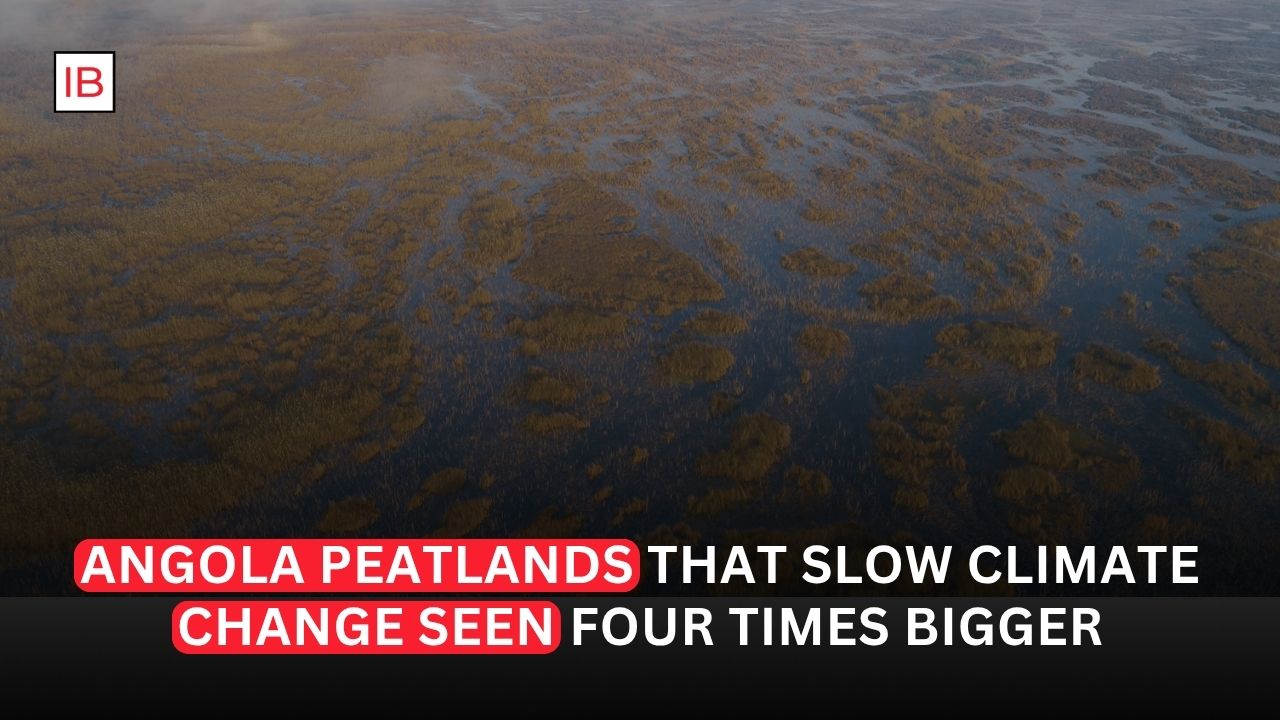
Angola’s peatlands may be far more extensive than previously understood, with new assessments suggesting the country contains an area of these carbon-rich ecosystems roughly four times larger than earlier estimates. The discovery could significantly raise the importance of Angola’s wetlands in global climate efforts while also highlighting the growing risks posed by fires, land degradation and climate change.
Peatlands are among the planet’s most important natural carbon stores. Although they cover only a small share of the world’s land surface, their waterlogged soils can accumulate enormous quantities of partially decomposed organic material over thousands of years. Globally, peatlands are estimated to store hundreds of gigatons of carbon, making their protection an important part of climate mitigation strategies.
For Angola, the significance goes beyond carbon.
The country’s peatlands are concentrated largely in its southeastern regions, where they form part of a broader landscape of wetlands, forests and grasslands. These ecosystems are closely connected to the headwaters of major rivers, including the Okavango and Zambezi systems.
That makes them important for water security across southern Africa.
Angola’s government has described its southeastern wetlands and peatlands as part of a regional “water tower.” The ecosystems help regulate water flows, retain moisture and provide protection against both droughts and floods. Their condition therefore affects communities and ecosystems far beyond the areas where the peat itself is located.
The newly recognized scale of Angola’s peatlands could change how policymakers view these landscapes.
If the peatland area is several times larger than previously estimated, the amount of carbon stored beneath the surface could also be considerably greater. That would make conservation potentially more valuable from a climate perspective because preventing degradation could avoid the release of carbon that has accumulated over centuries or even millennia.
But peatlands only remain effective carbon stores when they stay wet.
When peat soils dry out, they become vulnerable to oxidation and fire. Instead of continuing to store carbon, degraded peatlands can become sources of greenhouse-gas emissions.
That makes fire one of Angola’s biggest environmental threats.
Angola’s 2025 climate plan warned that fires are a major source of greenhouse-gas emissions in the country’s miombo woodland and peatland landscapes. In 2023, wildfires affected 42.5% of mapped peatland areas in southeastern Angola, demonstrating the scale of the pressure on these ecosystems.
The problem is particularly serious because peat fires can behave differently from ordinary vegetation fires.
Once dry, organic-rich peat can burn below the surface, making fires harder to detect and extinguish. The carbon released can be substantial, while the ecological damage may persist for years.
Repeated burning can also reduce vegetation cover, damage soils and weaken the ability of wetlands to regulate water.
Climate change could intensify those risks.
Angola is already experiencing higher temperatures and increasing pressure from drought and variable rainfall. The World Meteorological Organization has also warned that 2026 is bringing significant climate extremes globally, with heat, drought, floods and wildfires continuing to affect many regions.
For Angola, changing rainfall patterns could make some peatlands more vulnerable to drying.
That creates a potentially dangerous feedback loop. Hotter and drier conditions can increase fire risk. Fires can damage vegetation and peat soils, reducing their ability to retain water. Further degradation can then make the landscape even more vulnerable to future drought and fire.
Human activity adds another layer of pressure.
Angola’s climate strategy identifies unsustainable agriculture, land conversion, increasing human pressure and recurring fires as threats to inland wetlands and peatlands. Many ecologically valuable areas are also outside formal conservation frameworks, leaving them more exposed to unmanaged development and degradation.
Protecting the newly identified peatlands will therefore require more than simply drawing boundaries around them.
Authorities will need better mapping, monitoring and fire management. Local communities will also need to be included because many households depend on surrounding forests and wetlands for agriculture, water and other livelihoods.
That creates a difficult policy balance.
Conservation measures that ignore local economic needs can be difficult to enforce. But uncontrolled land conversion and repeated burning could destroy ecosystems whose climate and water-management value extends far beyond the immediate communities.
Angola is already developing programs aimed at managing its natural landscapes more sustainably. A government-backed project covering the Miombo and Mopane ecosystems is focused on reversing environmental degradation and strengthening climate resilience in provinces including Cuando Cubango, Cunene and Huíla.
The expanded understanding of Angola’s peatlands could strengthen the case for similar investment in wetland conservation.
There may also be opportunities to connect peatland protection with international climate finance. Countries and investors are increasingly looking for nature-based solutions capable of storing carbon while delivering benefits for biodiversity and water security.
But carbon finance comes with an important condition: the carbon savings must be measurable and credible.
That means Angola will need accurate maps, reliable measurements of carbon stocks and effective monitoring systems before it can demonstrate the full climate value of protecting its peatlands.
The potential economic benefits are significant.
Protecting wetlands can reduce the costs associated with drought and flooding while supporting agriculture, fisheries and rural livelihoods. Maintaining healthy watersheds can also improve water availability during dry periods.
In other words, peatlands should not be viewed only as climate assets.
They are infrastructure provided by nature.
Their ability to retain water, regulate river flows and support biodiversity gives them economic value even without assigning a price to their stored carbon.
The discovery of a much larger peatland area could therefore alter Angola’s environmental priorities.
The country has historically depended heavily on oil revenues, but its natural landscapes represent another form of long-term wealth. Forests, wetlands and watersheds can support communities and protect economic activity if they are managed properly.
The danger is that these assets can be destroyed long before their value is fully understood.
Angola now has an opportunity to avoid that mistake.
The latest estimates suggest that the country’s peatlands are not a marginal environmental feature but a potentially major component of its climate and water systems. Their protection could help Angola reduce emissions, strengthen resilience to drought and protect important river basins.
The challenge is implementation.
Finding four times more peatland than previously recognized is scientifically important, but mapping alone will not stop fires, agricultural expansion or degradation. Angola will need sustained investment, stronger land management and cooperation with local communities.
The bigger lesson is that the value of natural ecosystems is often underestimated until better data becomes available.
Angola’s peatlands may now emerge as one of the country’s most important natural climate assets.
Protecting them could benefit not only Angola, but the wider southern African region that depends on the water systems connected to these extraordinary landscapes.