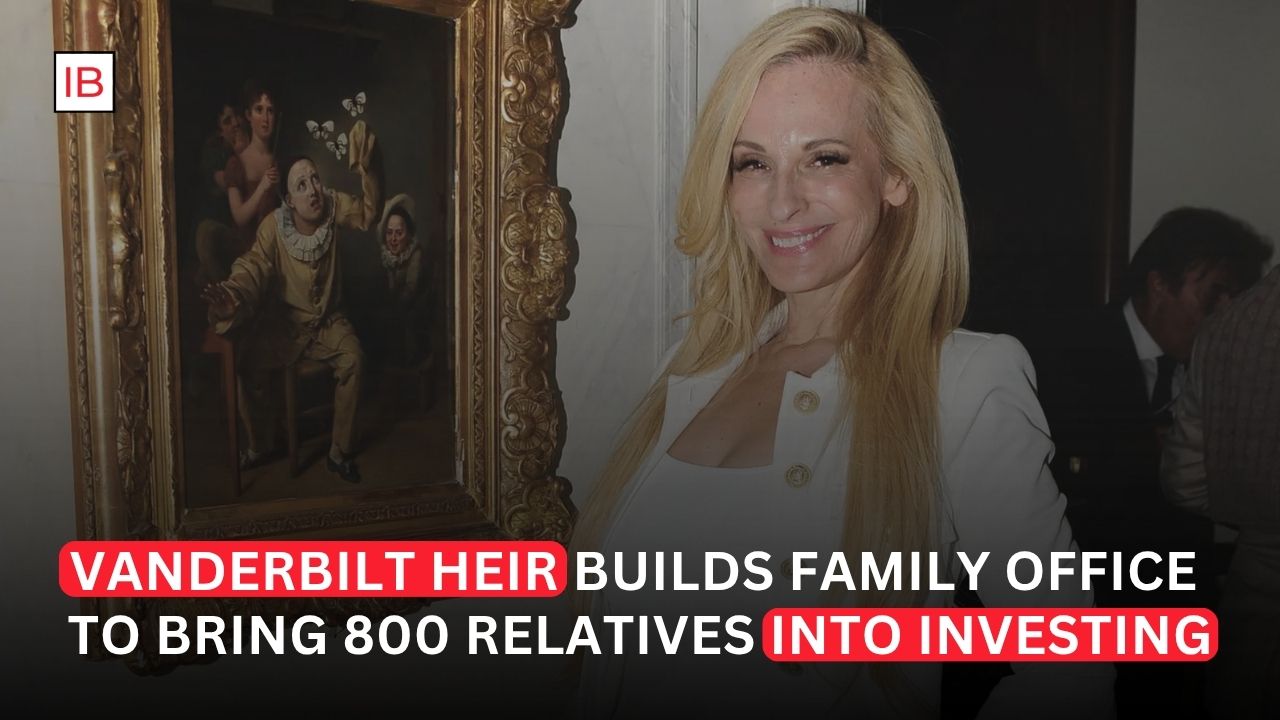
New Investment Firm Aims to Preserve and Expand a Historic Family Fortune
A descendant of the Vanderbilt family has launched a new family office designed to manage and grow wealth across generations, reviving an approach that stands in sharp contrast to the fate of much of the original Vanderbilt fortune.
The move highlights a broader trend among wealthy families: instead of treating inherited money simply as a pool of assets to be distributed among descendants, families are increasingly creating professional investment structures designed to preserve capital, diversify holdings and build wealth over decades.
The Vanderbilt name carries particular significance in this discussion. Cornelius “Commodore” Vanderbilt built one of the largest fortunes in 19th-century America through transportation and railroad businesses. Yet much of that fortune was eventually dispersed among generations of descendants.
The new family office therefore represents more than another investment vehicle. It reflects an attempt to avoid one of the most famous examples of wealth disappearing across generations.
Family Offices Are Designed for Long-Term Wealth
A family office is a private organization established to manage the financial affairs of a wealthy individual or family.
Depending on its size and structure, it can oversee investments, real estate, taxes, estate planning, philanthropy and succession planning.
The objective is not necessarily to maximize returns every year. Instead, family offices often focus on protecting purchasing power and compounding wealth over long periods.
For multigenerational families, that distinction can be important.
An investment strategy that works for one wealthy individual may not work when wealth eventually needs to support children, grandchildren and future generations.
The family office model provides a centralized structure for managing those challenges.
The Vanderbilt Story Provides a Powerful Lesson
The decision to establish a family office is particularly notable because of the Vanderbilt family’s history.
Cornelius Vanderbilt died in 1877 with a fortune estimated at more than $100 million, an extraordinary sum at the time. His son William Henry Vanderbilt inherited the majority of the estate and successfully expanded it during his lifetime.
But later generations experienced a very different financial trajectory.
The family became famous for spending enormous amounts on mansions, estates, yachts, parties and other displays of wealth. Over time, the original fortune was divided among an increasing number of descendants.
By the 20th century, the Vanderbilt name remained associated with extraordinary wealth and social status, but the family’s collective financial power had declined dramatically.
That history has become a classic example of the difficulty of preserving inherited wealth.
Wealth Can Disappear Even When Returns Are Available
The Vanderbilt experience illustrates an important principle of generational wealth.
A large fortune does not automatically remain large.
If assets are divided among many heirs, withdrawals are too high, investment returns are weak or family members fail to coordinate their financial decisions, wealth can decline surprisingly quickly.
Modern wealth-management professionals therefore focus heavily on governance.
Families may establish investment committees, formal distribution policies and long-term asset-allocation strategies. They can also separate personal spending from the capital intended to remain invested.
The objective is to ensure that future generations inherit not just money, but a structure capable of managing it.
Family Offices Are Becoming More Sophisticated
Today’s family offices increasingly resemble professional investment firms.
They can employ portfolio managers, analysts, tax specialists and lawyers while also working with external asset managers.
The largest family offices may invest across public equities, private equity, venture capital, real estate, infrastructure, hedge funds and private credit.
This diversification can reduce dependence on a single asset class.
A family whose fortune is concentrated in one business, property portfolio or industry can face enormous risks if economic conditions change. A professionally managed family office can instead allocate capital across multiple sectors and geographies.
That makes the structure particularly useful for preserving wealth over several generations.
The Goal Is More Than Wealth Preservation
While protecting existing capital is a major objective, modern family offices are increasingly focused on growing wealth as well.
This means investing in opportunities that can generate returns beyond traditional public markets.
Private equity, venture capital, technology investments and real assets can all provide opportunities for long-term capital appreciation.
The strategy involves balancing higher-return opportunities with assets designed to provide stability and liquidity.
A diversified portfolio can therefore allow a family to take calculated risks without placing its entire fortune in a single investment.
A Different Approach to Inheritance
The creation of a family office also reflects changing attitudes toward inheritance.
For some wealthy families, simply dividing an estate equally among heirs is no longer considered sufficient.
Instead, families may want to create systems that allow assets to remain invested while descendants receive controlled distributions.
This approach can help prevent the rapid fragmentation of wealth.
It can also encourage younger generations to become involved in investment decisions and understand how the family’s capital is managed.
The objective is to turn inheritance into a long-term financial institution rather than a one-time transfer of money.
Other Vanderbilt Descendants Offer a Different Model
The Vanderbilt family itself provides examples of both successful and unsuccessful approaches to preserving wealth.
The Biltmore Estate, for example, remains connected to descendants of George Washington Vanderbilt through the Cecil family. The property has been transformed from a private residence into a diversified business involving tourism, hospitality, agriculture and wine.
Another branch of the family established a family office decades ago.
William A.M. Burden & Co. was created to manage the wealth of one Vanderbilt-descended branch and reportedly helped preserve and grow the family’s assets across multiple generations. The office used a combination of outside money managers, real estate and business investments to maintain the family’s capital.
That history provides an important example of why professional wealth management can matter.
The Family Office Industry Is Growing
The Vanderbilt-related venture also arrives as family offices become increasingly important in global finance.
Wealthy families are establishing dedicated investment organizations because they want greater control over their portfolios and the ability to pursue strategies that may not fit conventional wealth-management products.
Family offices can also provide greater privacy and flexibility.
Instead of managing investments through a traditional bank relationship alone, families can build teams specifically around their own objectives.
For families with substantial assets, the potential benefits can outweigh the costs of maintaining a dedicated organization.
Generational Wealth Requires Governance
Investment performance is only one part of preserving a fortune.
Family governance can be equally important.
As wealth moves from one generation to another, disagreements can emerge over spending, investment strategy and control of family businesses.
A family office can provide a framework for making those decisions.
It can establish rules for how investments are selected, how much money can be distributed and how future generations participate in financial management.
This becomes increasingly important as the number of heirs grows.
Without a coordinated structure, even a very large fortune can become fragmented.
The Vanderbilt Name Adds Symbolic Weight
The new family office carries particular symbolic importance because the Vanderbilt fortune has long been used as an example of the risks associated with inherited wealth.
The family’s decline is often summarized through the idea that wealth can disappear within a few generations.
Modern research on family wealth supports the broader point that preserving fortunes across generations is difficult, although the popular claim that most fortunes automatically disappear after three generations is more complicated than the slogan suggests.
Successful families often rely on disciplined investment, careful succession planning and structures that prevent excessive fragmentation.
The new venture therefore represents a conscious attempt to approach inheritance differently.
Building Wealth Instead of Simply Spending It
The emphasis on “building” generational wealth is also significant.
A family office can encourage descendants to think about the family’s capital as productive capital rather than simply money available for consumption.
That can mean investing in companies, financing new businesses, purchasing real assets or supporting ventures that could create value over decades.
The strategy is similar to how the original Vanderbilt fortune was created.
Cornelius Vanderbilt did not inherit the fortune that made his family famous. He built it through business and investment.
A modern family office seeking to expand the family’s wealth is, in some ways, attempting to recreate that entrepreneurial mindset while starting from an already substantial capital base.
Technology and Private Markets Create New Opportunities
Today’s wealthy families also have access to investment opportunities that were not available to previous generations.
Artificial intelligence, digital infrastructure, private credit, renewable energy and biotechnology are creating new areas for long-term investment.
Family offices can invest directly in some of these areas or participate through specialist funds.
Their long investment horizons can make them particularly suited to assets that may require years before producing significant returns.
This could allow a new generation of Vanderbilt wealth to participate in emerging industries while maintaining exposure to more traditional assets.
Risks Still Remain
Creating a family office does not guarantee that wealth will survive.
Investment mistakes, excessive spending, poor governance and disagreements between family members can still damage a fortune.
There are also significant operating costs.
A sophisticated family office may require investment professionals, lawyers, accountants, administrators and technology systems.
For that reason, the structure generally makes the most sense for families with enough assets to justify the expense.
The challenge is finding the right balance between professional management and family involvement.
Looking Ahead
The launch of a family office by a Vanderbilt heir highlights a fascinating shift in the management of inherited wealth.
The Vanderbilt family name was once synonymous with one of America’s greatest fortunes, but much of the original wealth was eventually dispersed across generations. The family’s history has since become a powerful lesson in the difficulty of preserving capital over the long term.
A dedicated family office offers one possible solution.
By centralizing investment management, diversifying assets, establishing governance structures and focusing on long-term compounding, wealthy families can attempt to prevent their fortunes from becoming fragmented or consumed by successive generations.
The broader family-office industry is increasingly built around this philosophy.
The goal is no longer simply to preserve what one generation inherited. It is to create a financial structure capable of protecting, investing and expanding wealth for generations to come.
For a Vanderbilt heir, that mission carries an especially meaningful historical connection.
The family that once built one of America’s greatest fortunes became famous for losing much of it. A new generation now appears determined to learn from that history.
If successful, the new family office could demonstrate that generational wealth does not have to disappear with time. With disciplined investment, professional management and careful succession planning, inherited capital can potentially become the foundation for a new and more durable family fortune.