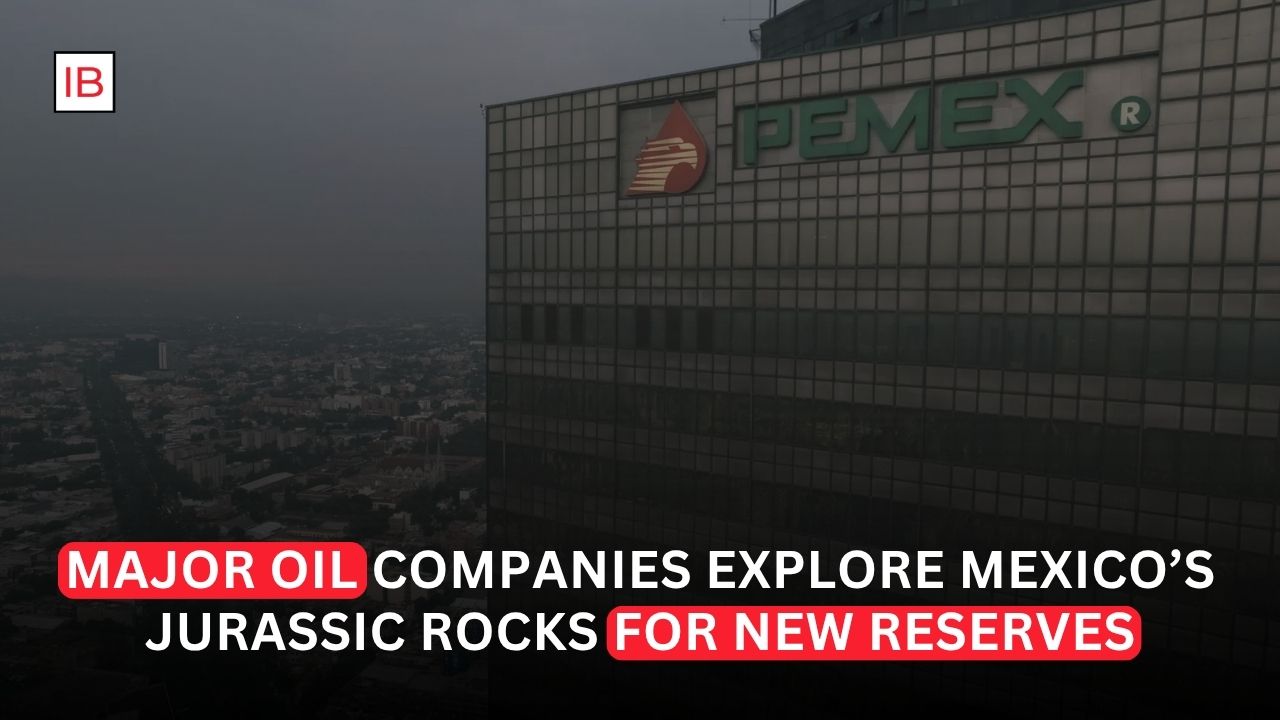
Global Energy Companies Return to Mexico’s Deepwater Potential
Some of the world’s largest oil companies are turning their attention toward an older and potentially lucrative geological target beneath Mexico’s waters, betting that Jurassic-age rocks could contain significant quantities of oil and gas.
The renewed interest comes as energy companies search for new reserves in a world where many of the easiest conventional discoveries have already been developed. Mexico’s portion of the Gulf of Mexico remains particularly attractive because of its extensive offshore geology, existing petroleum infrastructure and history of major discoveries.
The Jurassic formations have become an increasingly important exploration target as advances in seismic imaging and drilling technology allow companies to investigate geological structures that were previously considered too difficult or expensive to develop.
Mexico’s government has also been seeking ways to increase investment and revive exploration, while state oil company Pemex has begun working with international partners on deeper-water opportunities.
Jurassic Rocks Could Hold Significant Resources
The Jurassic period ended roughly 145 million years ago, but the rocks formed during that era remain important to the modern petroleum industry.
In Mexico, several oil and gas plays contain Jurassic-age formations. Government project data identifies Jurassic Kimmeridgian formations among areas containing potentially valuable hydrocarbons, including light and superlight oil.
The geological importance of these formations comes from the combination of source rocks, reservoirs and structural traps created during the development of the Gulf of Mexico.
The basin itself began forming during the breakup of the supercontinent Pangea, with continental rifting continuing into the Jurassic period. Geological research indicates that this process created complex structures across the Gulf that later became important petroleum systems.
That ancient geological history is now attracting modern exploration companies.
Mexico Still Has Large Undiscovered Potential
Mexico remains one of the world’s significant petroleum provinces, despite years of declining production from some of its most mature fields.
A US Geological Survey assessment estimated that Mexico, Belize and Guatemala contain a mean of 14.6 billion barrels of undiscovered, technically recoverable conventional oil resources, along with 83.7 trillion cubic feet of natural gas.
Not all of those resources are located offshore Mexico, and estimates do not guarantee commercially viable discoveries.
Nevertheless, the numbers help explain why international oil companies continue to study the country’s geology.
The potential is particularly interesting in deeper and less-developed areas where earlier exploration campaigns did not have access to today’s technology.
Deepwater Exploration Is Becoming More Attractive
Mexico’s offshore industry has historically focused heavily on mature fields and shallower waters.
But technological advances have made deeper offshore development increasingly feasible.
One of the clearest examples is Trion, Mexico’s first ultradeepwater oil development. Operated by Woodside Energy in partnership with Pemex, the project sits in water deeper than 2,500 meters and is expected to begin production in 2028. It has an estimated lifetime investment of about $10.4 billion and is expected to reach approximately 100,000 barrels of oil per day at peak production.
Trion demonstrates that Mexico can support technically complicated offshore projects.
Its development could also provide valuable experience and infrastructure for future exploration in nearby areas.
Pemex Is Looking for International Expertise
Mexico’s state-owned oil company Pemex has historically dominated the country’s petroleum industry.
However, developing deepwater resources requires enormous technical and financial capabilities.
That has encouraged Pemex to cooperate with international companies.
In June, Pemex and Brazil’s Petrobras signed an agreement covering potential exploration projects in the Gulf of Mexico. The partnership includes cooperation in deepwater exploration, production and technical expertise.
By working with companies that have extensive deepwater experience, Pemex can reduce some of the technical uncertainty associated with exploring challenging geological formations.
The strategy also allows Mexico to retain a central role for its national oil company while bringing outside expertise into projects that could require billions of dollars in investment.
Private Companies Are Expanding Their Mexican Positions
International oil companies are not the only investors becoming more interested in Mexican offshore resources.
Independent producers are also expanding their positions.
Talos Energy recently agreed to acquire a 50% working interest in Repsol-operated Block 29 offshore Mexico. The block contains the Polok and Chinwol discoveries and is estimated to hold more than 200 million barrels of oil equivalent in gross recoverable resources, with additional exploration potential.
The agreement demonstrates that companies continue to see Mexico’s offshore basins as attractive even before major projects reach final investment decisions.
Talos has also agreed to acquire deepwater assets from Shell, further expanding its Gulf of Mexico portfolio. The transaction includes proved reserves of approximately 23 million barrels of oil equivalent and additional probable reserves.
These moves indicate that interest in the region extends well beyond a single geological target.
The Search Is About More Than Jurassic Rocks
Although Jurassic formations are attracting attention, Mexico’s offshore potential is spread across several geological periods.
The country’s southeastern offshore basins contain Cretaceous, Jurassic and younger formations, while other areas include Miocene and Paleogene targets.
Government data for one shallow-water project involving the Ichalkil and Pokoch fields identifies both Cretaceous and Jurassic formations as important parts of the petroleum system. The project covers approximately 58 square kilometers and contains oil and gas resources.
The variety of geological targets gives exploration companies multiple opportunities.
If one formation disappoints, companies may be able to investigate other layers or structures using the same seismic data and offshore infrastructure.
Better Technology Is Changing Exploration
Modern exploration depends heavily on seismic imaging.
Three-dimensional seismic surveys allow geologists to create increasingly detailed pictures of underground formations. Companies can use these images to identify possible reservoirs, faults and traps before committing to expensive drilling campaigns.
This is particularly important for Jurassic targets because they can be located at considerable depths and beneath complicated geological structures.
Older exploration programs often lacked the computing power and imaging technology available today.
New seismic processing techniques can therefore transform previously marginal prospects into targets worth drilling.
The technology does not eliminate exploration risk, but it can improve the probability of identifying commercially attractive structures.
Offshore Exploration Comes With Huge Costs
The potential rewards are significant, but deepwater exploration remains one of the most expensive activities in the energy industry.
Companies must spend heavily on seismic surveys, drilling rigs, subsea equipment, pipelines and production facilities.
A single unsuccessful exploration well can cost hundreds of millions of dollars.
That means companies increasingly focus on areas where they can combine geological potential with existing infrastructure.
Infrastructure can reduce development costs because new discoveries may be connected to existing production systems instead of requiring entirely new facilities.
This strategy has become particularly important across the wider Gulf of Mexico.
The Gulf Has a Long History of Big Discoveries
The Gulf of Mexico is already one of the world’s most successful offshore petroleum provinces.
Its extensive oil and gas resources have supported decades of exploration and production. The basin contains numerous geological systems capable of generating and trapping hydrocarbons.
The region has also demonstrated that complex deepwater projects can become commercially successful.
In the US portion of the Gulf, companies have continued to discover oil in deepwater reservoirs. Recent drilling by Occidental, for example, encountered high-quality oil-bearing Miocene sands in an ultra-deepwater prospect with Chevron and Woodside as partners.
That success reinforces the broader argument that the Gulf still has substantial exploration potential.
Mexico Wants More Investment in Oil
For Mexico, successful offshore exploration could have major economic consequences.
Oil remains an important source of government revenue and foreign-exchange earnings, while Pemex continues to face pressure to stabilize production and improve its financial position.
New discoveries could help slow production declines and provide additional resources for future development.
The government has also been pursuing partnerships and investment structures that allow private companies to participate while maintaining state involvement.
The challenge will be creating terms attractive enough to bring in capital while ensuring that Mexico receives a meaningful share of the economic benefits.
Environmental and Financial Risks Remain
The renewed push into offshore oil also faces significant criticism and risks.
Deepwater drilling carries environmental risks, particularly because accidents can be difficult to contain in remote offshore locations.
There is also the long-term uncertainty surrounding global oil demand.
Companies investing billions of dollars in projects that may take years to develop must estimate what oil prices and demand will look like when production begins.
If the global energy transition reduces oil consumption faster than expected, some expensive offshore projects could struggle to generate acceptable returns.
That makes exploration economics just as important as geological potential.
Competition for Mexico’s Best Prospects Could Increase
If early exploration results confirm the potential of Jurassic formations, competition for Mexican offshore acreage could intensify.
Major companies with deepwater expertise and large capital budgets could seek partnerships with Pemex or acquire interests in existing projects.
Smaller independent producers could also attempt to enter through farm-ins and joint ventures.
This would give Mexico more access to technical expertise and investment capital while spreading exploration risks among multiple participants.
The country’s offshore sector could consequently become more competitive as companies attempt to secure positions before the most attractive opportunities are taken.
Looking Ahead
The renewed interest in Jurassic rocks beneath Mexico’s waters reflects a larger transformation in the country’s offshore oil industry.
Mexico still possesses substantial undiscovered petroleum potential, and geological assessments indicate that the country’s basins contain billions of barrels of technically recoverable conventional resources.
The combination of improved seismic technology, deepwater drilling expertise and international partnerships is allowing companies to investigate geological targets that were once considered too difficult or expensive.
Pemex’s cooperation with Petrobras, Woodside’s development of Trion and the expansion of companies such as Talos show that Mexico is becoming an increasingly active arena for offshore exploration.
The Jurassic formations could ultimately become an important source of new discoveries, but there is no guarantee of a major bonanza. Exploration wells can fail, development costs can rise and global oil markets can change dramatically.
Still, the potential rewards are large enough to attract some of the industry’s biggest players.
For Mexico, the opportunity is equally significant. Major discoveries could help replenish declining production, strengthen energy revenues and attract billions of dollars in investment.
The next phase of the country’s oil story may therefore depend on what companies find hidden beneath its waters.
After decades of production from older fields, the industry is looking deeper — and increasingly looking back in geological time — for Mexico’s next major oil opportunity.