The Collapse of Tricolor Creates New Demand for Asset Verification
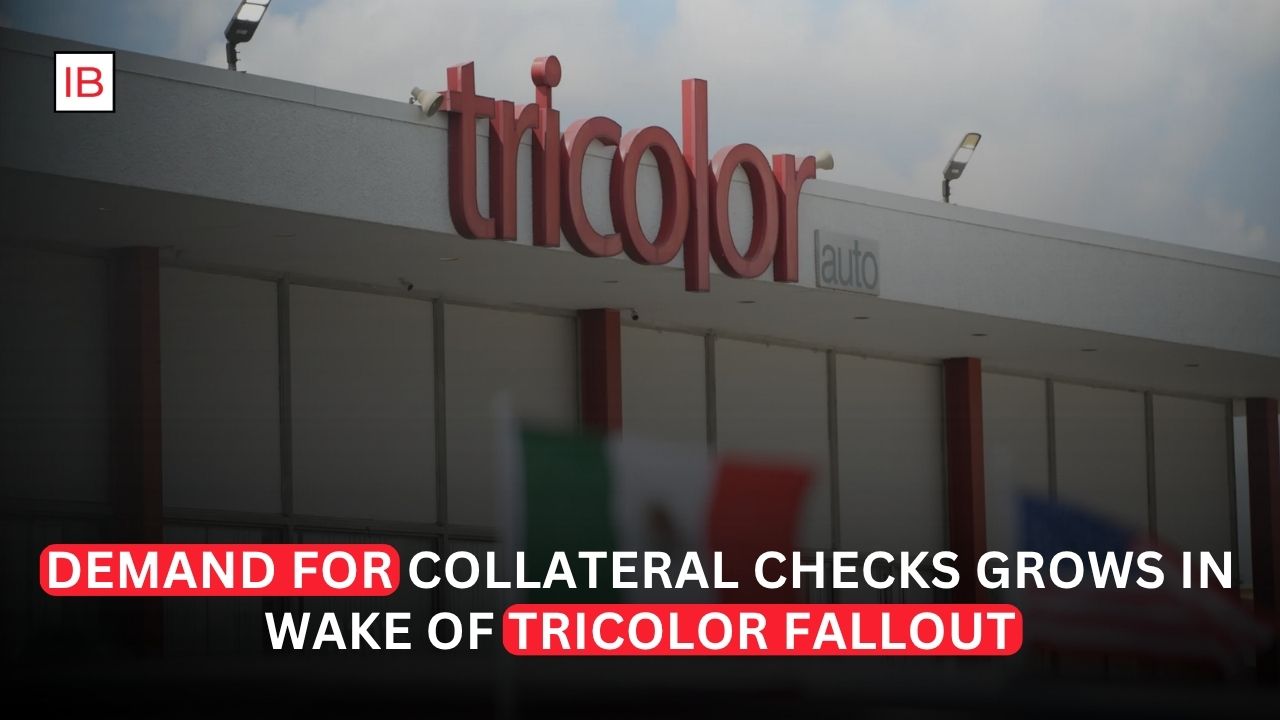
The fallout from the collapse of US auto lender Tricolor Holdings has created a surge in demand for companies that specialize in checking whether collateral backing loans actually exists and is properly accounted for.
The case has drawn attention across the financial industry because lenders and investors often rely on vehicles, equipment, property or other assets as security for loans. When questions emerge about the quality, location or ownership of that collateral, independent verification companies can become essential.
SEC Allegations Put Collateral Verification Under the Spotlight
The renewed attention follows serious allegations surrounding Tricolor, a Texas-based used-car seller and subprime auto lender that filed for Chapter 7 bankruptcy in September 2025.
The US Securities and Exchange Commission sued former executives of the company on August 18, alleging that they carried out a multiyear scheme involving the double pledging of hundreds of millions of dollars in subprime auto loans. According to the SEC, Tricolor raised more than $1.9 billion through asset-backed securities while allegedly misleading investors about the status and quality of the loans used as collateral.
The allegations have turned what might normally be a back-office function into a major concern for lenders, private-credit firms and investors.
What Is Collateral Checking?
Collateral is an asset pledged by a borrower to secure a loan.
In Tricolor’s case, the underlying assets were auto loans connected to specific vehicles. Those loans could then be packaged into securities and sold to institutional investors.
The system depends on a basic assumption: the same asset or loan should not be pledged multiple times without lenders knowing about it.
Collateral verification firms help test that assumption.
Their work can involve checking:
- Whether an asset actually exists
- Whether the borrower owns the asset
- Whether another lender already has a claim on it
- Whether loan records match underlying collateral
- Whether assets have been duplicated across financing arrangements
- Whether reported values are realistic
- Whether documentation contains inconsistencies
The more complex the financing structure, the more difficult these checks can become.
Double Pledging Creates Major Risks for Investors
The Tricolor case has highlighted the dangers of double pledging.
According to the SEC, Tricolor executives allegedly pledged some of the same subprime auto loans to multiple lenders or asset-backed securities transactions. The regulator also alleged that loan-performance information was manipulated to make nonperforming or defaulted loans appear healthier.
If multiple lenders believe they have rights to the same collateral, serious problems can emerge when a borrower defaults.
The total amount of financing may appear to be backed by a much larger pool of assets than actually exists.
When the company collapses, lenders may discover that the collateral they believed protected their investments has already been claimed by someone else.
That can turn a supposedly secured loan into a far riskier investment.
The Collapse Exposes Gaps in Traditional Due Diligence
The allegations surrounding Tricolor suggest that conventional checks may not always be sufficient when companies use complicated financing structures.
Investors often depend on information supplied by borrowers, auditors, trustees, underwriters and other intermediaries.
But information can move through several layers before reaching the final investor.
This creates opportunities for discrepancies to remain undetected.
Earlier industry analysis of the Tricolor collapse indicated that gaps in data verification may have contributed to the failure to identify possible double pledging of assets, prompting changes in how parts of the auto-finance industry assess collateral.
The result is growing interest in independent firms that can physically or digitally verify assets rather than simply relying on borrower-provided records.
Collateral Checkers Could See a Surge in Demand
The fallout is creating an opportunity for companies that specialize in asset verification.
These businesses may conduct physical inspections, reconcile databases, review loan files and compare collateral records across different financing arrangements.
In industries involving physical assets, inspectors may visit warehouses, dealerships, factories or other locations to confirm that pledged inventory actually exists.
In financial assets such as auto loans, the process can involve detailed data matching.
A verification firm might compare vehicle identification numbers, loan contracts, payment histories and lien records to identify possible duplication or inconsistencies.
The growing complexity of private credit makes this work increasingly valuable.
As lenders compete to deploy capital quickly, the pressure to complete deals efficiently can sometimes create weaknesses in due diligence.
Independent verification can act as an additional layer of protection.
Private Credit Faces a Growing Trust Problem
The Tricolor collapse has also increased concerns about the rapidly expanding private-credit market.
Private credit allows companies to obtain financing directly from investment funds and other nonbank lenders rather than relying exclusively on traditional banks or public bond markets.
The sector has grown rapidly because borrowers often value flexible financing, while investors seek higher returns.
However, complex private-credit structures can create transparency challenges.
Investors may have less publicly available information than they would when buying securities issued by large public companies.
That makes accurate collateral information especially important.
The SEC said the alleged Tricolor scheme violated the integrity of private credit markets and resulted in hundreds of millions of dollars in investor losses. At the time of the bankruptcy, more than $945 million in principal associated with Tricolor’s asset-backed securities remained outstanding, according to the regulator’s complaint.
Banks and Investors Are Reassessing Their Controls
The consequences of the collapse have spread beyond Tricolor itself.
Financial institutions connected to the company have faced potential losses, litigation and questions about whether warning signs were missed.
A lawsuit involving investors who accused major banks of overlooking red flags at Tricolor was dismissed in June, although the case highlighted the wider debate over the responsibilities of lenders, underwriters and other financial intermediaries.
Meanwhile, banks with claims against Tricolor continue to assess the status of collateral.
Regulatory filings have acknowledged uncertainty over competing interests in certain assets, demonstrating how difficult it can become to establish ownership rights after a company’s collapse.
These developments could encourage lenders to conduct more frequent checks throughout the life of a loan rather than relying only on verification at the beginning of a financing relationship.
Technology Is Changing the Verification Business
Technology could play an increasingly important role in collateral checking.
Large portfolios can contain thousands or even millions of individual assets, making manual verification slow and expensive.
Companies are therefore using automated systems to identify duplicate records, unusual transactions and inconsistencies across databases.
Artificial intelligence could also help analyze large volumes of loan and collateral data.
For example, an automated system could identify when the same vehicle identification number appears in multiple financing pools or when reported payment activity does not match other available records.
However, technology is not a complete solution.
If inaccurate information enters multiple systems, automated analysis may simply process the same false data faster.
Independent verification remains important because it can test whether the underlying information corresponds to a real asset.
The Cost of Verification May Be Easier to Justify
Collateral checks can add time and expense to a transaction.
In competitive lending markets, some firms may view extensive verification as an unnecessary burden.
But the financial consequences of a major fraud can be far greater.
Tricolor’s alleged scheme involved financing worth more than $1.9 billion, demonstrating the potential scale of losses when investors cannot accurately determine what is backing their investments.
The collapse could therefore change the calculation for lenders.
Spending more money on inspections, data reconciliation and independent verification may increasingly be viewed as a necessary cost of doing business.
Asset-Backed Finance May Become More Transparent
The Tricolor case could accelerate changes across asset-backed finance.
Investors may demand more frequent reporting and greater access to underlying loan-level data.
Lenders may also require borrowers to use independent collateral monitors, particularly in industries where assets can easily be moved, sold or pledged multiple times.
Other potential changes could include:
- More frequent collateral audits
- Independent third-party verification
- Real-time monitoring of pledged assets
- Improved lien and ownership databases
- Automated duplicate detection
- Greater data sharing between lenders
- Stronger reporting requirements
These measures could make financing more expensive.
However, they could also reduce the possibility that the same collateral is quietly used to support multiple loans.
The Human Element Still Matters
Despite advances in data analytics, the Tricolor collapse demonstrates that fraud prevention is not purely a technological problem.
Financial institutions must also question assumptions and investigate unusual patterns.
If a company’s growth, liquidity or collateral data appears inconsistent, lenders may need to conduct deeper investigations rather than relying exclusively on contractual assurances.
This can require a combination of technology, financial expertise and traditional investigative work.
The growing business for collateral checkers reflects this reality.
As financing becomes more complex, the value of simply confirming that an asset exists — and determining exactly who has a legal claim to it — is becoming increasingly important.
Regulators Are Increasing Their Scrutiny
The SEC’s lawsuit against Tricolor’s former executives has added new urgency to the debate.
The regulator alleges that former CEO Daniel Chu, former CFO Jerome Kollar and former senior finance director Ameryn Seibold participated in a scheme involving false and misleading statements about the company’s financial health and collateral.
Chu also faces criminal charges related to the collapse and has pleaded not guilty. A federal judge recently ruled that he must face the most serious charge in the indictment, with his trial scheduled for January 2027.
The legal proceedings could reveal more details about how the alleged scheme operated and whether existing oversight systems failed to detect problems early enough.
For the broader financial industry, the outcome could influence how lenders structure future asset-backed transactions.
A New Business Opportunity Emerges From Financial Fallout
Financial crises often create demand for new forms of risk management.
After major accounting scandals, companies invested more heavily in auditing and compliance. After the global financial crisis, banks faced stricter capital and risk-management requirements.
The Tricolor collapse could produce a similar shift in collateral monitoring.
Businesses that once considered asset verification a routine administrative service may now see it as an essential part of credit risk management.
That could create a boom for firms capable of conducting detailed inspections and identifying discrepancies before they become billion-dollar problems.
Looking Ahead
The fallout from Tricolor has exposed a weakness at the heart of asset-backed lending: investors can only rely on collateral if they know the collateral is real, properly valued and not already promised to someone else.
The SEC alleges that Tricolor executives exploited failures in that system by double pledging hundreds of millions of dollars in auto loans while raising more than $1.9 billion from investors.
Those allegations have placed collateral verification at the center of a wider discussion about risk in private credit and asset-backed finance.
As banks, investment funds and institutional investors reassess their exposure, demand for independent collateral checks could continue to grow.
The biggest change may be in how lenders think about verification.
Instead of treating it as a one-time procedure completed before money changes hands, collateral monitoring could become a continuous process throughout the life of a loan.
For companies operating in the verification business, that shift represents a significant opportunity.
For investors, it may become a necessary safeguard.
The Tricolor collapse has shown that sophisticated financial structures are only as reliable as the assets supporting them. As the private-credit market continues to expand, the ability to answer one basic question may become more valuable than ever: Does the collateral really exist, and does someone else already own a claim to it?