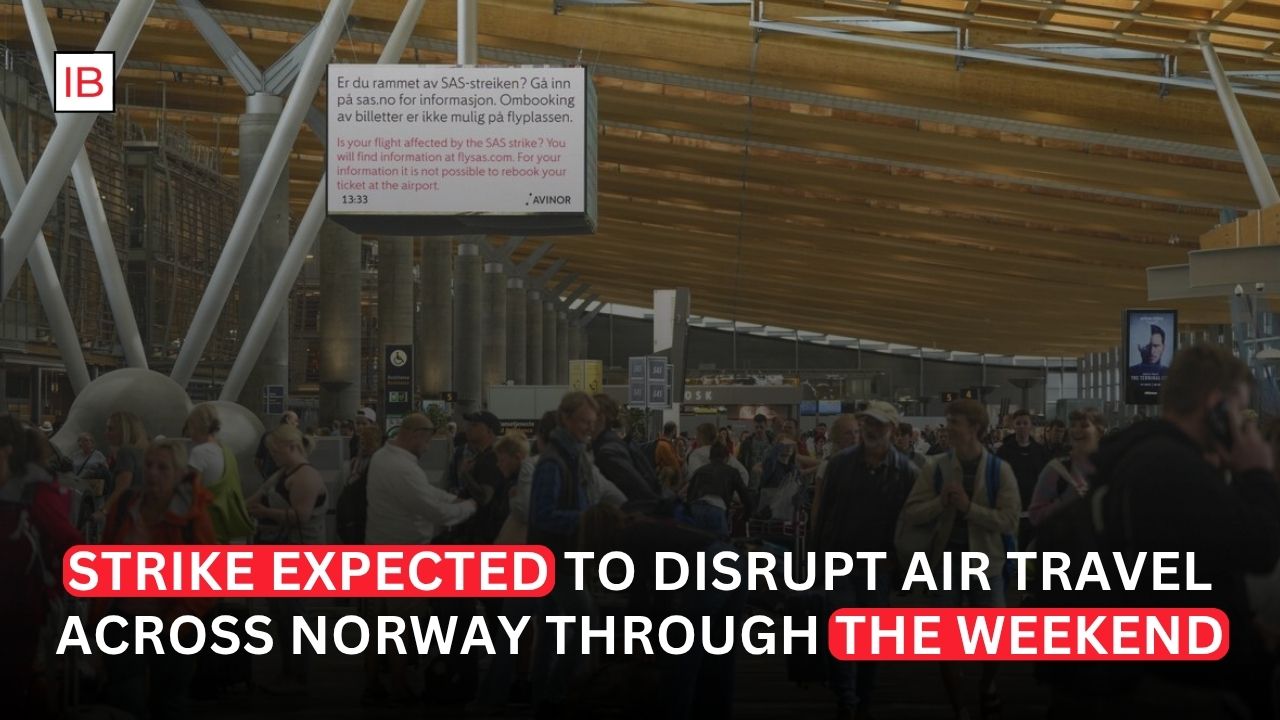
Industrial Action Threatens Widespread Flight Disruptions
Air travel in Norway is facing potential disruption through the weekend as a strike involving aviation workers threatens to affect flights and airport operations. The dispute adds pressure to travelers and airlines during a period when labor shortages and wage disagreements continue to affect parts of the European aviation industry.
The scale of the disruption will depend on how long the strike continues and whether the parties involved can reach an agreement.
Air Traffic Controllers Begin Strike After Talks Fail
The disruption stems from a labor dispute between the Norwegian Air Traffic Controllers’ Association and the employers’ side. Mediation failed to produce an agreement, leading to a strike that began on Friday, August 21.
The initial action involves 12 air traffic controllers working at key locations, including:
- Oslo Airport Gardermoen
- Bergen Airport Flesland
- Stavanger Airport Sola
- The air traffic control center at Røyken
Although the number of workers involved is relatively small, their positions are critical to managing Norwegian airspace. Even a limited reduction in air traffic control capacity can create delays and cancellations that spread across the country’s aviation network.
Norway’s Largest Airports Face the Greatest Risk
Oslo Airport is particularly important because it is Norway’s largest aviation hub and handles a significant share of domestic and international traffic.
Bergen and Stavanger are also major airports serving business travelers, tourists and Norway’s offshore energy industry.
The involvement of the Røyken control center could extend the impact beyond individual airports because air traffic control centers manage aircraft moving through wider sections of Norwegian airspace.
Avinor, Norway’s airport operator, has confirmed that the ongoing strike is reducing capacity and causing delays and cancellations across multiple arrivals and departures. The scale of disruption may vary depending on operational conditions and the duration of the strike.
Why Air Traffic Controller Strikes Have a Major Impact
Air traffic controllers perform a critical role in ensuring that aircraft can safely take off, land and travel through controlled airspace.
Airlines cannot simply continue operating normally if there are not enough controllers available.
When capacity is reduced, aviation authorities may need to limit the number of aircraft that can:
- Take off
- Land
- Enter controlled airspace
- Pass through affected regions
- Operate during specific time periods
This can create a chain reaction.
A delayed flight in Oslo, for example, may later affect aircraft schedules in Bergen, Trondheim or other destinations. Aircraft and flight crews may also be out of position for later services.
As a result, the consequences can extend far beyond the airports directly affected by the strike.
Travelers Could Face Delays Throughout the Weekend
The timing of the strike increases the risk of disruption because weekend travel can involve high passenger volumes.
Travelers may experience:
- Flight delays
- Flight cancellations
- Schedule changes
- Missed connections
- Longer waiting times
- Aircraft and crew scheduling disruptions
Norwegian airline Norwegian has advised passengers that it is monitoring the situation and will contact travelers if their flights are affected.
Avinor has also urged passengers to follow updates from their airlines because the impact can differ from one flight to another.
The Strike Could Expand if No Agreement Is Reached
The initial strike action involves only a small group of controllers, but the dispute could become more serious if the conflict continues.
Earlier reports indicated that the air traffic controllers’ union has more than 500 members, meaning the first walkout could potentially be followed by additional industrial action if negotiations remain unsuccessful.
A wider strike could place significantly greater pressure on Norway’s aviation system.
The first stage has already affected some of the country’s most strategically important aviation locations. Any expansion could increase the number of delayed or canceled flights and create longer-lasting disruption for airlines and passengers.
Emergency and Essential Flights Receive Priority
Not all air traffic is treated equally during industrial action.
According to preparations outlined before the strike, capacity is expected to prioritize essential operations, including:
- Search and rescue flights
- Air ambulance services
- Police aviation
- Norwegian Armed Forces operations
Regular scheduled airline traffic and offshore helicopter operations are prioritized after essential emergency and government services, while other aviation activity may be restricted when necessary to maintain safe operations.
This means commercial passengers could face the greatest disruption if air traffic control capacity remains constrained.
Airlines May Face Significant Operational Costs
The strike is not only a problem for travelers.
Airlines could face additional costs from cancellations, schedule changes and the need to reposition aircraft and crews.
A single canceled flight can create further complications because airlines operate interconnected networks.
For example, an aircraft scheduled to fly from Oslo to Bergen may later be assigned to another domestic or international route. If the first flight is delayed or canceled, the disruption can continue throughout the day.
Airlines may also need to arrange:
- Alternative flights
- Passenger rebooking
- Hotel accommodation in some cases
- Food and assistance
- Changes to crew schedules
- Aircraft repositioning
The longer the strike continues, the more expensive these disruptions could become.
Norway’s Aviation Industry Faces Another Labor Challenge
The air traffic controller dispute comes after other labor tensions in Norway’s aviation sector.
Recent negotiations involving cabin crew and airport employees created concerns about possible disruptions, although some earlier disputes were resolved before causing major nationwide problems.
The latest strike shows that labor relations remain an important risk for Norway’s aviation industry.
Airports and airlines depend on thousands of workers performing specialized roles, from air traffic control and ground handling to baggage operations and cabin services.
A strike involving even a relatively small number of workers can therefore have an outsized effect when those employees occupy critical positions.
What Passengers Should Do
Passengers traveling to, from or within Norway during the strike period should monitor their flights closely.
Useful steps include:
- Check your flight status before leaving for the airport.
- Monitor messages from your airline.
- Allow extra time for possible schedule changes.
- Avoid assuming that your flight will operate exactly as scheduled.
- Keep booking and contact information updated with your airline.
Avinor notes that passengers affected by strikes or other operational disruptions may have rights to assistance or compensation depending on the circumstances and who is responsible for the disruption. Passengers traveling on a single booking may also normally be entitled to help continuing their journey if a cancellation or major disruption occurs.
The Wider Impact on Norway’s Economy
A prolonged disruption could affect more than holiday and business travelers.
Norway depends heavily on domestic aviation because of its geography. Long distances, mountains and coastal communities make air travel an important part of the country’s transportation network.
Disruptions can therefore affect:
- Business travel
- Tourism
- Offshore energy operations
- Regional transportation
- International connections
- Cargo and logistics
Stavanger, in particular, is closely connected to Norway’s offshore oil and gas industry. Any significant reduction in aviation capacity could create additional challenges for workers and companies operating in the energy sector.
The country’s smaller airports could also experience indirect effects if aircraft and crews become delayed at larger hubs.
Looking Ahead
The air traffic controller strike has created immediate uncertainty for passengers traveling through Norway, with delays and cancellations already affecting operations at Avinor airports.
The initial walkout involves 12 controllers, but the impact is significant because the strike affects key aviation locations, including Oslo, Bergen, Stavanger and the Røyken air traffic control center.
The key question now is whether the labor dispute can be resolved before the disruption becomes more severe.
If negotiations resume and the parties reach an agreement, normal air traffic capacity could gradually return. However, if the strike continues or expands, Norway could face more widespread flight delays and cancellations through the weekend and beyond.
For passengers, the situation remains highly unpredictable.
The safest approach is to follow airline updates and check flight information regularly.
As the strike continues, the dispute demonstrates how a relatively small number of highly specialized workers can have a major impact on an entire transportation system. For Norway’s airlines and passengers, the coming days will depend heavily on whether air traffic controllers and employers can find a solution before the disruption spreads further.