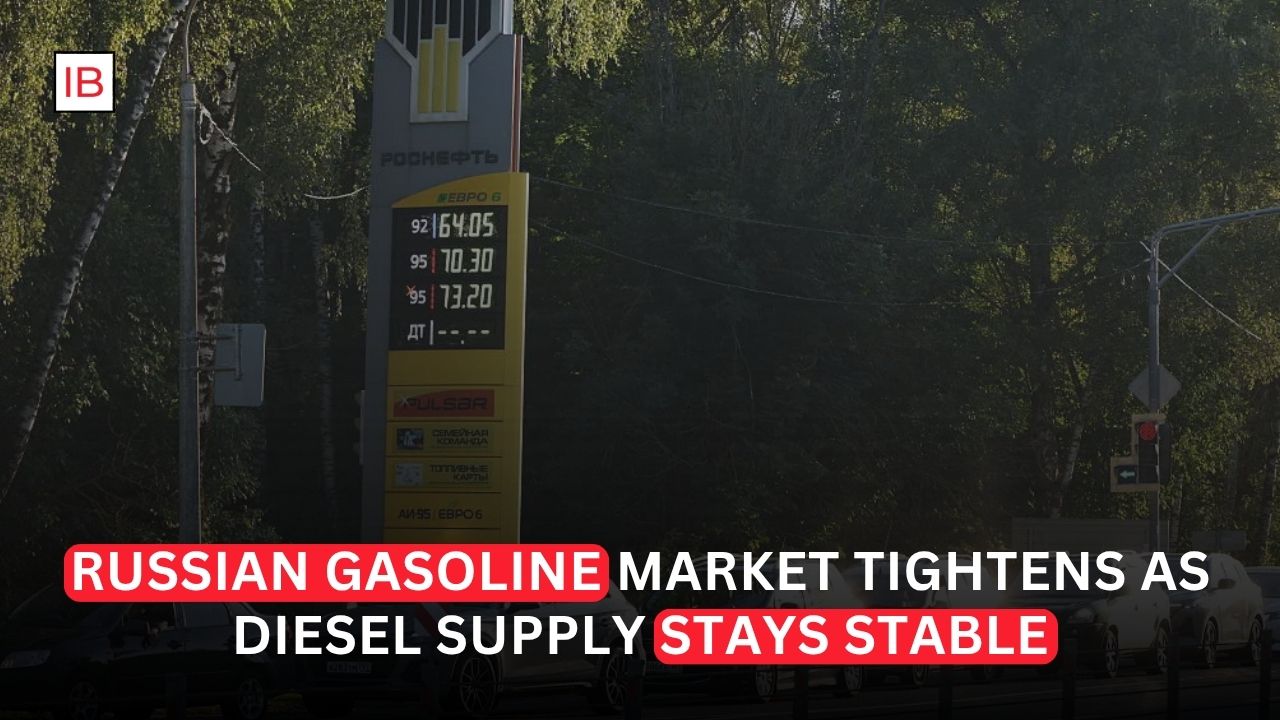
Russia Faces Fresh Fuel Pressure as Gasoline Shortages Return
Russia’s domestic fuel market is facing renewed pressure, with Deputy Prime Minister Alexander Novak acknowledging that gasoline supplies remain tight in several regions while the diesel market is relatively stable.
The comments come as Russia struggles with the combined effects of high seasonal demand, refinery disruptions and repeated Ukrainian drone attacks on energy infrastructure. Fuel shortages that appeared to ease earlier in the summer have returned in several parts of the country, forcing some filling stations to limit gasoline sales and leaving drivers facing long queues.
While gasoline availability has become a growing concern, Novak said the diesel market remains more balanced. The difference highlights the uneven impact of Russia’s refinery problems and the government’s efforts to prioritize domestic fuel supplies.
Gasoline Supply Remains a Major Challenge
Russia is one of the world’s largest oil producers and has historically been a major exporter of refined petroleum products.
However, the country has faced an unusual situation in 2026: shortages of gasoline inside its own domestic market.
The problem began earlier in the year and intensified during the summer. High seasonal demand placed additional pressure on supplies, while attacks on oil refineries reduced the country’s ability to produce and distribute enough fuel.
By August, shortages had spread to numerous regions.
Authorities and major fuel companies responded by introducing restrictions on gasoline purchases. In Moscow and surrounding areas, some stations limited the amount of fuel customers could buy, while others temporarily ran out of gasoline altogether.
The situation has become particularly significant because Moscow has traditionally had more reliable fuel supplies than many other parts of Russia.
Ukrainian Drone Attacks Have Hit Russian Refineries
One of the biggest factors behind the fuel shortages has been Ukraine’s continued campaign against Russian energy infrastructure.
Ukrainian drone attacks have targeted oil refineries and related facilities, disrupting Russia’s refining operations.
Reuters reported that the latest wave of shortages followed renewed attacks on refineries in late July and early August. Earlier government measures had helped ease the pressure temporarily, but the disruptions returned as refinery capacity was affected again.
The attacks demonstrate an important vulnerability in the energy sector.
Russia produces enormous quantities of crude oil, but crude alone does not solve a domestic fuel shortage. Gasoline and diesel must be processed, transported and distributed through an extensive refining and logistics network.
When refineries are damaged or taken offline, domestic consumers can experience shortages even when the country remains a major oil producer.
Diesel Supply Is More Stable
Despite the problems affecting gasoline, Novak said Russia’s diesel market remains stable.
This is an important distinction because diesel plays a critical role in Russia’s economy.
It is widely used in:
- Agriculture
- Freight transportation
- Construction
- Industrial operations
- Public transportation
- Military and logistics networks
A serious diesel shortage could therefore create much broader economic problems than a shortage of gasoline alone.
For now, the government appears to have been more successful in maintaining diesel availability.
Reuters reported that some Russian fuel stations experiencing gasoline shortages continued to offer diesel, while major restrictions were focused primarily on gasoline purchases.
However, Russia’s ability to keep the diesel market stable will depend heavily on refinery operations and the success of government efforts to protect domestic supplies.
Moscow Extends Export Restrictions
Russia has introduced several measures to prevent domestic shortages from becoming even more severe.
One of the most important steps has been restricting fuel exports.
The government extended its gasoline export ban until the end of January 2027 and also imposed restrictions on diesel exports to ensure more fuel remained available for the domestic market.
The policy represents a major shift for Russia.
Instead of focusing primarily on exporting refined products and generating additional revenue, the government is prioritizing domestic consumers.
The strategy is intended to increase supply at Russian filling stations and reduce pressure on prices.
However, export restrictions can also affect international fuel markets.
Russia has traditionally been an important supplier of diesel and other refined products. Reduced exports could tighten supplies elsewhere, particularly at a time when global energy markets are already dealing with refinery disruptions and geopolitical uncertainty.
Russia Has Begun Importing Fuel
Perhaps the most remarkable development is that Russia has also started importing fuel.
Reuters reported that a shipment of approximately 68,000 metric tons of gasoline from India arrived in Russia as Moscow attempted to stabilize domestic supplies. Additional shipments were expected, while Russia also explored fuel imports from neighboring countries including Belarus and Kazakhstan.
Russia has also begun importing diesel into some regions.
For a country that has traditionally been a major exporter of petroleum products, importing fuel highlights the seriousness of the disruption.
The government has effectively adopted a multi-layered strategy:
- Restrict fuel exports
- Import gasoline and other petroleum products
- Increase domestic refinery supplies
- Ease certain fuel quality requirements
- Monitor distribution between regions
- Encourage oil companies to prioritize the domestic market
These measures have helped prevent a complete nationwide fuel crisis, but gasoline availability remains uneven.
Long Queues Return to Moscow
The impact of the shortages has become increasingly visible to ordinary Russian consumers.
Drivers in Moscow have reported visiting multiple stations in search of gasoline, while others have waited for extended periods to refuel.
Some stations have imposed limits on the amount of gasoline sold to individual customers.
Reuters reported that Rosneft, Gazprom Neft, Tatneft and other major companies introduced various restrictions as shortages returned.
The return of long queues is politically sensitive.
Fuel prices and availability affect millions of consumers and businesses, particularly in a country where long-distance transportation is essential to economic activity.
The government is therefore under pressure to demonstrate that the situation remains under control.
Novak Calls for Better Distribution Across Russia
Novak has emphasized that fuel should be distributed more systematically across Russia’s regions.
At a government meeting on Aug. 21, he called for the domestic market to be supplied consistently and for fuel resources to be distributed fairly between regions while maintaining reasonable prices for consumers.
Officials also discussed fuel conditions in several regions, while oil companies were reported to be increasing gasoline and diesel deliveries.
The regional differences are an important part of the crisis.
Russia may have enough fuel available nationally, but shortages can still occur when refining capacity, transportation systems or distribution networks are disrupted.
Ensuring that fuel reaches the areas where demand is highest has therefore become a central challenge.
Seasonal Demand Adds More Pressure
The timing of the shortages has made the situation more difficult.
Summer typically brings increased demand for fuel as travel, agricultural activity and economic activity rise.
Russia’s agricultural sector is particularly dependent on reliable fuel supplies during important parts of the farming season.
Earlier government statements emphasized the need to prioritize agricultural producers and ensure that they receive sufficient supplies.
At the same time, Russia’s vast geography makes fuel distribution complicated.
A disruption at a major refinery can affect regions hundreds or even thousands of kilometers away.
The combination of seasonal demand and refinery outages has therefore created pressure that cannot always be solved simply by producing more fuel elsewhere.
Global Energy Markets Are Also Under Pressure
Russia’s domestic fuel problems are occurring during a period of wider stress in global refined-product markets.
Diesel supplies have tightened internationally due to refinery disruptions, geopolitical tensions and changing trade flows.
Reduced Russian refining output has contributed to the pressure, while disruptions affecting Middle Eastern refining capacity have added further uncertainty.
This means Russia cannot easily rely on global markets to solve all of its domestic problems.
Buying additional fuel internationally can be expensive when refined-product supplies are already under pressure.
The government’s export restrictions may also contribute to tighter international markets by reducing the availability of Russian fuel abroad.
As a result, Russia’s domestic fuel crisis has implications beyond its borders.
A Test for Russia’s Energy Infrastructure
The situation is becoming an important test of Russia’s energy resilience.
The country remains one of the world’s largest producers of crude oil and possesses a vast refining industry.
Yet the events of recent months have shown that a large energy sector can still be vulnerable when key infrastructure is repeatedly disrupted.
The challenge is not simply producing oil.
Russia must maintain refinery operations, repair damaged facilities, transport fuel across a massive territory and balance the needs of consumers, businesses and export markets.
The gasoline shortages show how disruptions at several critical points can create problems throughout the system.
The Government Wants to Avoid Further Price Increases
Fuel prices are another major concern.
Shortages can create opportunities for speculation and sharp increases in prices.
Russian officials have therefore emphasized the need to keep prices justified and prevent artificial increases.
Novak’s recent meetings with government officials and oil companies have focused on both increasing supplies and maintaining stability at filling stations.
The government faces a difficult balancing act.
If fuel companies are forced to prioritize domestic sales at controlled prices, their profitability may be affected.
But allowing prices to rise rapidly could increase inflation and create political pressure.
Maintaining adequate supplies while preventing sharp price increases will therefore remain one of the Kremlin’s most important energy challenges.
Looking Ahead
Alexander Novak’s assessment suggests that Russia’s fuel situation remains uneven.
Gasoline supplies are still tight in several areas, while the diesel market remains comparatively stable.
The government has responded with export restrictions, fuel imports, increased domestic deliveries and tighter monitoring of regional distribution.
However, the underlying problem has not disappeared.
Continued attacks on refinery infrastructure, strong seasonal demand and logistical challenges could keep gasoline supplies under pressure.
The situation also represents a remarkable reversal for one of the world’s largest energy producers.
Russia has traditionally supplied refined petroleum products to international markets. In 2026, it is restricting exports and importing fuel to support its own domestic consumers.
For now, the stability of the diesel market provides the government with some relief.
But gasoline shortages and long queues at filling stations show that Russia’s energy infrastructure remains under significant strain.
The key question is whether Moscow can restore refinery capacity and stabilize gasoline supplies before the current shortages develop into a broader and more prolonged energy crisis.