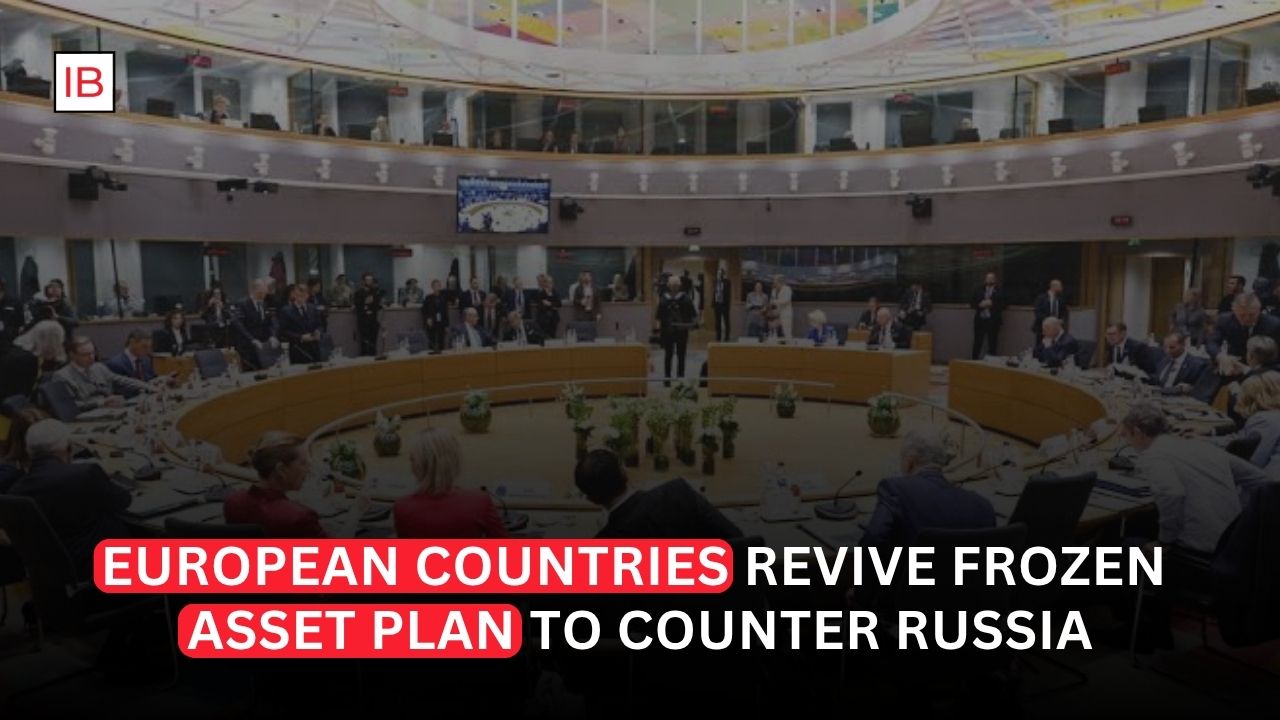
European governments are reviving a controversial plan to make greater use of frozen Russian sovereign assets to help finance Ukraine, reopening one of the most difficult financial and legal questions facing the European Union.
Sweden, the Netherlands, Spain and Poland are among the countries pushing Brussels to restart technical work on using immobilized Russian central-bank assets to support Ukraine. The initiative comes as European governments worry that Kyiv will face continuing financing needs while Russia maintains its war and attacks Ukrainian cities and infrastructure.
The renewed effort is significant because a previous proposal collapsed after Belgium, where most of the Russian assets are held, objected over legal and financial risks.
More Than €200 Billion at Stake
The EU has immobilized more than €200 billion of Russian central-bank assets since Moscow’s full-scale invasion of Ukraine in February 2022.
A large portion of that money is held through Euroclear, the Brussels-based securities depository.
The assets themselves remain frozen under sanctions. European countries have already found a way to use profits generated by the immobilized funds to support Ukraine, but the principal remains largely untouched.
The new proposal would go considerably further.
European governments want the European Commission to examine whether the underlying assets can be used to create additional financing for Ukraine.
Why the Plan Is Returning
The immediate reason is Ukraine’s continuing need for money.
Kyiv is facing substantial defense and budget requirements while Russian attacks continue.
The EU agreed last December to a €90 billion loan for Ukraine, but European governments increasingly acknowledge that this may not be enough to meet the country’s longer-term requirements.
Supporters of the frozen-asset plan argue that Russia should ultimately bear the financial cost of the damage caused by its invasion.
Instead of asking European taxpayers to provide all the money, they want Russian state resources to become part of the financing mechanism.
Sweden Leads the Push
Sweden’s foreign minister Maria Malmer Stenergard has emerged as one of the strongest advocates of reviving the discussion.
She argues that using the frozen assets would allow Europe to help Ukraine while reducing the burden on individual European governments.
The coalition supporting renewed technical work includes Sweden, the Netherlands, Spain and Poland.
Their approach is important because the proposal is not necessarily an immediate demand to confiscate the assets outright.
Instead, the countries are asking the European Commission to restart technical and legal work and determine whether a workable structure can be found.
The Previous Plan Failed
The EU already explored a much more ambitious approach last year.
The proposal was effectively designed around a reparations-style loan backed by Russian immobilized assets.
But Belgium opposed the plan.
The problem was not political support for Ukraine.
Belgium’s concern was financial and legal exposure.
Most of the Russian assets are held through Euroclear in Belgium, meaning the country could face enormous risks if Russia successfully challenged the arrangement in court or demanded repayment.
Belgium Remains the Main Obstacle
Belgium’s concerns have not disappeared.
The government continues to worry that Russia could retaliate legally against European financial institutions.
There are also concerns about the potential consequences for the international financial system.
If governments can seize the foreign reserves of another sovereign state, other countries may begin questioning the safety of holding reserves in euros or other Western currencies.
That could have consequences extending far beyond Russia.
The Legal Question
The central legal issue is simple but difficult.
Freezing an asset is not the same thing as confiscating it.
Under sanctions, Russia remains the legal owner of its central-bank reserves even though it cannot access or move them.
Using the principal to finance Ukraine could therefore face challenges under international law and domestic European legislation.
Supporters argue that Russia’s responsibility for the war provides a legal and moral basis for using its assets toward reparations.
Opponents warn that permanently taking sovereign reserves could establish a precedent that undermines protections for state assets.
Europe Is Already Using the Profits
The EU has already taken a less controversial approach.
The profits generated by the frozen Russian assets are being used to support Ukraine.
A €50 billion loan agreed in 2024 is backed by those extraordinary profits rather than directly taking the underlying principal.
That mechanism avoids some of the legal problems associated with outright confiscation.
But it also generates substantially less money than using the principal itself.
Ukraine Wants the Assets Used
Ukraine has consistently argued that Russian assets should pay for the consequences of the war.
Kyiv faces enormous costs for defense, reconstruction and economic recovery.
The longer the war continues, the greater those costs become.
From Ukraine’s perspective, asking European taxpayers to finance those expenses while hundreds of billions of euros belonging to the Russian state remain frozen appears difficult to justify.
That argument is gaining support among some European governments.
The Funding Gap Is Growing
Ukraine’s financial requirements remain enormous.
Military spending alone represents a major burden.
At the same time, the government must continue funding public services, salaries, pensions and reconstruction.
Russian attacks on energy infrastructure can also create additional costs.
European leaders therefore need to identify reliable sources of financing rather than repeatedly negotiating emergency packages.
The frozen Russian assets represent one of the few large pools of money that could potentially provide substantial additional support.
Europe Does Not Want One or Two Countries Carrying the Burden
Another argument behind the proposal is burden-sharing.
The EU has provided large amounts of financial and military assistance to Ukraine since the invasion.
But different member states face different domestic political pressures.
Countries closer to Russia often favor stronger support, while other governments are more concerned about public spending.
Using Russian assets could create a financing mechanism that spreads the risk across the EU rather than relying on individual national budgets.
The Financial System Risk
Critics of the proposal focus heavily on the international financial system.
Central banks around the world hold foreign reserves in currencies such as the euro and dollar because those currencies are considered relatively safe and liquid.
If sovereign reserves can be permanently confiscated for geopolitical reasons, some governments may reconsider where they keep their money.
That could encourage greater diversification into gold, other currencies or alternative financial systems.
The long-term effect could therefore be a gradual fragmentation of global reserve markets.
Russia Could Retaliate
Moscow has repeatedly condemned Western efforts to use its frozen assets.
If Europe goes further, Russia could attempt to seize Western-owned assets inside Russia.
European companies still have exposure to Russian businesses and property, even after years of sanctions and corporate exits.
A Russian retaliation could therefore impose additional costs on European companies.
Belgium is particularly concerned about the legal consequences because of Euroclear’s central role.
Euroclear Is at the Center
Euroclear holds the majority of the Russian sovereign assets immobilized in the EU.
That makes the company central to the debate.
Any mechanism involving the principal would have to address questions about Euroclear’s liabilities, legal protections and potential claims from Russia.
The institution has previously warned about the risks associated with handling the frozen assets.
That makes the issue as much a financial-infrastructure problem as a geopolitical one.
A New Technical Assessment
The coalition of European countries wants the European Commission to restart technical work.
That is an important distinction.
The governments are not necessarily announcing that the assets will immediately be confiscated.
They want Brussels to determine whether legal structures can reduce the risks that caused Belgium to block the previous proposal.
Possible solutions could involve guarantees, risk-sharing arrangements or a different structure for the financing.
The objective would be to prevent Belgium from carrying the entire liability.
Why the Political Environment May Be Different
The circumstances have changed since the previous attempt.
Ukraine’s financing requirements have increased.
European governments are also under pressure to strengthen defense spending and reduce dependence on the United States.
That makes finding new European sources of financing more urgent.
The frozen Russian assets have therefore become increasingly attractive as a strategic resource.
Europe Wants to Strengthen Its Own Defense
The issue is not only about helping Ukraine.
European governments increasingly view Ukraine’s defense as directly connected to European security.
If Russia remains capable of waging a prolonged war, European countries may need to spend more on their own militaries.
Supporting Ukraine can therefore be presented as a form of forward defense.
Using Russian assets would allow Europe to finance part of that effort without relying entirely on domestic taxation or borrowing.
The Proposal Could Change the EU Budget Debate
The frozen-asset discussion is also arriving as European governments negotiate the bloc’s next seven-year budget.
Ukraine’s financing requirements could become part of those negotiations.
If the EU cannot agree on a workable asset-backed mechanism, additional money may have to come from the European budget.
That would force member states to decide how much they are willing to contribute.
The frozen assets could therefore become an alternative to increasing national contributions.
Markets Will Be Watching
Financial markets are likely to monitor the debate closely.
The biggest concern is whether the move could affect confidence in European financial infrastructure.
If investors or foreign governments begin to view European custody systems as vulnerable to political decisions, the consequences could extend to capital flows.
However, supporters argue that Russia’s invasion represents an exceptional circumstance and that the legal framework can be designed to prevent broader disruption.
The Euro’s International Role
The issue also touches on the future of the euro.
The euro is one of the world’s major reserve currencies.
Europe has an interest in maintaining confidence in the currency and its financial institutions.
If the EU uses sovereign assets in an unprecedented way, some countries may reconsider their reserve allocations.
That does not necessarily mean a major shift away from the euro would happen immediately.
But even gradual diversification could affect Europe’s financial influence.
Russia’s Legal Options
Russia could challenge the use of its assets through courts in Europe or elsewhere.
The success of such challenges would depend on the specific legal structure adopted by the EU.
European policymakers therefore want to develop a framework that minimizes the possibility of successful claims.
That is why the renewed proposal emphasizes technical and legal analysis rather than immediate confiscation.
The Moral Argument
Supporters make a straightforward moral case.
Russia launched the invasion and caused enormous destruction in Ukraine.
If Russia ultimately has to pay reparations, using its frozen reserves would allow the money to contribute toward the cost.
From this perspective, the assets are not simply financial reserves.
They are a potential source of compensation for victims of the war.
The Precedent Argument
Opponents see the issue differently.
They argue that international financial stability depends on governments believing that their sovereign reserves will remain protected.
If Western countries create a precedent for confiscating central-bank assets, other countries could eventually use similar arguments against Western reserves.
That could weaken one of the basic assumptions behind the global financial system.
The EU Has to Balance Both Risks
Europe therefore faces two competing risks.
Not using the assets could leave Ukraine underfunded and place greater pressure on European taxpayers.
Using them could create legal, financial and geopolitical consequences that are difficult to reverse.
Neither option is risk-free.
That explains why the issue has remained unresolved for years.
What Could Make the Plan Work?
A successful arrangement would probably require extensive risk-sharing.
Belgium would need protection against potentially enormous legal claims.
Euroclear would need clear legal guarantees.
Other EU governments would likely need to share financial risks.
The European Commission would need a strong legal foundation.
And member states would have to agree that the strategic benefits outweigh the financial-system risks.
The Importance of EU Unity
The coalition of countries pushing for renewed discussions is significant because EU unity has often been essential in dealing with Russia.
Sanctions require agreement among member states.
Financial assistance also requires political coordination.
A divided EU would make the frozen-asset plan much harder to implement.
The current initiative is therefore partly a test of Europe’s ability to coordinate major financial decisions during wartime.
Ukraine’s Immediate Need
For Ukraine, the debate is not theoretical.
The country needs money now.
The longer the war continues, the more expensive defense and reconstruction become.
A mechanism that could unlock even a portion of the frozen Russian assets would potentially provide Ukraine with a significant additional source of funding.
That urgency is driving the renewed European effort.
What Happens Next?
The European Commission is expected to assess the renewed proposal and determine whether the legal and technical work can be restarted.
The biggest question remains Belgium.
If Brussels can develop a mechanism that protects Belgium and Euroclear from disproportionate risks, political support could increase.
If those concerns remain unresolved, the plan could once again stall.
Conclusion
Europe’s decision to revive discussions about frozen Russian assets reflects the growing financial pressure surrounding Ukraine’s war effort.
More than €200 billion of Russian central-bank assets remain immobilized in the EU, with the majority held through Euroclear in Belgium.
European governments including Sweden, the Netherlands, Spain and Poland now want the European Commission to restart technical work on using those assets to support Ukraine.
The proposal is attractive because it could provide Ukraine with substantial financing without requiring European taxpayers to cover the entire cost.
But the obstacles are serious.
Belgium remains concerned about Russian legal retaliation, while financial officials worry that confiscating sovereign reserves could undermine confidence in European financial markets.
The EU therefore has to solve a difficult puzzle: how to make Russia bear more of the financial cost of its war without creating a precedent that damages the financial system Europe itself relies on.
The renewed effort does not guarantee that the frozen assets will be unlocked.
But it shows that European governments are becoming less willing to leave one of their largest potential sources of Ukraine financing untouched.
If Brussels can develop a structure that addresses Belgium’s liability concerns, the debate could move from political rhetoric toward implementation.
If it cannot, Europe may once again have to rely on national budgets and common EU borrowing to finance Ukraine.
Either way, the frozen Russian assets are becoming an increasingly important part of Europe’s strategy for dealing with the war—and of the broader debate over how far economic sanctions can go in a geopolitical conflict.