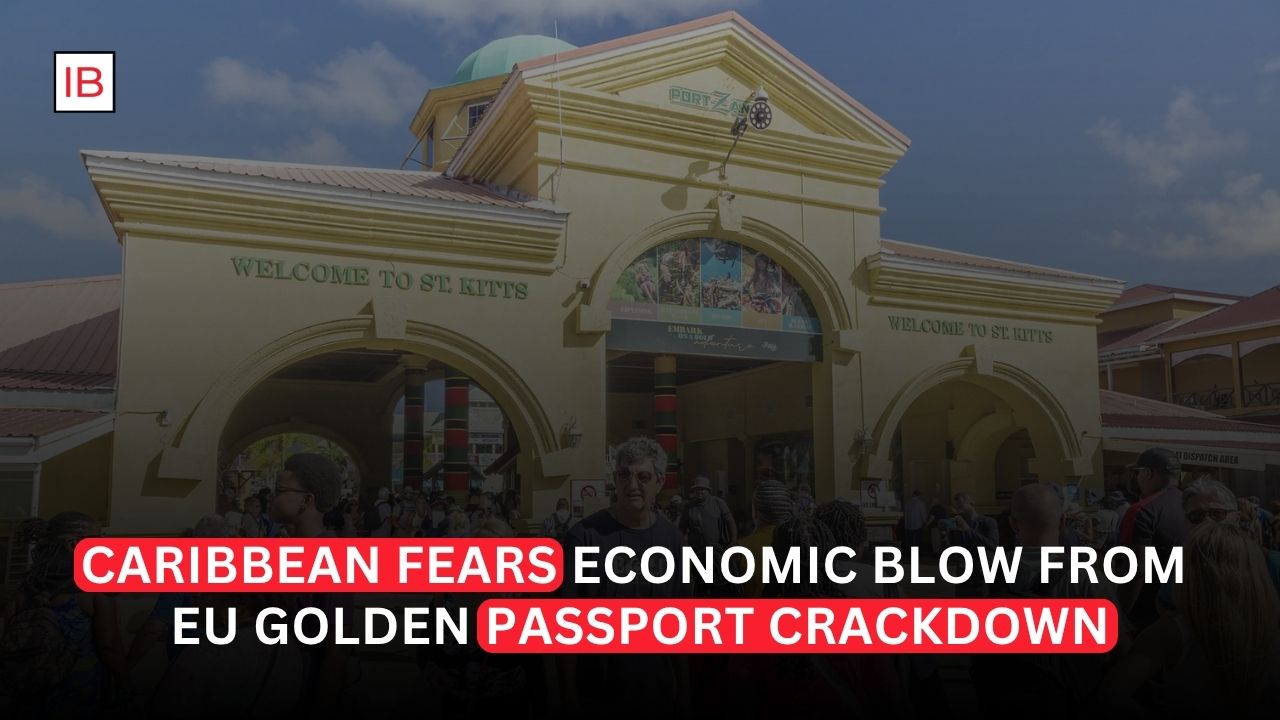
Five Caribbean nations are facing growing pressure from the European Union to end their citizenship-by-investment programs, commonly known as “golden passports,” creating a major economic challenge for small island economies that have come to depend on revenue from wealthy foreign applicants.
The countries affected are Antigua and Barbuda, Dominica, Grenada, Saint Kitts and Nevis, and Saint Lucia. The EU wants them to phase out their citizenship-by-investment schemes by 2028 or risk losing visa-free access to the Schengen area.
For these countries, the issue is much larger than immigration policy. Golden-passport programs have become an important source of government revenue, foreign investment and economic activity. Losing the programs could therefore force governments to find alternative sources of income at a time when many Caribbean economies are already dealing with high import costs, climate risks and slowing growth.
Why the EU Is Acting
The European Union’s concerns center on security and financial risks.
Citizenship-by-investment programs allow wealthy foreigners to obtain citizenship after making a qualifying financial contribution, often without establishing significant physical ties to the country.
Applicants can typically qualify through contributions to national funds, real-estate purchases or other approved investments.
The EU is concerned that insufficient screening could allow individuals connected to money laundering, organized crime, sanctions evasion or other financial crimes to obtain passports that provide easier access to Europe.
Brussels has also questioned whether citizenship should effectively be available to people who have little or no genuine connection to the country issuing the passport.
Visa-Free Access Is the Key
The biggest weapon available to the EU is visa policy.
Caribbean passport holders have historically benefited from visa-free or simplified travel to the Schengen area.
That access significantly increases the value of a Caribbean passport for wealthy applicants from countries where obtaining European visas can be difficult.
If the EU removes visa-free access, demand for these passports could fall sharply.
That would directly threaten the business model behind the programs.
A Major Source of Revenue
The Caribbean islands involved have relatively small populations and limited economic bases.
Tourism is the dominant industry in many of them, while agriculture and financial services provide additional income.
Golden passports have offered governments another way to raise foreign currency without relying entirely on tourism.
Applicants can spend hundreds of thousands of dollars to obtain citizenship, generating money for government programs, infrastructure and investment projects.
The loss of that revenue could therefore create significant fiscal pressure.
Wealthy Foreign Applicants Drive Demand
The programs have attracted wealthy investors from around the world.
African investors have become particularly important customers.
Nigeria, for example, has been a significant source of applications to Caribbean citizenship programs, as wealthy individuals seek easier international travel and greater access to global business opportunities.
For these applicants, the attraction is not necessarily living in the Caribbean.
The passport itself is the product.
It can provide easier travel, additional financial flexibility and a potential second citizenship.
Caribbean Governments Push Back
The affected governments argue that the programs can be strengthened rather than eliminated.
They have an incentive to improve screening procedures and increase transparency, but they do not want to lose an important source of economic activity.
The dispute therefore reflects a broader disagreement over who should control citizenship policy.
The Caribbean governments view citizenship-by-investment as a sovereign economic tool.
The EU sees the passports partly through the lens of European border security.
The Economic Risk Is Real
The World Bank says Caribbean economies are already facing moderating growth, high import and energy costs and significant climate-related vulnerabilities.
That makes the EU crackdown particularly sensitive.
If golden-passport revenues decline at the same time that tourism weakens or climate-related disasters increase public spending, governments could face larger budget deficits.
They may also have to raise taxes, cut spending or seek additional borrowing.
Could Applicants Move Elsewhere?
Demand is unlikely to disappear completely.
Instead, wealthy investors could move toward alternative citizenship programs.
Countries outside the Caribbean are already attempting to attract applicants with cheaper or differently structured programs.
São Tomé and Príncipe, for example, has introduced a citizenship-by-investment scheme costing around $90,000, although its passport does not provide access to the Schengen area.
Nauru has also promoted a low-cost citizenship program to raise money for climate adaptation.
That suggests the global market for second citizenship may continue even if Caribbean programs are restricted.
The EU Faces Its Own Trade-Off
The European Union also has to consider the economic consequences of its decision.
The Caribbean countries involved are small economies, and a sudden loss of passport demand could affect businesses, government finances and employment.
However, European policymakers appear increasingly willing to accept those consequences in exchange for stronger control over who receives visa-free access to Europe.
The EU’s position is that citizenship should not become a mechanism for bypassing European security standards.
A Bigger Fight Over Financial Transparency
The dispute also reflects a broader international campaign against anonymous wealth and weak financial controls.
Governments around the world are increasing scrutiny of offshore structures, investment migration programs and cross-border financial flows.
Caribbean financial centers have faced pressure for years to strengthen transparency and anti-money-laundering rules.
The golden-passport dispute is therefore part of a much larger effort to make international finance more traceable.
What Happens Next?
The five Caribbean governments now face a difficult choice.
They can attempt to redesign their programs with stricter background checks, greater transparency and stronger links between applicants and their new countries.
Or they can resist the EU’s demand and risk losing visa-free access to the Schengen area.
Neither option is attractive.
Maintaining the programs could preserve an important source of revenue but increase tensions with Europe.
Ending them could satisfy Brussels but leave a major hole in government finances.
Conclusion
The EU’s crackdown on Caribbean golden-passport programs is becoming a serious economic issue for Antigua and Barbuda, Dominica, Grenada, Saint Kitts and Nevis, and Saint Lucia.
The European Union wants these countries to end their citizenship-by-investment schemes by 2028 or face the possibility of losing visa-free access to the Schengen area.
For the Caribbean governments, the stakes are high because these programs provide more than passports. They generate foreign investment, government revenue and economic activity in countries with relatively limited sources of income.
But the EU’s concerns over security, money laundering and inadequate applicant screening are unlikely to disappear.
The real challenge for the Caribbean will therefore be finding a middle ground between protecting economic interests and satisfying European demands for stronger controls.
If the islands fail to reach an agreement, the consequences could extend well beyond the passport industry. Reduced investment and government revenue could put additional pressure on already vulnerable economies.
The dispute ultimately shows how a policy designed to attract wealthy foreigners has become entangled with global debates over financial transparency, migration and national security.
For the five Caribbean countries, the next two years could determine whether golden passports remain an important economic tool—or become another casualty of Europe’s tightening approach to citizenship and cross-border finance.