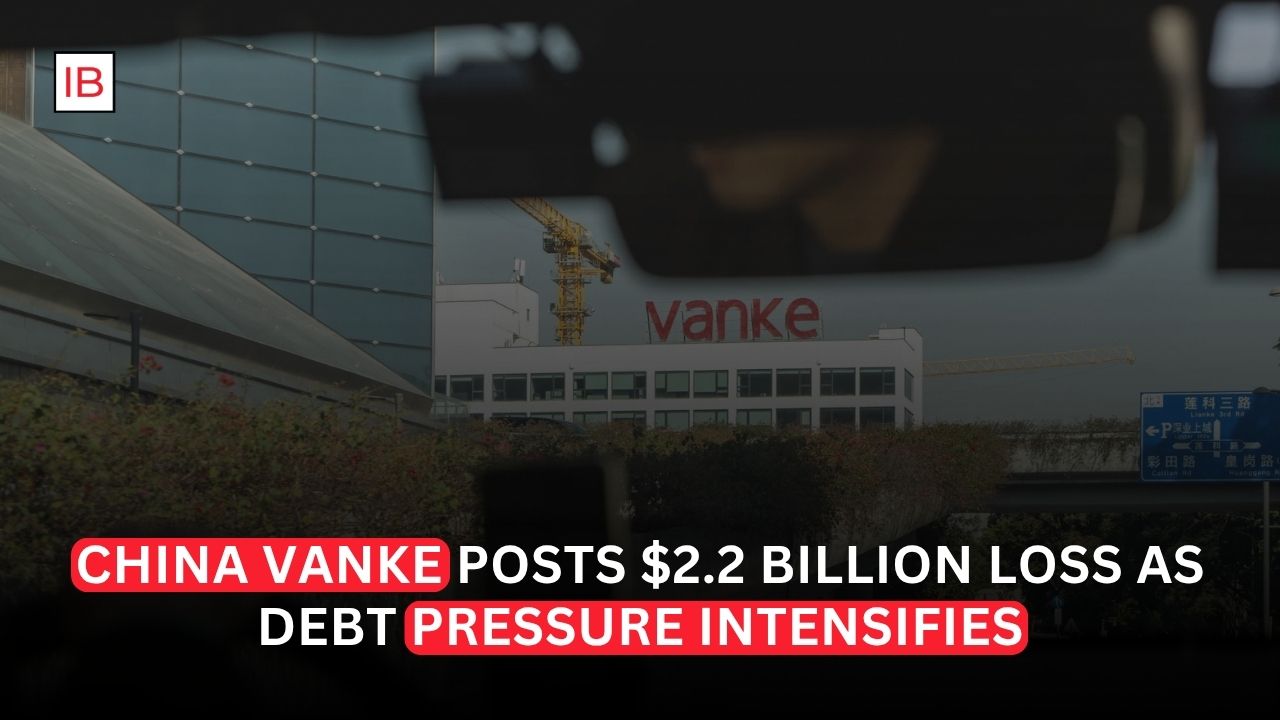
China Vanke Co. reported a loss of about $2.2 billion for the first half of the year, underscoring the severity of the financial pressure facing one of China’s largest property developers as the country’s real-estate crisis continues to weigh on sales, cash flow and investor confidence.
The result highlights how difficult conditions remain for major Chinese developers, even after years of government efforts to stabilize the property market. Vanke’s financial deterioration is particularly significant because the company was once regarded as one of China’s strongest and most professionally managed developers.
The latest loss shows that the industry’s problems have moved beyond smaller private developers and are continuing to affect companies with substantial assets and longstanding relationships with financial institutions.
A Huge Loss for a Major Developer
Vanke’s first-half loss represents a sharp deterioration from its previous financial performance.
The company has been struggling with declining property sales, falling margins and increasing financing pressure. These problems have made it more difficult to generate enough operating cash to meet debt obligations and fund ongoing projects.
For investors, the size of the loss is important because it demonstrates that China’s property downturn is not simply a short-term correction.
The sector continues to face structural problems involving weak demand, excess housing inventory and high leverage.
Debt Pressure Is Intensifying
The biggest concern surrounding Vanke is not simply its accounting loss.
It is the company’s debt burden.
Developers typically require substantial amounts of financing because they must spend money on land, construction and development long before receiving the full proceeds from property sales.
When housing demand weakens, that financing model becomes dangerous.
Lower sales mean less cash coming into the company while debt payments continue.
Vanke is now operating in precisely that environment.
China’s Property Crisis Continues
China’s property downturn began several years ago after authorities moved to reduce excessive borrowing by developers.
The policy shift exposed weaknesses in a sector that had relied heavily on debt-funded expansion.
Several major developers subsequently defaulted or entered restructuring.
Although Beijing has introduced measures intended to stabilize the market, confidence among homebuyers has remained weak.
That has prevented a rapid recovery in sales.
Vanke Was Once Seen as Different
Vanke’s current difficulties are especially important because of its reputation.
The company was historically viewed as a relatively conservative and professionally managed developer compared with some of its more aggressive private-sector competitors.
Its business model was considered more disciplined.
That reputation helped Vanke maintain access to financing and build relationships with banks and investors.
The current financial pressure therefore represents a major change in perception.
State Support Has Limits
Vanke has benefited from its connections with state-owned institutions.
China Resources Group became the company’s largest shareholder after taking a significant stake, while state-linked financial institutions have also played important roles in supporting the developer.
That backing has helped Vanke obtain additional financing and manage liquidity pressure.
But state support does not eliminate the underlying problem.
If property sales remain weak, even a well-connected developer can continue generating losses.
Liquidity Is the Immediate Concern
For Vanke, maintaining liquidity is critical.
A property developer can own billions of dollars worth of apartments, land and other assets while still experiencing a cash shortage.
The reason is that assets cannot necessarily be sold quickly at their book value.
If the market is weak, selling property may require large discounts.
That can produce further losses and reduce the company’s financial flexibility.
Asset Sales Could Become Necessary
Vanke may therefore need to continue selling assets to raise cash.
Possible disposals could include stakes in commercial properties, logistics assets, development projects or other investments.
Asset sales can provide immediate liquidity.
But they also reduce the company’s future earnings potential.
That creates a difficult trade-off.
Vanke needs cash today, but selling valuable assets can weaken its ability to recover tomorrow.
Falling Property Prices Hurt Developers Twice
Weak housing prices create two problems for developers.
First, buyers become less willing to purchase new homes because they worry prices could fall further.
Second, developers receive less revenue from the homes they do sell.
At the same time, construction and financing costs do not necessarily decline at the same rate.
That compresses margins.
For a highly leveraged company, shrinking margins can quickly become a serious financial problem.
Homebuyer Confidence Remains Weak
China’s housing market depends heavily on confidence.
People purchasing homes are making one of the largest financial commitments of their lives.
If they believe prices will continue falling, they may delay purchases.
If they are worried about developers completing projects, they may also prefer completed homes over new developments.
That behavior reduces demand for developers such as Vanke.
The Pre-Sale Model Has Become More Difficult
China’s developers historically relied heavily on presales.
Buyers would pay for apartments before construction was completed, giving developers cash that could be used to finance projects.
The model worked well during the housing boom.
But when buyers became concerned about unfinished projects and declining prices, presales became less reliable.
That created an enormous liquidity problem across the industry.
Vanke Faces a Confidence Problem
The company must therefore convince investors and homebuyers that it can remain financially stable.
This is difficult because every new loss can weaken confidence further.
Lower confidence can reduce sales.
Lower sales reduce cash flow.
Lower cash flow increases financing pressure.
That can create a negative feedback loop.
Banks Are Watching Closely
Vanke’s financial condition also matters for Chinese banks.
Property developers have historically been major borrowers from the banking system.
A significant deterioration at Vanke could therefore create additional pressure on lenders.
Chinese regulators have strong incentives to prevent disorderly defaults by major developers.
That explains why Vanke has received substantial attention from policymakers and state-linked financial institutions.
The Risk of Contagion
A major Vanke crisis could have broader consequences.
Suppliers, contractors, banks, property buyers and local governments are all connected to the property sector.
If a large developer cuts construction spending or delays payments, smaller companies can suffer.
That can create a chain reaction.
The Chinese government therefore has an interest in containing Vanke’s financial problems.
Local Governments Are Also Exposed
China’s local governments have historically relied heavily on land sales for revenue.
Developers buying land generated substantial income for local authorities.
When developers stopped aggressively acquiring land, local government finances weakened.
The property downturn therefore affects more than developers.
It also reduces the fiscal resources available to local governments.
China’s Economic Growth Is Linked to Property
Real estate has played a huge role in China’s economy.
Construction, steel, cement, appliances, furniture and financial services are all connected to housing.
When property investment declines, many other industries feel the impact.
That is why Vanke’s losses matter beyond the company itself.
They are another indicator of the broader challenge facing China’s economy.
Beijing Has Tried to Stabilize the Market
Chinese authorities have introduced numerous measures to support housing demand.
These have included lower mortgage rates, reduced down-payment requirements and policies encouraging purchases in some cities.
Authorities have also tried to improve access to financing for developers and unfinished housing projects.
But these measures have not yet produced a sustained nationwide recovery.
The Problem Is More Than Interest Rates
Lower mortgage rates can make homes more affordable.
But affordability is not the only issue.
Potential buyers also care about employment, household income, future property prices and whether developers will complete projects.
If consumers remain uncertain about the economy, cheaper mortgages alone may not be enough to restore confidence.
Vanke’s Reputation Cannot Fully Protect It
The company’s experience demonstrates an important reality.
Strong management and relationships with the government can reduce financing risk.
They cannot completely eliminate business-cycle risk.
Vanke still depends on selling homes.
If buyers do not return to the market, the company’s balance sheet remains under pressure.
Investors Face Difficult Choices
For bondholders, the key issue is whether Vanke can maintain sufficient liquidity to meet obligations.
For shareholders, the question is whether the company can eventually return to profitability without excessive dilution or asset sales.
For banks, the concern is credit exposure.
Each group therefore has different priorities.
More Financing May Be Needed
Vanke could require additional financing if operating cash flow remains weak.
That could come from bank loans, bond issuance, asset-backed financing or support from state-linked shareholders.
However, additional borrowing would not solve the underlying problem if sales remain depressed.
It would simply give the company more time.
Time Is Valuable—but Expensive
For a developer, additional financing can be useful because property markets may eventually recover.
But carrying debt for longer increases interest expenses.
If asset values continue declining, the collateral supporting that debt may also weaken.
Vanke therefore needs both liquidity and a credible path toward restoring profitability.
Asset Quality Matters
One of Vanke’s potential strengths is the quality and location of many of its properties.
Major Chinese cities remain more attractive than smaller markets.
If housing demand eventually recovers in major urban centers, Vanke could benefit.
But the company still needs to survive the downturn long enough to capture that recovery.
China’s Property Market Is Becoming More Uneven
The national housing market should not be viewed as one single market.
Demand in major cities such as Beijing, Shanghai and Shenzhen is different from demand in smaller cities with shrinking populations.
Developers with exposure to weaker regions face greater risks.
Vanke’s geographic footprint therefore matters when assessing its future.
Commercial Property Offers Another Opportunity
Vanke also has exposure to commercial real estate.
Shopping centers, office buildings and other commercial assets can generate recurring income.
But these properties have also faced challenges as China’s economy slows and consumer demand changes.
Commercial assets may therefore provide some diversification without eliminating the company’s overall property exposure.
The Rental Market Could Become More Important
China’s government has encouraged the development of rental housing as part of efforts to make the property market more sustainable.
Vanke has experience in rental and residential operations.
That could provide a more stable source of income over time.
But rental housing generally produces lower returns than rapid property development.
It cannot immediately replace the profits once generated by the housing boom.
A New Business Model May Be Necessary
The property industry may need to shift away from the old model of buying land, borrowing heavily, building quickly and selling at rising prices.
That model depended on continuous price appreciation and easy credit.
Those conditions are unlikely to return in the same form.
Developers such as Vanke may have to focus more on rental housing, property management, commercial assets and operational income.
The Era of Rapid Expansion Is Over
For decades, China’s property market benefited from urbanization, rising household wealth and expanding credit.
Developers responded by aggressively acquiring land and increasing construction.
The current environment is different.
Population growth has slowed.
Urbanization is becoming more mature.
Housing supply is high in many regions.
And consumers are more cautious.
These structural changes make a return to the previous growth model unlikely.
Vanke’s Loss Is a Warning Sign
The most important lesson from Vanke’s latest results is that even major developers with strong reputations are not immune to the property downturn.
If Vanke continues to report large losses, investors may become increasingly concerned about the financial health of other developers.
That could increase pressure across China’s credit markets.
The Government Still Has a Strong Incentive to Intervene
Beijing is unlikely to ignore a disorderly collapse of a developer as important as Vanke.
The company is deeply connected to China’s housing system and financial sector.
Authorities therefore have strong reasons to support an orderly restructuring if necessary.
But there is a difference between preventing collapse and restoring profitability.
Government support can provide liquidity.
It cannot create millions of new homebuyers.
Moral Hazard Is Another Concern
Repeated state support can also create moral-hazard problems.
If investors believe the government will always rescue major developers, they may underestimate risk.
That can encourage excessive borrowing.
Chinese policymakers therefore have to balance financial stability against the need to impose discipline on companies that accumulated too much debt.
Bondholders May Get More Attention
As the property crisis continues, Chinese authorities may increasingly prioritize the completion of homes and protection of households.
That could influence how scarce liquidity is allocated.
Bondholders and other creditors may face tougher outcomes if policymakers prioritize social stability and unfinished housing projects.
This makes Vanke’s financing structure particularly important.
The Broader Credit Market Matters
Vanke’s problems could influence how investors view Chinese corporate debt.
If a developer with significant state connections struggles to manage its obligations, investors may demand higher risk premiums from other property companies.
That could make refinancing more expensive.
A negative cycle could therefore develop in the credit market.
China’s Property Recovery May Be Slow
The latest results suggest that China’s housing market is unlikely to experience a rapid V-shaped recovery.
A more gradual stabilization appears plausible.
That would mean developers need to manage balance sheets carefully for several more years.
Companies that entered the downturn with lower debt and stronger liquidity will have a better chance of surviving.
What Vanke Needs to Do
The company ultimately needs three things.
First, it needs sufficient liquidity to meet near-term obligations.
Second, it needs to reduce its debt burden.
Third, it needs to restore confidence among homebuyers and investors.
None of these objectives is easy.
But failing to address any one of them could make the other two harder.
The Path Forward
Vanke’s future may depend less on returning to the property boom and more on adapting to China’s new housing environment.
That could involve reducing development activity, selling non-core assets, expanding rental housing and focusing on stronger cities.
The strategy would likely produce a smaller but potentially more sustainable company.
Investors Should Watch Cash Flow
The headline loss will attract attention, but investors should also monitor Vanke’s operating cash flow.
A company can report accounting losses while still generating cash.
Conversely, it can report relatively modest losses while experiencing severe liquidity pressure.
For a highly leveraged developer, cash is often more important than reported earnings.
Debt Maturities Are Critical
Investors should also examine when Vanke’s debt comes due.
Large maturities concentrated in a short period can create refinancing risk.
If credit markets remain open and state-linked lenders continue providing support, the company may be able to manage those obligations.
If financing conditions deteriorate, pressure could increase rapidly.
The Property Sector Remains China’s Weak Spot
China’s broader economy has other growth engines, including manufacturing, exports, technology and clean energy.
But real estate remains an important source of economic activity.
The continued weakness of major developers therefore suggests that China’s economic rebalancing is still incomplete.
Vanke’s Loss Has Symbolic Importance
Vanke was once a symbol of China’s property boom and professional development industry.
Its current struggles symbolize the end of that era.
The company is now operating in a market where survival, liquidity and balance-sheet management matter more than rapid expansion.
That represents a profound change for the Chinese property industry.
Conclusion
China Vanke’s roughly $2.2 billion first-half loss is another warning that the country’s property crisis remains far from resolved.
The problem is not simply falling home prices.
It is a combination of weak demand, declining sales, high debt, limited cash flow and a loss of confidence among buyers and investors.
Vanke’s position is particularly important because the company was long regarded as one of China’s stronger developers. Its difficulties show that even companies with substantial assets, established brands and state-linked support can face severe financial pressure when the property market deteriorates.
The immediate priority is liquidity.
Vanke needs enough cash to meet debt obligations, maintain construction and protect its core operations. Asset sales and additional financing may provide breathing room, but neither solves the fundamental problem if housing demand remains weak.
The longer-term solution will require a different business model.
China’s property sector can no longer rely on the combination of rising land prices, aggressive borrowing and ever-growing home sales that powered the industry for decades. Developers will need to become smaller, less leveraged and more focused on recurring income.
That transition will be painful.
For Beijing, the challenge is to prevent a disorderly collapse without simply recreating the excessive borrowing that caused the crisis.
For investors, Vanke’s results are a reminder that state support and a strong reputation do not eliminate credit risk.
And for China’s economy, the loss is another indication that the property downturn remains one of the country’s biggest obstacles to a stronger and more sustainable recovery.