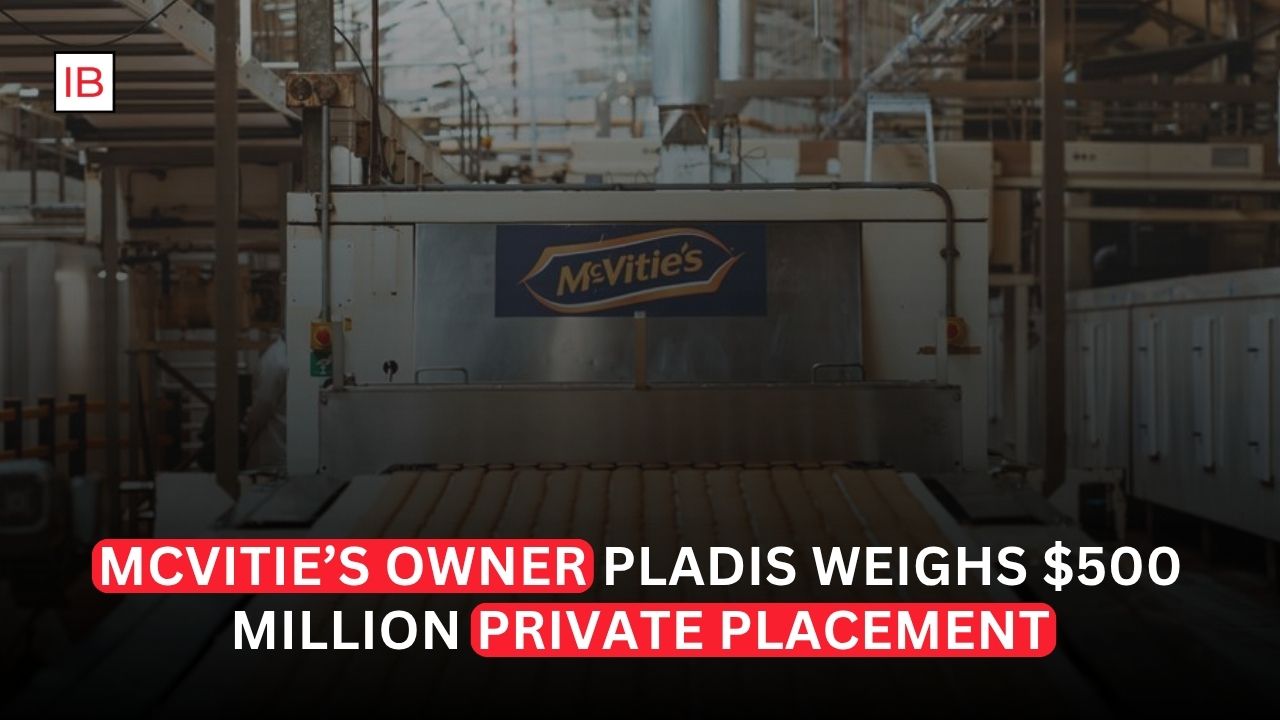
Pladis, the global snacking company behind McVitie’s, Godiva and Ülker, is considering raising around $500 million through a private placement, according to people familiar with the matter. The potential financing would give the privately held food group additional capital at a time when major consumer companies are navigating higher input costs, changing consumer preferences and intense competition for supermarket shelf space.
The possible transaction also highlights the growing role of private capital in financing large food and consumer businesses. Rather than relying entirely on traditional bank borrowing or public debt markets, companies can use private placements to secure funding from institutional investors under negotiated terms.
Pladis has built a broad international business, with its products sold in more than 110 countries and a workforce of about 16,000 people.
A Major Financing Decision
A $500 million private placement would be substantial for Pladis.
The company is not publicly listed, meaning it does not have the same straightforward access to equity markets as a publicly traded consumer-goods company. Private financing therefore provides an alternative way to raise significant capital while maintaining its existing ownership structure.
The potential transaction could involve institutional investors purchasing privately negotiated debt or other securities.
The exact structure and terms of the proposed deal are important because they would determine how much the financing costs Pladis and how much flexibility it provides.
For a business operating across multiple currencies and markets, that flexibility can be valuable.
Why Pladis Needs Capital
Pladis operates a large manufacturing and distribution network.
Its portfolio includes some of the world’s most recognizable snack brands, including McVitie’s, GODIVA and Ülker, alongside Jacob’s, Flipz and other regional products.
Maintaining those brands requires constant investment.
The company has been spending on manufacturing capacity, automation, product development, marketing and technology.
In the UK alone, Pladis previously announced a £68 million investment in its operations, including factory modernization and automation projects.
A new $500 million financing could therefore provide additional financial capacity for expansion, refinancing or general corporate purposes.
Pladis Has Been Growing
The financing proposal comes after a period of strong operating performance.
Pladis reported record revenue of approximately £3.23 billion for 2024, representing a 17% year-on-year increase. EBITDA rose 11% to about £486.9 million.
Those figures suggest the company is not simply raising money because its core business is collapsing.
Instead, the financing could be about strengthening the balance sheet and giving management more room to pursue growth.
That distinction matters.
A company raising capital during growth can be in a very different position from one raising money simply to meet immediate liquidity needs.
The Private Placement Market
Private placements have become increasingly important for large companies seeking alternatives to traditional public debt.
The attraction is flexibility.
A private transaction can often be negotiated around the company’s particular needs, including maturity, interest rates, covenants and repayment terms.
Investors can also benefit from lending to established companies that may offer relatively predictable cash flows.
For Pladis, the arrangement could provide access to long-term capital without requiring a public bond offering.
Why Investors May Be Interested
Pladis owns valuable consumer brands with established distribution networks.
That can make the company attractive to institutional credit investors.
Food and snack consumption tends to be relatively resilient compared with more economically sensitive industries.
People may cut discretionary purchases during a downturn, but everyday food products often retain relatively stable demand.
However, the defensive nature of the industry should not be overstated.
Consumers can trade down from branded products to cheaper alternatives, particularly when household budgets are under pressure.
That is an important risk for Pladis.
The Private-Label Threat
Supermarket private-label products have become increasingly competitive.
Retailers can offer their own biscuits, snacks and confectionery at lower prices, putting pressure on branded manufacturers.
This trend has become particularly important as consumers look for value.
Pladis is therefore competing on two fronts.
It must maintain the strength of brands such as McVitie’s while also keeping prices competitive.
The rise of private-label manufacturing is becoming a broader structural trend across the food industry. Recent industry analysis suggests retailers increasingly want private-label suppliers that can provide innovation, manufacturing scale and faster responses to consumer trends.
Consumer Preferences Are Changing
Another challenge is changing attitudes toward nutrition.
Consumers increasingly want snacks that fit health and wellness goals while still delivering taste.
Pladis recently announced a target to double the sales volume of products with a better nutritional balance by 2030. These products contain lower levels of sugar, salt and saturated fat and higher levels of nutrients such as fibre and protein.
The company says these products currently represent around 10% of its sales volume.
That means there is significant room for expansion.
Reformulation Could Require Investment
Changing recipes is not necessarily simple.
Companies have to reformulate products without damaging taste, texture, shelf life or consumer recognition.
They also need to invest in research and development, production changes and marketing.
Pladis has already removed hundreds of tonnes of sugar and fat from some products and has introduced a global nutrition framework to guide future development.
A stronger balance sheet could help fund this transition.
McVitie’s Remains a Key Asset
McVitie’s is one of Pladis’s most important brands and has a long history in the UK biscuit market.
Products such as Digestives and Hobnobs have strong consumer recognition.
But brand heritage alone is not enough.
Pladis needs to keep the brand relevant to younger consumers while maintaining its traditional customer base.
That requires innovation in flavors, formats, packaging and marketing.
Innovation Has Become Central to Growth
Pladis has increasingly emphasized product innovation.
In 2024, the company highlighted its ability to respond quickly to consumer trends, including new flavors and products inspired by viral food trends. Its Ülker brand, for example, rapidly entered the Dubai chocolate trend and produced thousands of tonnes of the product in a short period.
That strategy can help brands capture new demand.
But innovation also carries risk.
Not every new product succeeds, and excessive product launches can increase complexity across manufacturing and distribution networks.
Godiva Adds Premium Exposure
Godiva gives Pladis exposure to the premium chocolate segment.
Premium products can provide higher margins than mass-market snacks, but they can also be more vulnerable to economic pressure.
When consumers become cautious, they may reduce purchases of expensive chocolates or shift toward cheaper alternatives.
This makes portfolio diversification important.
Pladis benefits from having products positioned at different price points.
Ülker Strengthens the International Portfolio
Ülker gives Pladis another major international brand and provides significant exposure to Turkey and surrounding markets.
The broader portfolio means Pladis is not dependent on one country.
Its products reach consumers across Europe, Asia, the Middle East, Africa and other markets.
That geographic diversification can reduce dependence on any individual economy.
However, it also creates currency and geopolitical risks.
Inflation Remains a Challenge
Food manufacturers are particularly exposed to commodity prices.
Ingredients such as cocoa, sugar, wheat and vegetable oils can experience significant price swings.
Packaging, energy and transportation costs also affect margins.
Pladis has already faced commodity inflation and currency fluctuations in recent years.
A $500 million financing could therefore provide additional financial flexibility if cost pressures remain elevated.
Cocoa Is Particularly Important
Chocolate manufacturers have faced major volatility in cocoa prices.
That creates a difficult environment for companies selling chocolate products.
If input costs rise sharply, manufacturers have several choices:
- Raise prices
- Reduce product sizes
- Accept lower margins
- Reformulate products
- Increase efficiency
None is perfect.
Higher prices can push consumers toward cheaper alternatives, while absorbing costs directly reduces profitability.
Debt Could Also Create Risks
The proposed private placement is not automatically positive.
If the financing consists primarily of debt, Pladis would have additional interest and repayment obligations.
That could become a burden if earnings weaken.
The important question for investors will therefore be the terms of the financing.
A long maturity and manageable interest rate would give Pladis greater flexibility.
Expensive financing with restrictive covenants would create more pressure.
Why Private Capital Can Be Attractive
Private investors may be willing to provide financing on terms that are more customized than those available through public markets.
For Pladis, this could be useful because the company has a complex international business and long-term investment requirements.
Private investors may also take a longer-term view than public-market investors focused on quarterly earnings.
That can be particularly valuable for a company investing in factories, automation and brand development.
Ownership Structure Matters
Pladis is part of Yıldız Holding, the Turkish conglomerate associated with the Ülker family.
A private placement can allow the company to raise capital without changing that ownership structure.
That may be an important consideration for its controlling shareholders.
Instead of selling equity to outside investors, the company can potentially raise financing while preserving ownership control.
The Company Is Investing for the Future
Pladis has described investment in technology, research and development and advertising as essential to future growth.
Its annual report emphasizes innovation and investment as part of its strategy to expand sustainably.
That makes the potential financing consistent with a broader strategy.
The company appears to be positioning itself for long-term growth rather than simply focusing on short-term cost reductions.
Private Placement Could Support Acquisitions
Another possibility is acquisitions.
Pladis operates in a fragmented global snack market where smaller brands and manufacturers can become acquisition targets.
Additional capital could allow the company to pursue opportunities when attractive assets become available.
However, acquisitions would also increase execution risk.
Buying a business is only valuable if Pladis can integrate it effectively and generate returns above its financing costs.
Global Expansion Remains an Opportunity
Pladis already sells products in more than 110 countries.
But international distribution does not mean every market has reached its full potential.
Emerging markets could provide opportunities for higher growth as incomes rise and consumers become more familiar with international snack brands.
The company can also adapt products to local preferences.
That combination of global scale and local customization is increasingly important in the food industry.
Competition Will Remain Intense
Pladis competes with some of the world’s largest food companies.
These businesses have enormous marketing budgets, sophisticated distribution networks and significant research capabilities.
They also face the same pressures from private labels, health-conscious consumers and commodity inflation.
Pladis therefore needs to keep investing simply to maintain its competitive position.
What Could Go Right?
Several factors could make the financing beneficial.
Strong Brand Performance
McVitie’s, Godiva and Ülker provide substantial brand recognition.
International Growth
Emerging markets could deliver additional volume and revenue.
Product Innovation
New formats and healthier products could attract younger consumers.
Manufacturing Efficiency
Automation could improve productivity and margins.
Financial Flexibility
The private placement could provide capital for investment and acquisitions.
What Could Go Wrong?
There are also clear risks.
Higher Debt Costs
If the financing is debt-heavy and expensive, interest expenses could pressure profits.
Commodity Inflation
Persistent cocoa, sugar and energy costs could squeeze margins.
Private-Label Competition
Retailers could continue shifting consumers toward cheaper alternatives.
Weak Consumer Spending
Economic weakness could reduce demand for premium snacks.
Failed Innovation
New products may not generate sufficient returns.
Acquisition Risk
Using borrowed money for acquisitions could increase financial pressure.
The Bigger Food Industry Picture
The potential Pladis financing illustrates a broader shift in the consumer-goods industry.
Large food companies are being forced to invest heavily while simultaneously protecting margins.
Consumers want better products at lower prices.
Retailers want stronger margins.
Investors want growth and cash generation.
Manufacturers therefore need to find ways to increase productivity while maintaining brand appeal.
Private capital can help bridge that gap, but it does not solve the underlying operating challenges.
What Investors Will Watch
If the $500 million private placement moves forward, several details will matter.
Investors will likely focus on:
- The interest rate
- The maturity period
- Any financial covenants
- The use of proceeds
- Existing debt levels
- Cash-flow generation
- Potential acquisitions
- Future investment plans
The terms will provide a clearer indication of how markets view Pladis’s credit quality.
Conclusion
Pladis’s consideration of a $500 million private placement is a significant financing development for the owner of McVitie’s, Godiva and Ülker.
The company has a substantial international footprint, sells products in more than 110 countries and has demonstrated strong revenue growth in recent years.
The potential financing could provide additional flexibility for investment in manufacturing, technology, innovation, international expansion and possibly acquisitions.
But the move also comes with risks.
The food industry is facing high commodity costs, stronger private-label competition and changing consumer expectations. Consumers increasingly want healthier products without sacrificing taste, forcing companies to spend heavily on reformulation and innovation.
The key issue will therefore be what Pladis does with the money and at what cost.
If the company secures attractive financing and invests the capital into projects that generate strong returns, the transaction could strengthen its competitive position.
If borrowing costs are high or the money is used to support weak acquisitions or cover persistent operational problems, the additional financing could instead increase pressure on the balance sheet.
For now, the potential $500 million placement signals that Pladis is preparing for its next phase of growth while seeking greater financial flexibility.
The company has strong brands and a broad global footprint, but maintaining that position will require continued investment.
In an industry where consumers are becoming more price-conscious and health-conscious at the same time, the challenge for Pladis will be to prove that its iconic brands can keep growing without sacrificing profitability.