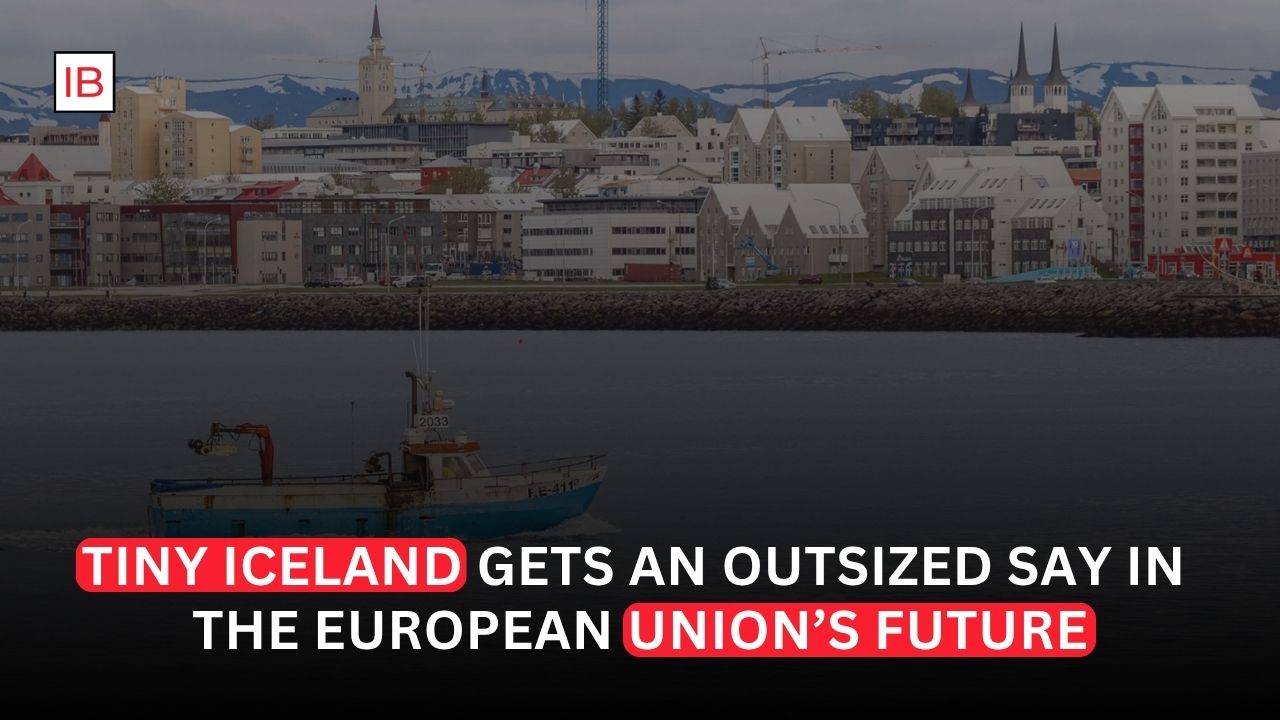
Iceland is preparing for a referendum that could reopen one of the country’s most consequential political debates: whether it should move closer to full membership of the European Union.
On August 29, Icelanders will vote on whether to resume accession negotiations with the EU. The ballot will not decide whether Iceland actually joins the bloc. If negotiations eventually produce an agreement, voters would have another opportunity to approve or reject membership in a second referendum.
That distinction is important because the current vote is essentially about whether Iceland should reopen the door.
A Narrowly Divided Electorate
The referendum comes at a time when Icelandic opinion appears unusually divided.
A recent poll found that 51.3% supported reopening EU membership talks, compared with 48.7% against. That narrow margin highlights how uncertain the outcome could be.
The debate is not simply about economics.
For supporters, EU membership could provide greater political influence, economic stability and a stronger position within Europe at a time of growing geopolitical uncertainty.
Opponents argue that Iceland risks giving up too much control over its laws, natural resources and especially its fishing industry.
Iceland Already Has Close EU Ties
One of the unusual aspects of the debate is that Iceland is already deeply connected to the European economy.
The country is a member of the European Economic Area, giving it access to the EU’s single market. It also participates in the Schengen area and belongs to the European Free Trade Association.
As a result, Iceland already follows many European rules without having a seat at the table when those rules are created.
This is one of the strongest arguments made by supporters of membership.
They say Iceland has effectively accepted many EU regulations while remaining outside the institutions where those rules are decided.
The Rule-Taker Problem
For supporters, the central issue is political influence.
Iceland can participate in Europe’s single market, but it does not have representatives voting on EU legislation.
Full membership would change that.
Instead of simply adapting to regulations created elsewhere, Iceland would have a formal role in EU institutions.
That could become increasingly important as Brussels develops policies affecting trade, energy, industry and environmental standards.
Fishing Remains the Biggest Obstacle
The most difficult issue is likely to be fishing.
Iceland’s fishing industry is economically important and deeply connected to national identity.
Many opponents fear that joining the EU could force Iceland to surrender control over its fishing waters and accept the bloc’s Common Fisheries Policy.
That concern was a major reason earlier membership negotiations became politically difficult.
For many Icelanders, fishing is not simply another economic sector.
It represents sovereignty.
Previous Negotiations Were Suspended
Iceland applied for EU membership in 2009 following the country’s financial crisis.
Accession negotiations began later but were put on hold after a change of government in 2013. The application itself was never formally withdrawn.
The current referendum therefore represents a reopening of a process that has effectively been frozen for more than a decade.
The political environment, however, is very different from the one Iceland faced in the aftermath of the financial crisis.
Geopolitics Has Changed the Debate
Security has become a much more important factor.
Russia’s invasion of Ukraine has changed the European security environment.
At the same time, growing competition among major powers has increased uncertainty across the North Atlantic and Arctic regions.
For a small country such as Iceland, the question of which political and security structures it belongs to has become more consequential.
The Greenland Factor
Statements by US President Donald Trump about Greenland have also contributed to the debate.
Greenland is geographically close to Iceland and occupies a strategically important position in the Arctic.
Trump’s reported threats to pursue US control over Greenland have unsettled Nordic governments and contributed to wider discussions about sovereignty and security.
That has given Iceland’s EU debate a geopolitical dimension that was less prominent during its previous accession effort.
Iceland Has No Standing Army
Iceland’s security position is unusual.
It does not maintain a conventional standing army and relies heavily on international security arrangements, particularly through NATO.
That makes external alliances particularly important.
EU membership would not replace NATO, but supporters argue that deeper European integration could provide an additional layer of political and economic security.
Economic Stability Is Another Argument
Supporters also point to the potential economic advantages of membership.
Iceland’s economy is relatively small and exposed to external shocks.
Closer integration with the EU could potentially provide greater access to European institutions, funding mechanisms and decision-making structures.
It could also make Iceland’s economic relationship with its largest regional market more predictable.
The Euro Question
EU membership could eventually raise another major issue: monetary policy.
Iceland currently has its own currency, the krona.
Membership would not automatically mean adopting the euro immediately, but EU accession would create a longer-term pathway toward deeper monetary integration.
For supporters, the euro could provide greater currency stability.
Opponents could argue that surrendering monetary independence would remove an important tool for managing Iceland’s economy.
The Krona Has Been Volatile
Iceland’s currency has historically been vulnerable to economic shocks.
A relatively small economy can experience significant currency movements when tourism, fishing revenues or international financial conditions change.
The euro could potentially reduce some of that volatility.
But the trade-off would be less independent monetary policy.
Inflation Matters
Cost-of-living concerns are also influencing the political debate.
Iceland has experienced significant inflationary pressures in recent years.
Supporters of EU integration argue that closer alignment with a larger economic bloc could contribute to greater stability.
But opponents question whether EU membership would actually solve Iceland’s domestic inflation problems.
The relationship between membership and prices is much more complicated.
Tourism Changes the Equation
Tourism has become an important part of Iceland’s economy.
Millions of visitors are attracted by the country’s landscapes, geothermal features and unique environment.
A stable relationship with European markets is therefore important.
But tourism also creates vulnerabilities, particularly when global travel demand falls or currencies move sharply.
Fishing Is Still Central
Despite tourism’s growth, fishing remains politically powerful.
The industry supports coastal communities and contributes substantially to exports.
This explains why EU membership cannot be evaluated solely through a macroeconomic lens.
A policy that benefits the broader economy could still be opposed if fishing communities believe their interests are threatened.
Regional Communities Are Worried
The fishing debate is particularly important outside Reykjavík.
Smaller coastal communities depend heavily on fishing-related employment.
Residents fear that changes to fishing quotas or foreign access could weaken local economies.
Those concerns are one reason the EU debate remains emotionally charged.
Supporters Want Negotiations First
An important argument from the pro-EU side is that voting to reopen negotiations does not mean agreeing to every EU demand.
It simply creates an opportunity to negotiate.
Supporters say Iceland should first determine what terms Brussels is willing to offer, particularly on sensitive issues such as fisheries.
Only afterward would voters decide whether the final agreement is acceptable.
Opponents See Negotiations as a Risk
Opponents reject that logic.
They argue that reopening negotiations creates political momentum toward membership and could make it harder to reject an eventual agreement.
They would rather maintain Iceland’s current relationship with Europe without entering a process that could eventually reduce national control.
The Referendum Is Advisory
The legal character of the vote also matters.
Iceland’s government has described the referendum as advisory. The question is simply whether negotiations should resume.
That means the result would establish political direction rather than immediately changing Iceland’s international status.
A Second Vote Would Be Required
If negotiations succeed, Icelanders would have another opportunity to decide.
That second referendum would be on the actual accession agreement.
This gives voters two separate moments to assess the issue.
The first vote asks whether Iceland should explore membership.
The second would determine whether the negotiated terms are acceptable.
Europe Has an Interest Too
The EU is also watching the referendum closely.
Iceland is already highly aligned with European rules and institutions.
Its potential accession would therefore be less complicated than the entry of countries that are far less integrated with the bloc.
European officials have suggested negotiations could potentially move relatively quickly if Iceland votes to reopen them.
A Small Country With Strategic Importance
Iceland’s population is under 400,000, but its geographic location gives it importance far beyond its size.
The country sits in the North Atlantic between Europe and North America.
Its location matters for maritime routes, communications, energy and military strategy.
That makes Iceland relevant to broader European and transatlantic security calculations.
The Arctic Is Becoming More Important
Climate change and geopolitical competition are increasing the strategic importance of the Arctic.
Russia, the US and European countries all have growing interests in the region.
Iceland’s location gives it a unique position within this changing security environment.
That may encourage Icelanders to reconsider whether existing political arrangements provide enough protection.
The EU Is Also Changing
Iceland’s decision comes as the EU itself is facing major strategic questions.
The bloc is trying to strengthen defense capabilities, reduce dependence on external suppliers and compete economically with the US and China.
For Iceland, joining the EU would mean participating in those debates rather than remaining outside them.
Membership Would Bring Obligations
EU membership would not be entirely about benefits.
Iceland would have to accept additional EU rules and obligations.
It would also participate in the EU’s institutional and financial systems.
That could create costs for some industries and reduce the government’s ability to set independent policies.
Sovereignty Is the Core Emotional Issue
The strongest argument against membership is not necessarily economic.
It is sovereignty.
Iceland has a strong tradition of political independence.
For opponents, joining the EU would mean transferring some decision-making authority from Reykjavík to Brussels.
They question whether the economic benefits justify that loss of autonomy.
Supporters Define Sovereignty Differently
Supporters respond that sovereignty is not only about making decisions alone.
It can also mean having influence over decisions that affect you.
From that perspective, remaining outside the EU while adopting many of its rules can actually weaken Iceland’s influence.
This is the central philosophical disagreement in the debate.
The Fishing Exception Question
The most important negotiation could involve whether Iceland can secure special treatment for fisheries.
Iceland would likely seek protections for its fishing industry.
The EU would have to determine how far it is willing to accommodate those demands without undermining the principles of its common fisheries system.
The outcome could determine whether a final membership deal is politically viable.
Iceland’s Current Arrangement Has Advantages
Remaining outside the EU offers flexibility.
Iceland can participate in the single market through the EEA while maintaining control over certain areas of national policy.
It also avoids the full institutional obligations of EU membership.
That arrangement has worked for decades.
But There Is a Cost
The cost is influence.
Iceland has to implement many European rules without having the same formal role in creating them.
As EU policies become more ambitious, that imbalance could become increasingly frustrating.
The Vote Reflects a Changing Europe
The referendum therefore represents more than a traditional membership debate.
It reflects a broader question facing smaller European countries:
Is it safer to remain independent outside major political blocs, or to integrate more deeply into them?
For Iceland, that question has become more urgent because of geopolitical uncertainty.
The Result Could Be Close
With recent polling showing only a narrow advantage for reopening negotiations, turnout could become critical.
A small change in participation or undecided voters could determine the result.
That makes the referendum difficult to predict.
Markets Will Watch the Outcome
Financial markets are unlikely to treat the referendum as a major global event, but Icelandic assets could react to the result.
The krona, government bonds and domestic companies could respond to expectations about future economic integration.
The immediate reaction may be limited because actual EU membership would still be years away.
A Yes Vote Would Not Mean Immediate Membership
This is perhaps the most important point for investors and readers.
A “yes” vote would only authorize the resumption of negotiations.
It would not make Iceland an EU member.
Negotiators would still have to reach an agreement, and Icelanders would then have to approve that agreement in another vote.
A No Vote Would Preserve the Status Quo
A rejection would effectively keep the existing relationship in place.
Iceland would remain outside the EU while continuing to participate in the EEA, Schengen and EFTA frameworks.
That would not end the country’s relationship with Europe.
It would simply close the door on formal membership talks for now.
The Bigger European Question
Iceland’s referendum also has implications beyond Iceland.
If voters support reopening negotiations, it could signal renewed interest in EU integration among countries that have historically preferred flexible arrangements outside the bloc.
If voters reject the proposal, it could reinforce the appeal of remaining closely connected to Europe without accepting full membership.
Conclusion
Iceland’s August 29 referendum is being presented as a vote on EU membership, but technically it is a vote on something narrower and potentially more consequential: whether to reopen negotiations over joining the European Union.
That distinction gives Icelanders another chance to examine the issue without immediately committing themselves to membership.
The arguments on both sides are substantial.
Supporters see EU membership as a way to gain political influence, improve economic stability and strengthen Iceland’s position within Europe at a time of geopolitical uncertainty. Iceland already participates in the European Economic Area and Schengen, meaning it is deeply integrated with the EU despite remaining outside the bloc.
Opponents are particularly concerned about sovereignty and fishing.
They fear that membership could weaken Iceland’s control over one of its most important natural resources and transfer important decisions to institutions outside the country.
Geopolitics has added another layer.
Russia’s war in Ukraine, growing competition in the Arctic and controversy surrounding US ambitions toward Greenland have made security more prominent in Iceland’s political calculations.
Yet the economic and sovereignty questions remain at the heart of the debate.
A narrow polling lead for reopening negotiations suggests that Iceland is genuinely divided.
If voters say yes, negotiations could restart after more than a decade on hold. The process could eventually lead to a second referendum on actual membership.
If they say no, Iceland will continue with the system it already knows: close economic integration with Europe without full political membership.
The referendum therefore does not decide whether Iceland becomes part of the EU.
It decides whether Icelanders are willing to find out what joining could look like.