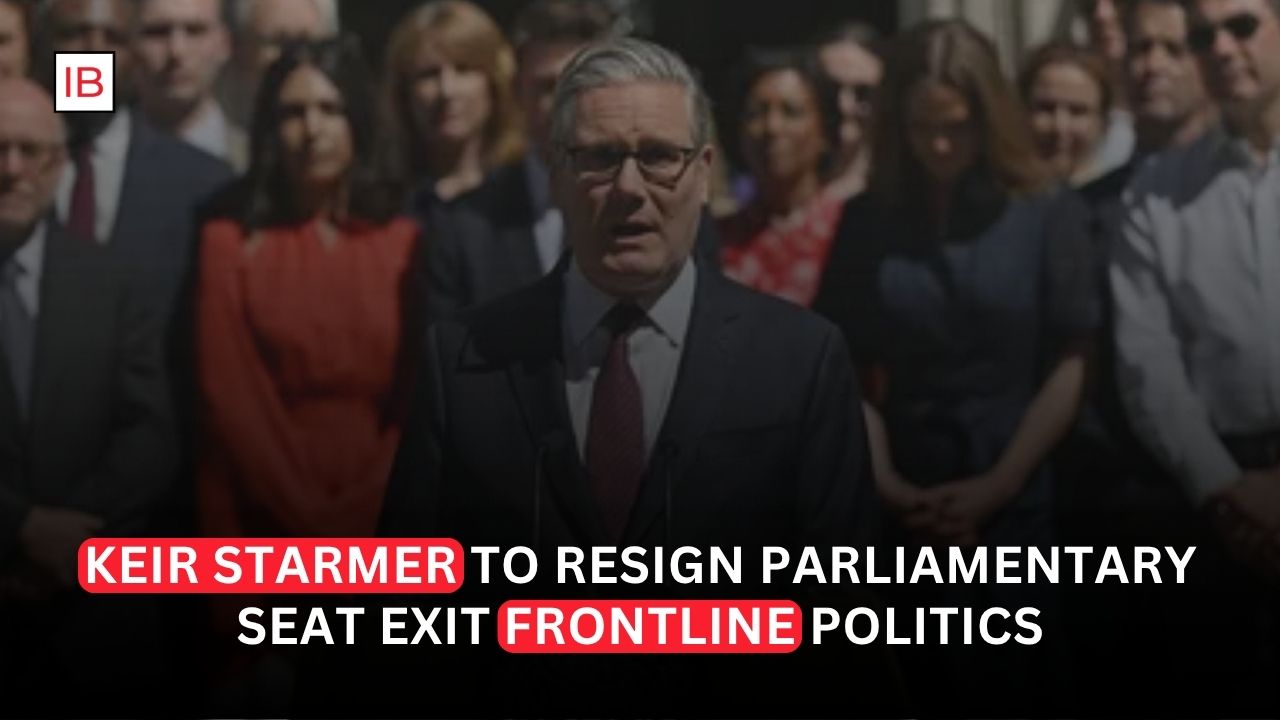
Former British Prime Minister Keir Starmer is stepping down as a Member of Parliament, bringing an end to an 11-year parliamentary career and marking another major transition in Britain’s rapidly changing political landscape.
Starmer has decided to leave his seat representing Holborn and St Pancras, the central London constituency he has represented since entering Parliament in 2015. His decision comes only months after he resigned as prime minister and Labour leader following mounting pressure within his party.
The former prime minister said it was the right time to step away from frontline parliamentary politics. He also indicated that his next phase would focus on international affairs, particularly defence, security, trade and technology.
Starmer Leaves Parliament
Starmer’s departure from the House of Commons represents the final step in his withdrawal from Britain’s domestic political frontline.
He told the Camden New Journal that he intends to focus on issues extending beyond Westminster, particularly international affairs in a world he described as changing rapidly. His priorities include defence, security, trade and technology.
He also plans to continue campaigning against violence toward women and girls, an issue he has worked on for many years.
The announcement means Starmer will no longer have a formal role in Parliament after more than a decade as an MP.
End of an 11-Year Parliamentary Career
Starmer was first elected to Parliament in 2015.
Before entering politics, he had built a prominent legal career as a human-rights barrister and later served as director of public prosecutions.
His political career advanced quickly.
He became Labour leader in 2020, succeeding Jeremy Corbyn after Labour’s defeat in the 2019 general election.
Four years later, Starmer led Labour to a sweeping victory in the 2024 general election, ending 14 years of Conservative-led government.
From Labour Leader to Prime Minister
Starmer became prime minister in July 2024 after Labour won 411 seats in the House of Commons.
The result gave Labour a large parliamentary majority and placed Starmer at the center of British politics.
His government entered office promising to improve economic growth, public services and living standards while restoring political stability after years of Conservative governments marked by leadership changes and economic turbulence.
But his premiership proved considerably shorter than many had expected.
Pressure Within Labour
Starmer faced growing criticism from Labour MPs as his government struggled with political and economic challenges.
The party suffered significant losses in local elections, while concerns grew over Labour’s ability to maintain support among voters.
Internal disagreements intensified as potential successors began positioning themselves.
Starmer eventually announced in June that he would resign as Labour leader and prime minister after accepting that he no longer had sufficient parliamentary support to lead the party into the next general election.
Andy Burnham Takes Over
Andy Burnham subsequently emerged as the figure leading Labour’s next phase and became prime minister in July.
Burnham’s arrival marked a major shift in Labour’s political direction.
The former mayor of Greater Manchester returned to Parliament before taking the top job, promising a stronger focus on economic growth, living costs and decentralization.
Starmer’s decision to leave Parliament now means he will have no direct role in the new government.
A By-Election Will Follow
Starmer’s resignation as an MP will trigger a by-election in Holborn and St Pancras.
The constituency is located in central London and has historically been a strong Labour area.
At the 2024 general election, Starmer won 18,884 votes, giving him a majority of 11,572 over his nearest rival.
The by-election will nevertheless attract considerable attention because it provides an early test of Labour’s standing under its new leadership.
Opposition parties are likely to view the contest as an opportunity to demonstrate that Labour’s political difficulties extend beyond Starmer personally.
Labour Faces a New Political Reality
Starmer’s departure also removes one of the most recognizable figures associated with Labour’s 2024 election victory.
The party must now build its identity under Burnham without relying on the political brand that delivered its landslide victory.
That could prove difficult because Labour’s large parliamentary majority was achieved under circumstances that have since changed substantially.
The electorate is now confronting a different political environment, with Reform UK putting pressure on established parties and voters remaining dissatisfied with economic conditions and public services.
Reform UK Changes the Contest
The rise of Reform UK has been one of the most important developments in British politics since Labour’s 2024 victory.
Reform’s growing support has put pressure on both Labour and the Conservatives, particularly among voters concerned about immigration, taxation and the cost of living.
Starmer’s political difficulties were partly connected to Labour’s concern that it was losing voters to parties further to the left and right.
The new government will therefore face a more fragmented political environment than the one that produced Labour’s huge majority.
Starmer’s New Focus
Rather than immediately seeking another political role, Starmer says he wants to concentrate on international issues.
Defence and security are likely to remain especially important as Europe continues to deal with the consequences of Russia’s war against Ukraine and broader geopolitical tensions.
Trade and technology are also increasingly connected to national security.
Governments are seeking greater control over strategic industries, supply chains, artificial intelligence and advanced technologies.
Starmer’s background in government and international diplomacy could give him opportunities to remain active in these debates outside Parliament.
Campaign Against Violence Against Women
Starmer also intends to continue work addressing violence against women and girls.
The issue has been a longstanding area of interest for him, dating back to before his parliamentary career.
His continued involvement could allow him to pursue the issue through advocacy and international work rather than through government legislation.
That would give him a public role without requiring a return to elected politics.
What His Departure Means for Westminster
Starmer’s exit is unusual because former prime ministers often remain MPs after leaving Downing Street.
Leaving Parliament entirely means he will no longer participate in debates, vote on legislation or question the government.
It also removes him from the immediate political contest between the government and opposition parties.
For Labour, this may help create a clearer break between the Starmer era and Burnham’s leadership.
The 2024 Victory Is Now History
Starmer’s political legacy will be closely linked to Labour’s 2024 election victory.
The result was one of the party’s largest parliamentary wins in modern history.
Yet the size of Labour’s majority masked a more complicated electoral picture.
Labour won a huge number of seats while receiving a relatively modest share of the overall vote.
That meant the government entered office with substantial parliamentary power but faced a less overwhelming level of popular support than the seat total suggested.
A Short Premiership
Starmer’s time as prime minister lasted roughly two years.
That is a relatively short tenure for a British leader who entered office with such a large parliamentary majority.
His resignation illustrates the difficulty of converting an election victory into sustained political support.
Economic pressures, public-service problems, internal party disagreements and changing voter preferences all contributed to the instability surrounding his leadership.
Britain’s Political Turnover Continues
Starmer’s departure from Parliament comes amid an unusually turbulent period in British politics.
The country has experienced multiple prime ministers in a relatively short period, with political parties struggling to maintain public confidence.
The change from Starmer to Burnham adds another chapter to that pattern.
For investors, businesses and international partners, frequent political changes can complicate long-term policy planning.
International Work Could Become His Next Chapter
Starmer’s stated focus on defence, security, trade and technology suggests he may continue operating in areas where his experience as prime minister remains relevant.
Former leaders often retain significant international networks after leaving office.
His legal background and experience dealing with governments could also provide opportunities in international organizations, policy institutions or advocacy.
However, his future role remains unclear.
The Holborn and St Pancras Contest
The upcoming by-election will be closely watched.
Labour is likely to defend the seat strongly, given its historical strength in the constituency.
But the contest could still reveal important changes in voter sentiment.
A reduced Labour majority would strengthen arguments that the party remains vulnerable under its new leadership.
A comfortable Labour victory would provide Burnham with an early political boost.
Starmer’s Political Legacy
Assessing Starmer’s legacy will depend heavily on how Britain’s political situation develops.
His supporters will point to the 2024 election victory and the return of Labour to government after 14 years.
Critics will focus on the difficulties that followed, including internal party unrest and his inability to maintain sufficient political support.
His relatively short time in office means his record is likely to remain contested.
A Different Role Outside Politics
Starmer’s decision suggests that he does not intend to disappear from public life.
Instead, he is moving from elected politics toward international and advocacy work.
His focus on defence, security, trade and technology could keep him involved in major policy debates.
That may ultimately become an important part of his post-premiership career.
Conclusion
Keir Starmer’s decision to step down as an MP marks the definitive end of his parliamentary career.
After more than a decade representing Holborn and St Pancras, the former prime minister will leave the House of Commons and concentrate on international affairs and advocacy work.
His departure is particularly significant because it comes only months after his resignation as Labour leader and prime minister.
Starmer entered Downing Street after Labour’s overwhelming 2024 election victory, ending 14 years of Conservative government.
But political pressure built rapidly during his time in office.
He eventually accepted that he no longer had sufficient support within his parliamentary party to lead Labour into the next general election and announced his resignation.
Andy Burnham has since taken over as prime minister, leaving Starmer outside the new government’s political structure.
The former Labour leader now says he wants to focus on defence, security, trade and technology as well as his longstanding campaign against violence against women and girls.
His departure will also create a by-election in Holborn and St Pancras.
Although Labour has historically been dominant in the constituency, the contest will attract attention because it comes at a politically sensitive moment for the party.
The result could provide an early indication of whether Burnham’s Labour has retained the support that delivered its huge 2024 majority.
For Starmer personally, leaving Parliament closes an important chapter.
He began his career as a lawyer, entered the Commons in 2015, became Labour leader in 2020 and reached Downing Street four years later.
His premiership was considerably shorter than the scale of his election victory initially suggested.
His next role will be less defined.
By focusing on international affairs, defence, security, trade and technology, Starmer is positioning himself for a public life beyond Westminster.
Whether that develops into a significant international role remains to be seen.
What is certain is that his decision to leave Parliament represents more than a change of job.
It marks the end of the Starmer era in British domestic politics and gives Labour a clear opportunity to establish itself under a new leader and a new political strategy.