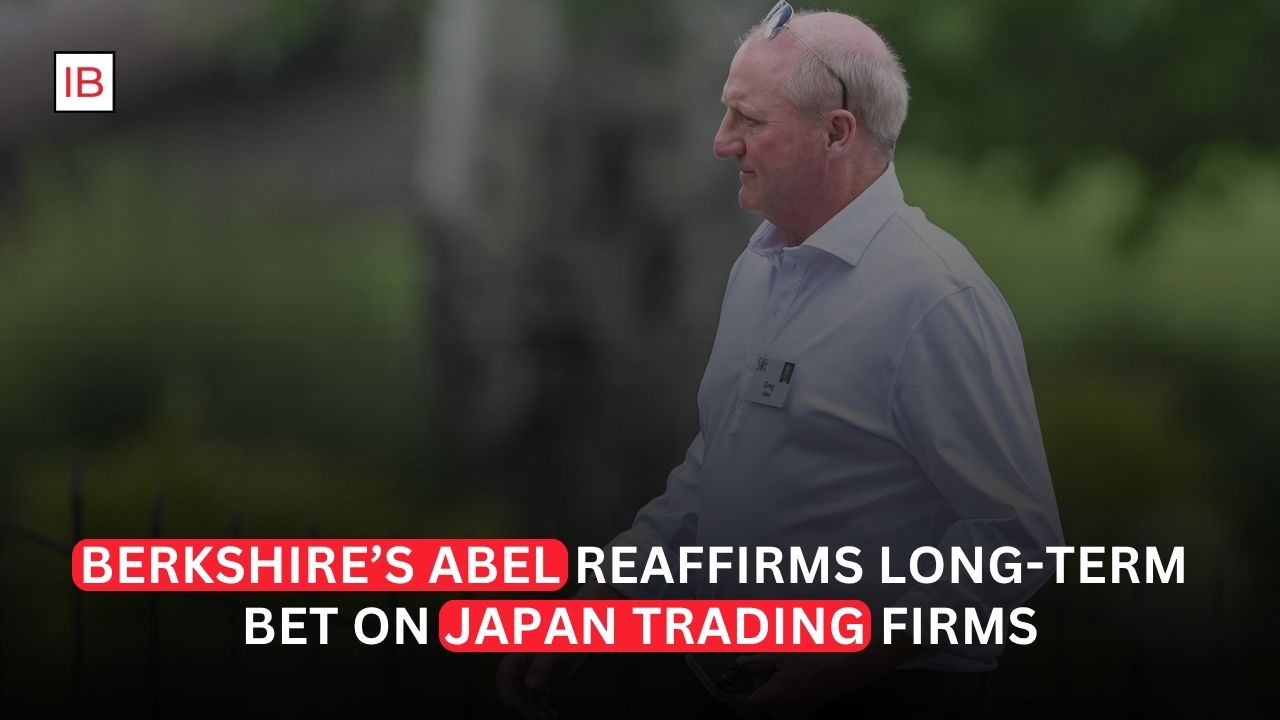
Berkshire Hathaway Chief Executive Officer Greg Abel has reaffirmed the company’s long-term commitment to Japan’s leading trading houses, signaling that the investment strategy associated with Warren Buffett will remain an important part of Berkshire’s portfolio under its new leadership.
Speaking from Tokyo, Abel said Berkshire intends to maintain its stakes in the five Japanese trading companies for the long haul. The companies — Itochu Corp., Marubeni Corp., Mitsubishi Corp., Mitsui & Co., and Sumitomo Corp. — have become one of Berkshire’s most significant international investments. The combined value of the holdings is now estimated at about $42 billion.
Berkshire began building positions in the five companies in 2020, when their relatively low valuations, diversified businesses and shareholder-friendly policies attracted Buffett’s attention. The trading houses operate across a broad range of industries, including energy, commodities, infrastructure, food, finance and manufacturing. Their diversified structures helped Berkshire view them less as traditional trading businesses and more as collections of operating assets capable of producing cash over decades.
The investment has grown considerably since Berkshire first disclosed the positions. The company has repeatedly increased its ownership, eventually crossing the 10% level in all five firms. Regulatory filings showed Berkshire’s holdings in Sumitomo and Marubeni moved above 10% in May 2026, completing a milestone across the Japanese portfolio.
Abel’s comments are particularly important because they offer investors an early indication of how Berkshire’s investment philosophy is evolving after Buffett’s retirement as CEO. Buffett stepped down at the end of 2025, with Abel taking over as chief executive on Jan. 1, 2026. Although Buffett remains chairman, the responsibility for capital allocation and Berkshire’s operating strategy increasingly rests with Abel.
Rather than signaling a departure from Buffett’s international bets, Abel appears to be strengthening them. His confidence comes despite a significantly different financial environment in Japan. Japanese interest rates have risen sharply, and the 10-year government bond yield recently reached around 3%, its highest level in almost three decades. Abel nevertheless said borrowing costs for the trading houses remain manageable and described yen-denominated financing as a sensible strategy. Berkshire itself has more than $15 billion of yen-denominated debt.
The higher-rate environment could actually create additional opportunities. Japanese companies have spent years improving capital efficiency, reducing cross-shareholdings and returning more money to shareholders. Berkshire has benefited as the trading houses have expanded dividends and strengthened their balance sheets while continuing to invest in new businesses.
Abel’s willingness to maintain the stakes also demonstrates Berkshire’s preference for partnerships rather than short-term trading. The company has developed relationships with the Japanese firms’ management teams and has discussed opportunities for Berkshire’s operating businesses to work with them. That could allow the investment to evolve beyond simply owning publicly traded shares.
Berkshire has already expanded its Japanese strategy beyond the five trading houses. The company recently invested about $2 billion in Tokio Marine and formed a strategic partnership with the Japanese insurer, showing that Berkshire sees additional opportunities in Japan’s corporate sector.
The Japan strategy also fits Berkshire’s broader approach under Abel. While the company has recently made large investments in US businesses, including housing and technology-related opportunities, Abel continues to emphasize businesses with durable competitive advantages, strong cash generation and long investment horizons.
For Japanese investors, Berkshire’s continued commitment provides another vote of confidence in the country’s corporate transformation. For Berkshire shareholders, it offers reassurance that the transition from Buffett to Abel does not necessarily mean abandoning one of Buffett’s most successful international investment themes.
The key question now is how far Berkshire will take the strategy. With stakes above 10% in all five trading houses and new relationships emerging in Japan’s insurance industry, Abel has room to deepen Berkshire’s presence. His latest comments suggest that the Japan portfolio is not a legacy position waiting to be sold, but a strategic investment that Berkshire expects to hold and develop for many years.