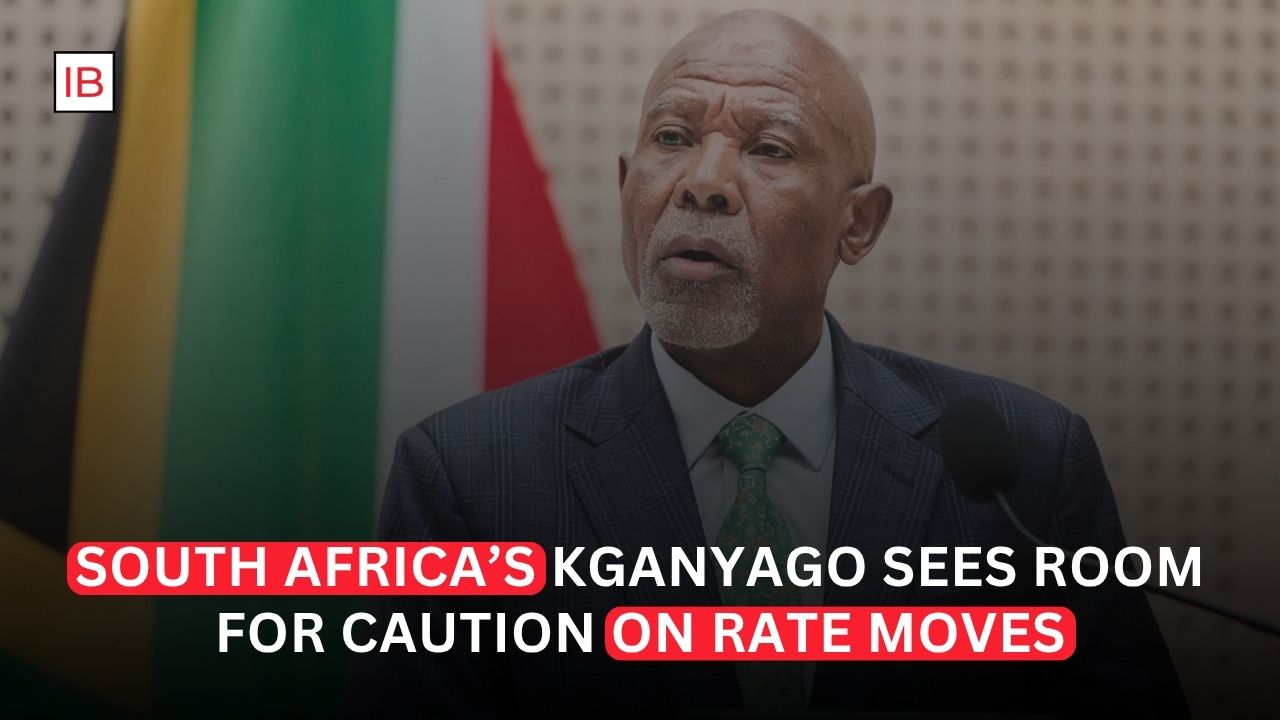
Central Bank Governor Signals Policymakers Will Remain Careful as Inflation Risks Persist. South African Reserve Bank Governor Lesetja Kganyago has indicated that policymakers have room to remain cautious when making future interest rate decisions, as the country continues to face inflation risks and uncertainty in the global economy.
Kganyago’s comments come after the central bank kept its benchmark repo rate unchanged at 7% in July, following an earlier increase as policymakers responded to renewed inflation pressures. The Monetary Policy Committee was divided over the decision, highlighting the difficult balance between controlling inflation and supporting economic growth.
Inflation Outlook Remains Key Focus
The South African Reserve Bank has continued to closely monitor inflation expectations, energy prices and global economic developments.
Rising oil prices and instability in the Middle East have created additional uncertainty for central banks, particularly in countries that are exposed to higher imported energy costs. Earlier this year, the Reserve Bank warned that higher energy prices linked to regional conflict could increase inflationary pressures.
Kganyago has emphasized that future policy decisions will depend heavily on incoming economic data and the evolving outlook for inflation.
Caution Over Further Rate Changes
The governor’s remarks suggest that policymakers are not under pressure to make rapid changes to interest rates and can take time to assess how economic conditions develop.
The central bank must weigh the risk that inflation could accelerate against concerns that higher borrowing costs could slow an already fragile economic recovery.
South Africa’s policy rate was raised to 7% in May before being held at that level in July. The July decision was supported by four members of the six-person Monetary Policy Committee, while two members preferred another 25-basis-point increase.
Global Risks Add to Uncertainty
International developments remain an important factor in South Africa’s monetary policy outlook.
Higher global energy prices, geopolitical tensions and changes in major economies can affect inflation, the rand and financial conditions in South Africa. The rand strengthened on September 3 as a weaker US dollar and higher gold prices supported the currency, although global market conditions remain volatile.
A stronger rand can help reduce imported inflation, while higher oil prices can have the opposite effect by increasing fuel and transport costs.
Growth Also Remains a Concern
While inflation remains a major priority, the central bank also faces pressure to avoid unnecessarily restricting economic activity.
Higher interest rates increase borrowing costs for households and businesses, potentially affecting consumer spending and investment. Policymakers must therefore determine whether inflation risks are strong enough to justify further tightening.
Kganyago’s cautious approach suggests the Reserve Bank will continue to assess both inflation and growth conditions before committing to its next policy move.
Markets Watch Next Rate Decision
Investors will now focus on upcoming inflation, growth and currency data for signals about the direction of South African interest rates.
The central bank has made clear that future decisions will remain dependent on economic developments rather than following a predetermined path. With inflation risks still present but growth concerns continuing, policymakers are expected to proceed carefully.
For now, Kganyago’s comments reinforce the message that the South African Reserve Bank has room to wait and assess the economic outlook before deciding whether interest rates need to move again.