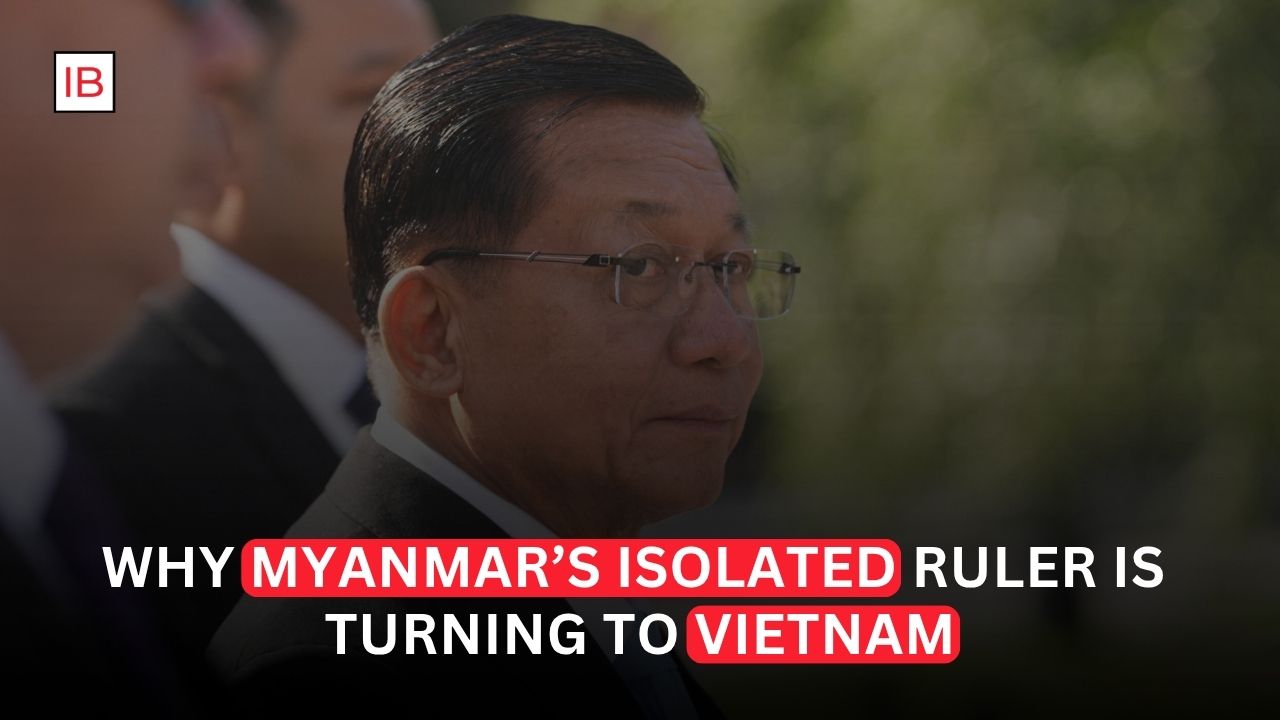
Myanmar President Min Aung Hlaing has begun a three day official visit to Vietnam as his government seeks stronger regional relationships, economic opportunities, and greater international engagement. The September 4 to 6 visit comes as Myanmar continues to face diplomatic isolation and conflict following the military takeover in 2021.
The trip gives Myanmar an opportunity to strengthen ties with one of its Southeast Asian neighbors while pursuing cooperation in areas such as telecommunications, electric vehicles, agriculture, investment, and security.
Vietnam Becomes an Important Stop for Myanmar
Min Aung Hlaing arrived in Vietnam on September 4 for an official visit at the invitation of Vietnamese President and Communist Party General Secretary To Lam. The two sides are expected to discuss bilateral relations and economic cooperation during the visit.
The timing is significant. Myanmar has struggled to maintain normal relations with many international governments since the military takeover. Its military backed government has faced sanctions and criticism over the conflict and human rights situation.
Vietnam, however, has maintained engagement with Myanmar. The two countries have diplomatic relations dating back to 1975 and have continued cooperation despite Myanmar’s political turmoil.
For Myanmar, maintaining relationships with countries in Southeast Asia can provide valuable diplomatic and economic channels at a time when access to international markets and institutions remains challenging.
Economic Cooperation Is a Major Focus
The visit is not only about diplomacy. Economic cooperation is expected to be an important part of the agenda.
Min Aung Hlaing is scheduled to attend the Myanmar Vietnam Business Forum, where officials and companies are expected to explore opportunities for investment and trade. Areas of interest include telecommunications, agriculture, consumer goods, and electric vehicles.
Myanmar needs foreign investment to support economic activity and rebuild infrastructure after years of political instability and armed conflict.
Vietnamese companies already have commercial interests in Myanmar, giving the two countries an existing foundation for further cooperation.
Expanding those links could provide Myanmar with additional investment while giving Vietnamese businesses access to a market with significant natural resources and a large population.
Viettel Offers a Key Connection
One of the most notable stops during the visit is Viettel, Vietnam’s defense and telecommunications group. The company has an established presence in Myanmar through its telecommunications operations.
Telecommunications could become an important area of cooperation because Myanmar needs stronger digital infrastructure and connectivity. Vietnam, meanwhile, has developed significant expertise in telecommunications and technology.
The relationship also has a security dimension because Viettel is connected to Vietnam’s defense ministry. Discussions involving telecommunications, digital technology, drones, or military equipment could therefore attract close attention.
For Myanmar, stronger cooperation with Vietnamese technology and infrastructure companies could help expand economic ties beyond traditional trade.
VinFast Adds an Electric Vehicle Dimension
The visit also includes engagement with VinFast, Vietnam’s electric vehicle manufacturer. The company has been expanding its international presence and already operates in markets including Indonesia and India.
Electric vehicles represent another potential area for economic cooperation. Myanmar has an emerging automotive market, while Vietnam is attempting to build a stronger regional position in electric vehicle manufacturing.
Partnerships involving electric vehicles could potentially include manufacturing, distribution, charging infrastructure, and technology.
However, Myanmar’s political and economic instability remains a major obstacle for large foreign investments. Companies must consider currency risks, sanctions, security concerns, and the wider business environment before committing significant capital.
Myanmar Seeks a Path Back Into ASEAN Engagement
The diplomatic importance of the Vietnam visit extends beyond bilateral relations.
Myanmar has faced restrictions within the Association of Southeast Asian Nations because of the military’s failure to make meaningful progress on the bloc’s peace plan. Min Aung Hlaing’s regional outreach can therefore be viewed as an attempt to rebuild connections within Southeast Asia.
Vietnam’s willingness to host the Myanmar leader provides an important diplomatic opening.
Myanmar cannot easily restore its international position through one visit. However, regular engagement with regional governments could help reduce its isolation and create channels for dialogue.
The government is also seeking recognition for its political transition after the military backed election process that brought Min Aung Hlaing to the presidency.
A Broader Foreign Policy Push
The Vietnam trip is part of a wider increase in Min Aung Hlaing’s international travel.
Since becoming president in April, he has visited or engaged with several countries, including India, China, Russia, and Thailand. His Vietnam visit represents another effort to expand Myanmar’s international relationships.
These relationships are particularly important because Myanmar depends heavily on regional powers for trade, investment, energy, technology, and diplomatic support.
China remains an important partner, while India also has strategic interests in Myanmar. Russia has developed strong military ties with the country.
Vietnam offers another regional relationship that could help Myanmar diversify its external partnerships.
Trade Between Myanmar and Vietnam Remains Limited
Despite the diplomatic relationship, trade between Myanmar and Vietnam remains relatively modest.
Bilateral trade declined significantly during the first half of 2026, reaching about $335 million, according to recent reporting. The weak trade figure highlights the gap between the two countries’ political engagement and their actual economic relationship.
Increasing trade will require more than government meetings. Businesses need predictable regulations, reliable infrastructure, stable financial systems, and confidence that investments can operate safely.
Myanmar’s ongoing conflict remains the largest challenge.
If political and security conditions remain unstable, foreign companies may continue to limit investment even when governments announce new cooperation agreements.
Security Cooperation Could Draw Attention
Security is another sensitive element of the relationship.
Myanmar’s military has faced international criticism since the 2021 takeover and subsequent conflict. Any expansion of military or defense cooperation with Vietnam could therefore receive significant international attention.
At the same time, both governments have longstanding interests in maintaining security ties.
Potential cooperation in areas such as telecommunications, drones, and defense technology could strengthen the relationship, but it could also create diplomatic complications for Vietnam as it balances relations with other regional and global powers.
Vietnam has traditionally pursued a careful foreign policy that seeks strong relationships with multiple major powers. Its engagement with Myanmar fits within that broader approach.
Vietnam Has Its Own Strategic Interests
Vietnam is not engaging with Myanmar solely to help its neighbor.
Hanoi has its own economic and strategic interests. Vietnamese companies are looking for opportunities abroad, while the government wants stronger connections across Southeast Asia.
Myanmar’s location also gives it strategic importance. It sits between South and Southeast Asia and has access to the Bay of Bengal, making it relevant to regional trade and connectivity.
Vietnam can therefore benefit from maintaining practical relations with Myanmar while encouraging economic cooperation.
The relationship also gives Vietnam another channel for regional diplomacy at a time when Southeast Asia faces growing competition among major powers.
What Happens Next Will Matter More Than the Visit
The most important test will be whether the visit produces concrete results.
Governments frequently announce cooperation agreements during high level visits, but implementation can take years. Myanmar’s difficult economic conditions could make large projects particularly challenging.
The business forum and meetings with Vietnamese companies could create new opportunities, but investors will likely continue to assess political risk carefully.
For Myanmar, even limited progress could be valuable. New investment, stronger trade, and regional engagement could provide economic benefits while helping the government demonstrate that it is not completely isolated.
Myanmar Attempts to Rebuild Regional Connections
Min Aung Hlaing’s Vietnam visit represents a broader effort to rebuild Myanmar’s relationships with neighboring countries. The focus on business, technology, infrastructure, and security shows that Myanmar wants its foreign engagement to produce both political and economic benefits.
Vietnam has an opportunity to deepen its relationship with Myanmar while protecting its own strategic and commercial interests.
The visit is unlikely to resolve Myanmar’s broader political crisis or its international isolation on its own. However, it demonstrates that regional engagement remains possible despite the country’s continuing conflict.
The next question is whether the meetings in Hanoi lead to actual investment, stronger trade, and sustained diplomatic cooperation. If they do, Vietnam could become an increasingly important partner in Myanmar’s attempt to reconnect with Southeast Asia.