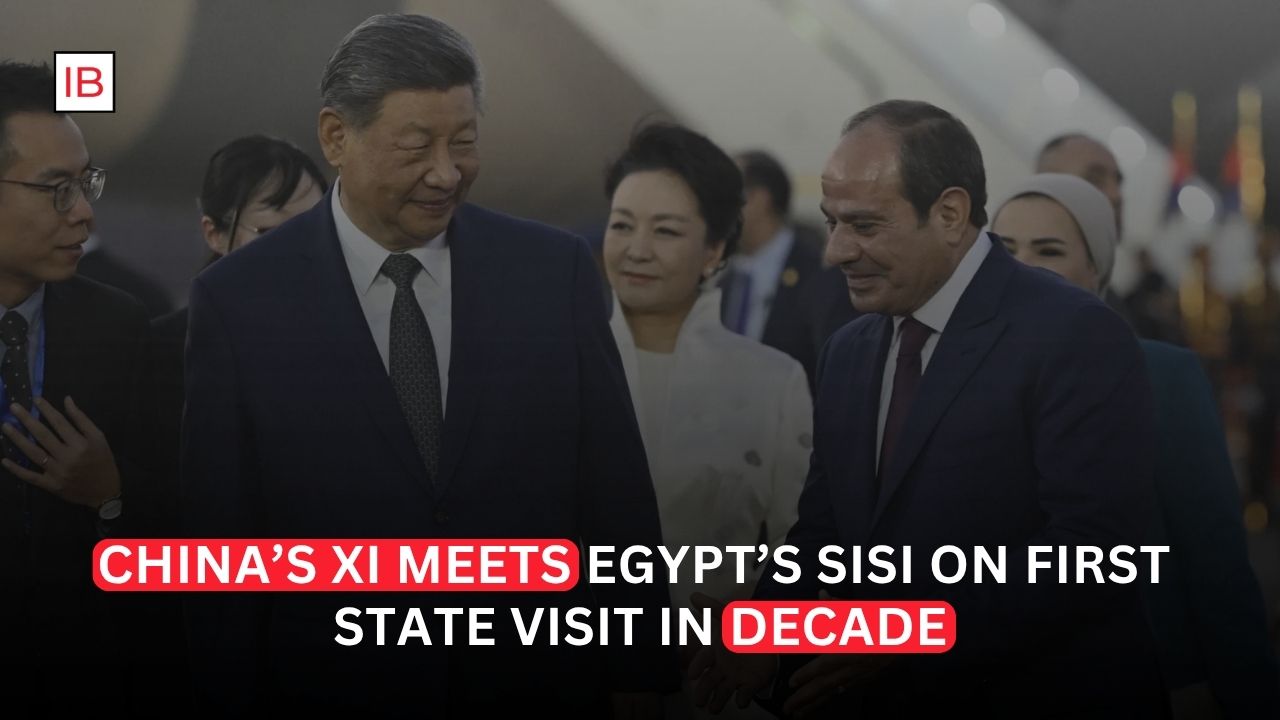
Chinese President Xi Jinping met Egyptian President Abdel Fattah al-Sisi in Cairo on Wednesday during his first state visit to Egypt in a decade, underscoring the rapidly deepening relationship between Beijing and one of the Middle East’s most strategically important countries. The visit comes as regional alliances are shifting amid the war involving the US and Iran and growing uncertainty over Washington’s long-term role in the region.
Xi’s trip is particularly significant because it comes 10 years after his previous visit to Egypt, when he traveled to Cairo in January 2016. Since then, China and Egypt have expanded cooperation in infrastructure, manufacturing, energy and technology, while their relationship has developed into a comprehensive strategic partnership. Their diplomatic ties also reached a major milestone this year, marking seven decades of formal relations.
For Egypt, closer ties with China fit into President Sisi’s broader strategy of diversifying international partnerships. Cairo remains a major US ally and receives about $1.3 billion in annual American military assistance, but Egypt has increasingly developed economic and security relationships with China, Russia and European countries. The approach gives Egypt additional options at a time when regional security arrangements are undergoing significant change.
China, meanwhile, views Egypt as an important gateway into Africa and the Middle East. Egypt controls the Suez Canal, one of the world’s most important shipping routes, and occupies a strategically valuable position between Asia, Africa and Europe. Chinese companies have invested heavily in Egyptian infrastructure and manufacturing, including projects connected to the Suez Canal economic zone and Egypt’s new administrative capital.
Economic cooperation is expected to remain central to Xi and Sisi’s discussions. Chinese investment in Egypt has expanded across industrial production, energy, transportation and technology. Bilateral trade exceeded $17 billion in 2024, while Chinese companies have established manufacturing operations that use Egypt as a potential export base for regional markets.
The two governments are also looking toward newer areas of cooperation. Technology, artificial intelligence, clean energy and digital infrastructure are increasingly becoming part of the relationship. Chinese companies have already played a major role in Egypt’s infrastructure modernization, and Beijing is seeking to expand its technological footprint as countries across the Middle East accelerate investment in AI and advanced industries.
Security cooperation is another increasingly important element. China and Egypt recently conducted joint military exercises involving Chinese J-16 fighter jets and French-made Rafale aircraft operated by Egypt. The exercises demonstrated that military ties between Beijing and Cairo are moving beyond symbolic diplomacy and into more practical cooperation.
Regional instability gives Xi’s visit additional importance. The ongoing US-Iran conflict has disrupted energy markets and created uncertainty across the Gulf and wider Middle East. Egypt has strong interests in regional stability because instability can affect tourism, investment, shipping through the Suez Canal and access to energy. Xi has used the visit to emphasize China’s support for regional stability, multilateral cooperation and greater coordination among countries of the Global South.
Beijing’s growing engagement with Cairo also reflects a broader Chinese effort to strengthen its influence across the Middle East without presenting itself solely as a military power. China has sought to build relationships through trade, infrastructure, technology and diplomatic initiatives, while maintaining ties with countries that have very different political and security interests.
For Sisi, the relationship offers access to investment and technology while reducing dependence on any single international partner. Egypt’s difficult economic situation has increased the importance of foreign capital, infrastructure financing and industrial investment. Chinese participation can potentially support Cairo’s ambitions to expand manufacturing capacity and strengthen its role as a regional logistics and production center.
However, the growing relationship also creates challenges. Egypt must balance its expanding cooperation with China against its longstanding security partnership with the United States and relationships with European governments. Beijing, meanwhile, must demonstrate that increased economic and political involvement can deliver practical benefits without creating new financial or strategic tensions.
Xi’s meeting with Sisi therefore represents more than a ceremonial return to Cairo. It signals a relationship that has expanded significantly since his last visit and reflects China’s ambition to deepen its position in a region undergoing major geopolitical change. For Egypt, closer ties with Beijing offer another source of investment, technology and diplomatic support. For China, Egypt provides strategic access to the Middle East, Africa and the Suez Canal, making the partnership increasingly valuable to both sides.