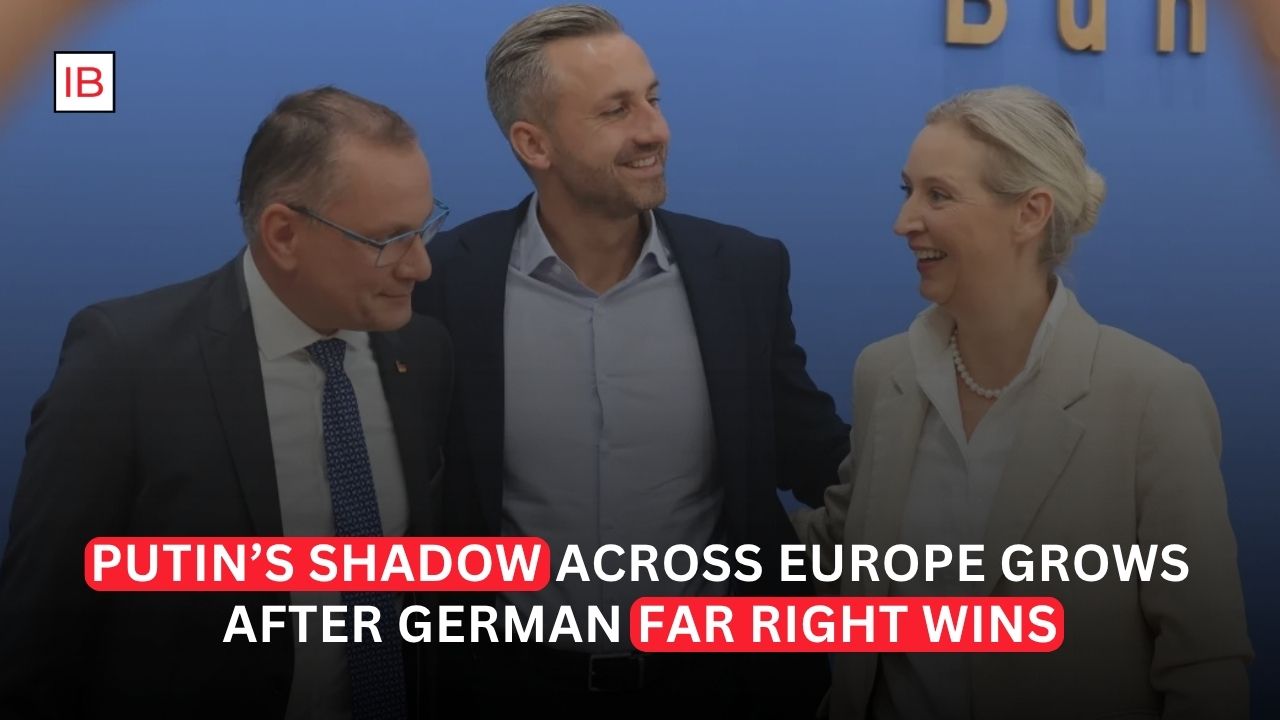
The historic victory of Germany’s far-right Alternative for Germany in Saxony-Anhalt has intensified concerns over Russia’s growing political influence in Europe, placing renewed pressure on Chancellor Friedrich Merz and raising questions about Germany’s future approach to Moscow and support for Ukraine.
The AfD won 43.8% of the vote in Sunday’s state election, more than doubling its 2021 result and finishing far ahead of Merz’s Christian Democratic Union, which collapsed to 17.2%. The AfD won 39 of the state parliament’s 83 seats, leaving it just short of an outright majority but putting it in an unprecedented position to seek control of a German state government.
The result does not mean Vladimir Putin has gained direct control over German politics, and attributing the AfD’s success primarily to Russia would overlook the domestic forces driving voters toward the party. Immigration, economic frustration, dissatisfaction with established parties and concerns over living standards all played important roles. Turnout reached 77.8%, suggesting that the AfD was also highly successful in mobilizing voters who had previously stayed away from the polls.
But Russia is an important part of the political equation. The AfD has consistently advocated closer relations with Moscow, criticized German military support for Ukraine and opposed policies that have increased confrontation with Russia. Its victory therefore comes at a particularly sensitive moment, as Germany is attempting to strengthen its defense capabilities while maintaining a central role in European support for Kyiv.
The timing is even more striking because German authorities recently attributed an attempted drone attack on Leipzig/Halle Airport to Russia, an incident that has intensified debate about Moscow’s use of hybrid tactics against Germany. The episode has exposed a deep political divide: while the government has emphasized the security threat posed by Russia, the AfD has challenged Berlin’s approach and argued for a fundamentally different relationship with Moscow.
Russian influence does not necessarily require direct interference to have an impact. Moscow can benefit from political movements that oppose sanctions, question military assistance to Ukraine or seek to weaken European unity. Analysts have warned that the AfD could provide Russia with a powerful political platform inside Germany if it eventually gains influence at the federal level.
Research published ahead of the Saxony-Anhalt election found that Kremlin-linked information campaigns were amplifying AfD messages while portraying Germany’s support for Ukraine and confrontation with Moscow as dangerous steps toward a wider war. Such narratives framed the election as a choice between continued escalation and a return to diplomacy with Russia.
The AfD’s breakthrough also matters beyond Germany. Europe has spent much of the past decade struggling with the political consequences of migration, inflation, weak economic growth and the war in Ukraine. Right-wing and nationalist parties have gained ground in several countries, creating a political environment in which skepticism toward EU institutions and closer relations with Russia can find larger audiences.
Germany is particularly important because of its economic and political weight. A sustained shift in German public opinion could eventually affect European sanctions policy, defense spending and support for Ukraine. Even without entering government, a stronger AfD can pressure mainstream parties to adjust their positions on migration, energy, national sovereignty and foreign policy.
For now, however, the AfD faces the same obstacle that has blocked it elsewhere in Germany: the political firewall maintained by mainstream parties. Merz has rejected cooperation with the party, despite the CDU’s disastrous performance in Saxony-Anhalt. The AfD’s 39 seats leave it dependent on other lawmakers if it wants to form a government, while established parties remain reluctant to break a postwar taboo against governing with the far right.
That firewall is under growing pressure. The AfD’s result gives it a powerful argument that millions of German voters want it treated as a legitimate governing force rather than permanently excluded from power. Whether other parties can maintain their refusal while addressing the issues that produced the result will be one of Germany’s biggest political challenges.
For Putin, the attraction is clear. A divided Europe is strategically less capable than a united one, particularly on Ukraine and defense. Every electoral breakthrough by a Russia-friendly political force creates another potential source of disagreement over sanctions, military assistance and the future of European security.
Yet the German result also demonstrates the limits of Moscow’s influence. The AfD’s rise is rooted substantially in German domestic politics, and voters cannot simply be reduced to instruments of Russian strategy. The more immediate lesson for Berlin may be that economic dissatisfaction, migration concerns and distrust of established parties are creating political openings that Russia can exploit—but did not necessarily create.
The next test will be whether the AfD can convert its electoral breakthrough into governing power. If it succeeds in Saxony-Anhalt or continues advancing in other eastern German states, the party could transform from a protest movement into a permanent force in European politics. That would make Russia’s shadow over Germany longer and harder to ignore, even if the forces producing the shadow are ultimately domestic as much as foreign.