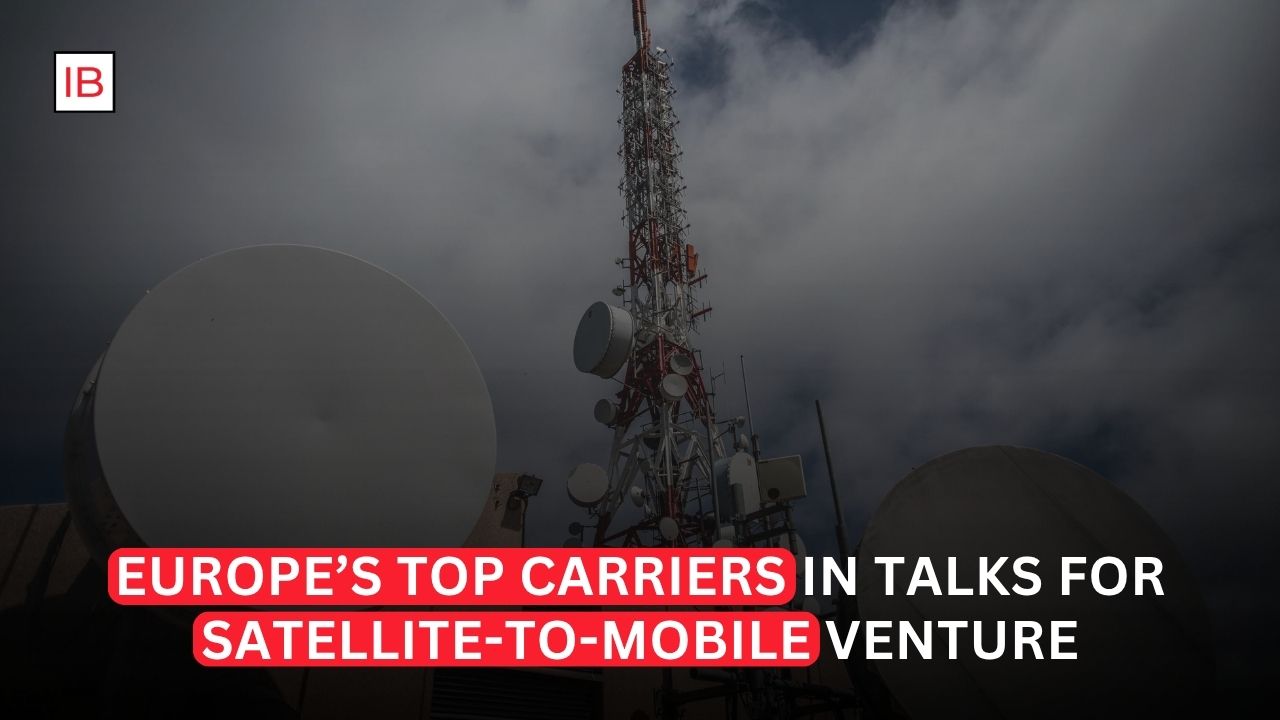
Europe’s largest mobile operators are discussing a potential joint venture that could create a homegrown satellite-to-mobile service, bringing Deutsche Telekom, Orange, Vodafone and Telefónica together in an effort to compete with Elon Musk’s Starlink and strengthen Europe’s control over critical communications infrastructure. The discussions are still at an early stage, with no final decision on whether the consortium will be formed or submit a bid.
The four operators are considering jointly bidding for part of the 2 gigahertz spectrum that the European Union has proposed reserving for a European satellite operator. The initiative reflects Brussels’ growing emphasis on strategic autonomy in space and telecommunications, particularly as satellite networks become increasingly important for communications resilience, emergency services, defense and connectivity in areas where terrestrial networks are unavailable.
A successful consortium would give Europe another potential route into the rapidly developing direct-to-device market. Unlike traditional satellite broadband services that generally require dedicated terminals or antennas, direct-to-device technology is designed to connect satellites directly with ordinary smartphones. That can allow users to send messages, make calls or eventually access data in areas outside conventional cellular coverage.
The technology is moving quickly from experimentation toward commercial deployment. Omdia said earlier this year that 22% of European mobile network operators had already launched, were testing or had announced direct-to-device satellite partnerships as of March. Current commercial offerings remain relatively limited, particularly for high-bandwidth services, but operators increasingly view satellite connectivity as an extension of terrestrial mobile networks rather than a separate communications market.
The European carriers are already pursuing different satellite strategies, making a unified venture potentially significant. Deutsche Telekom has partnered with SpaceX to extend mobile coverage in parts of its European footprint, with commercial launches planned in several markets from 2028. Orange has separately partnered with AST SpaceMobile and Satellite Connect Europe, while Telefónica has explored opportunities with the same European satellite venture. Vodafone is itself a partner in Satellite Connect Europe, a joint venture with AST SpaceMobile.
That fragmented landscape highlights the strategic calculation behind the proposed consortium. Europe has historically operated a large number of separate national telecommunications markets, limiting scale compared with the United States and China. Satellite connectivity could become another area where European companies need greater coordination if they want to compete against companies able to deploy global networks and invest billions of dollars in space infrastructure.
Starlink currently has a major first-mover advantage. SpaceX has deployed thousands of low-Earth-orbit satellites and has rapidly expanded its direct-to-cell ambitions, working with mobile operators in multiple countries. Its existing satellite network gives it a substantial infrastructure advantage, while its vertically integrated model allows SpaceX to control satellite deployment and much of the underlying technology.
Europe’s potential response is therefore about more than commercial competition. Policymakers increasingly regard telecommunications networks, satellites and access to space as strategic infrastructure. Europe has become more cautious about depending on American technology following Russia’s invasion of Ukraine and amid growing geopolitical tensions between the United States and Europe. The successful launch of Europe’s first fully commercial orbital rocket by Germany’s Isar Aerospace on September 5 has provided another sign of the continent’s push for greater independence in space.
The proposed mobile-satellite consortium could also benefit from the EU’s willingness to reserve spectrum for European operators. Securing access to suitable frequencies is one of the most important prerequisites for direct-to-device services because satellites must operate within carefully coordinated spectrum allocations to communicate with terrestrial handsets without causing harmful interference.
For consumers, the eventual objective would be relatively simple: a phone that remains connected even when conventional mobile towers disappear. Remote communities, travelers, emergency responders and maritime users could benefit from coverage extending beyond terrestrial networks. In disaster zones, satellite-to-mobile connectivity could also provide a backup when storms, earthquakes or other events damage cellular infrastructure.
Yet substantial challenges remain. The operators would need to agree on financing, spectrum strategy, satellite technology and governance while navigating European competition and telecommunications regulation. They would also face a market in which Starlink and other satellite providers are already moving aggressively, while AST SpaceMobile and other companies are developing competing direct-to-device networks.
The talks nevertheless demonstrate how quickly satellite connectivity is becoming part of mainstream European telecom strategy. A consortium involving Deutsche Telekom, Orange, Vodafone and Telefónica would combine some of the continent’s largest customer bases and network resources and could provide the foundation for a distinctly European satellite-to-mobile platform.
Whether the plan develops into a formal bid remains uncertain. But the discussions underscore a broader shift: Europe no longer views satellite communications simply as a niche space-industry technology. As terrestrial networks approach broader coverage limits and geopolitical concerns make communications sovereignty more important, satellites are increasingly being treated as a strategic extension of Europe’s mobile infrastructure.