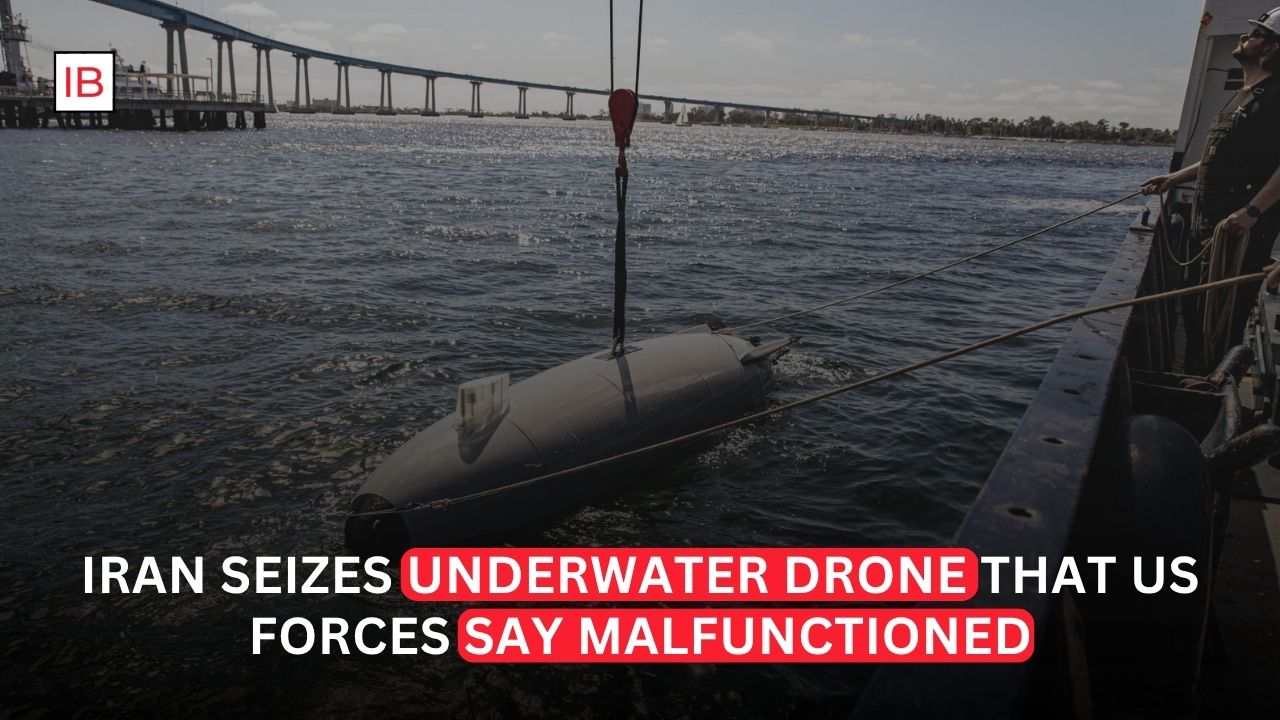
Iran says its forces have seized an American underwater drone near the Strait of Hormuz in what Tehran described as a sophisticated intelligence operation, while the United States has sought to minimize the incident by saying the unmanned vessel malfunctioned more than a day earlier and was an older model without sensitive surveillance equipment.
The confrontation adds another flashpoint to the increasingly dangerous U.S.-Iran standoff around the Strait of Hormuz, one of the world’s most important energy corridors. Iran’s Islamic Revolutionary Guard Corps said its naval forces captured the unmanned submarine near the entrance to the strait and characterized it as one of the most advanced U.S. military underwater systems. Iranian state media said images of the captured vessel would be released.
The Pentagon’s version is substantially different. U.S. Central Command spokesman Captain Tim Hawkins said the drone had been conducting surveillance in regional waters before malfunctioning more than a day before Iran claimed to have captured it. Hawkins described the system as defective and an older model, saying it did not collect sensitive data and did not carry classified sonar or radar equipment. U.S. officials also said American operations in the area were continuing.
That distinction is important because the strategic value of an unmanned underwater system depends heavily on its sensors, communications architecture and mission software. Losing an older vehicle with no classified equipment would be considerably less damaging than losing an operational platform capable of collecting sensitive information about U.S. naval activity, mines, submarines or shipping routes.
Iran nevertheless has an incentive to portray the seizure as a major intelligence success. Demonstrating that its forces can detect, intercept and recover American unmanned systems near Hormuz could strengthen Tehran’s deterrence message at a time when Washington is attempting to maintain control over maritime traffic through the strait.
The incident also highlights the growing role of uncrewed systems in the conflict. The U.S. Navy has increasingly deployed unmanned surface and underwater vehicles for missions including surveillance, mine-clearing and other operations where sending crewed vessels would carry greater risks. The technology allows militaries to maintain a persistent presence in contested waters without exposing sailors to every threat.
But unmanned systems create their own vulnerabilities. A malfunctioning vehicle can become an intelligence liability if it remains in an adversary’s territory or waters long enough to be recovered. Even when sensitive sensors or data are absent, an adversary may be able to examine physical construction, propulsion systems, communications equipment or other components for clues about military capabilities.
The Strait of Hormuz makes the episode particularly significant. The waterway normally carries roughly one-fifth of global oil and gas shipments, and its security has become a central issue in the wider conflict. Iran has maintained a blockade around the strait, while the United States has sought to keep shipping routes open and restrict Iranian energy exports.
The latest incident comes as military tensions are again escalating. Reuters reported Tuesday that Iran-backed Houthi forces attacked several Saudi cities, damaging oil installations and injuring more than 70 people. At the same time, explosions were reported near Iran’s Kharg Island oil hub and the port of Jask, while Washington continued economic pressure against Tehran with new sanctions targeting Iran’s aviation sector.
Oil markets are already sensitive to any development that threatens maritime traffic. Brent crude has remained below $100 a barrel despite severe disruptions because alternative export routes, increased non-OPEC production and weaker demand have partly offset the supply shock. A sustained deterioration in Hormuz security could nevertheless push physical oil markets tighter and raise transportation and insurance costs.
For Washington, the immediate priority is likely to prevent the seizure from becoming a propaganda victory for Tehran while avoiding an escalation over an unmanned vehicle that U.S. officials characterize as non-sensitive. For Iran, publicizing the capture serves a different purpose: it demonstrates that American technology is not invulnerable and that Iranian forces can operate in waters where U.S. naval power is heavily concentrated.
The incident may ultimately have limited intelligence consequences if the U.S. account is accurate. Its political and psychological significance could nevertheless be much larger. In a conflict increasingly defined by drones, missiles, blockades and contested shipping lanes, even a malfunctioning unmanned vehicle can become a symbol of military vulnerability.
The competing descriptions of the drone capture therefore tell two stories. Washington wants the episode viewed as the recovery of a defective, obsolete system with little intelligence value. Tehran wants it seen as proof that its forces successfully penetrated American surveillance operations at one of the world’s most strategically important waterways. As fighting intensifies around Hormuz, the battle over that narrative may matter almost as much as the drone itself.