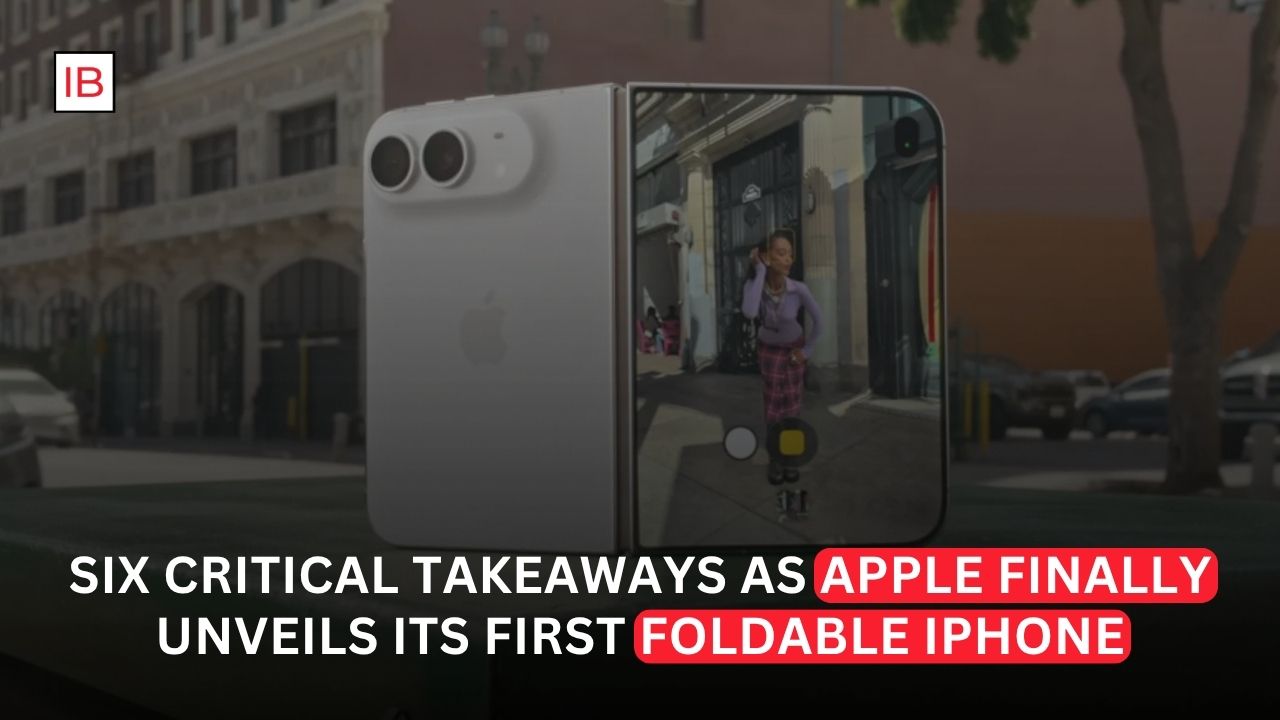
Apple has finally entered the foldable smartphone market, unveiling the iPhone Duo at its September 9 launch event in what could become the company’s biggest iPhone design change since the original device arrived in 2007. The event also marked new Chief Executive Officer John Ternus’s first major presentation in the role, putting both Apple’s hardware strategy and its ambitions in artificial intelligence under a brighter spotlight.
The headline product is the iPhone Duo, Apple’s first foldable smartphone. Designed to open like a passport, it has a 7.6-inch internal display and a 5.4-inch outer screen. Apple says the unfolded device is its thinnest iPhone ever, while the larger display is intended to make multitasking, gaming and content consumption more practical than on conventional smartphones.
The price makes clear that Apple is positioning the Duo as a premium product rather than a mass-market replacement for the traditional iPhone. It starts at $1,999, considerably above the new iPhone 18 Pro Max’s $1,299 starting price, and higher-storage versions can reach $3,199. Preorders for the Duo begin Oct. 16, with sales starting Oct. 23.
The second major takeaway is that Apple is treating the foldable format as a productivity device, not simply a larger screen. The company has redesigned iOS 27 for the Duo so users can work across applications and take advantage of the expanded display. Apple is also integrating Apple Intelligence and Siri AI with the device, emphasizing the combination of personal context, on-device processing and privacy.
That strategy reflects a broader change in how Apple is presenting the iPhone. Ternus described the device as an “intelligent personal hub” for AI, putting the smartphone at the center of Apple’s efforts to combine its custom silicon, cameras, microphones, displays and user data into a more capable personal-computing platform. His presentation also deliberately echoed Apple’s traditional product-launch style, including the famous “one more thing” introduction for the Duo.
The third takeaway is that Apple has entered the foldable market deliberately rather than early. Samsung, Huawei and other manufacturers have spent years developing foldable phones, allowing Apple to observe problems involving durability, battery life, software and camera performance before committing to the category. Samsung remains the leading foldable-phone manufacturer globally, while Huawei has also built substantial market share.
Apple’s late arrival could nevertheless transform the category. Foldable smartphones have remained a relatively small part of the overall handset market despite years of development. Analysts expect foldable shipments to grow rapidly in 2026, but the devices still face high prices and concerns about durability. Apple’s brand loyalty and enormous installed base could help move foldables from an enthusiast product toward a more mainstream premium category.
The fourth major development is the continued price pressure across Apple’s smartphone range. The iPhone 18 Pro starts at $1,199 and the Pro Max at $1,299, both $100 more than their predecessors. Component shortages, particularly in memory chips, are contributing to higher costs across the technology industry. The increases demonstrate that Apple is willing to protect margins even as consumers face a more expensive smartphone market.
The fifth takeaway is that the conventional iPhone lineup is becoming more differentiated. Apple introduced the iPhone 18 Pro and Pro Max with the new A20 Pro processor, upgraded cameras and longer battery life. The company is also changing its release strategy, with the standard iPhone 18 expected to arrive later rather than alongside the Pro models. That creates more room for Apple to emphasize its premium devices during the key September sales period.
Finally, the event showed that Apple is trying to make AI useful without surrendering control over privacy. The company highlighted on-device processing and a redesigned Siri experience rather than presenting AI simply as a chatbot feature. Apple also introduced a new Reference Image standard intended to help verify whether photographs are authentic and combat AI-generated manipulation, although the feature will not initially be available in the European Union or China.
Taken together, the announcements represent more than another annual iPhone upgrade. Apple is simultaneously introducing a new form factor, raising the ceiling on iPhone prices, expanding AI capabilities and beginning the John Ternus era. The iPhone Duo will be the most visible test of that strategy. If consumers accept a $1,999 foldable iPhone, Apple could establish a new premium category much as it reshaped the smartphone market in earlier generations.
But the risks are substantial. The Duo’s price puts it beyond the reach of most smartphone buyers, while established foldable manufacturers have years of experience in the category. Apple therefore needs more than a polished design to succeed: it must persuade consumers that its software, durability, multitasking and ecosystem justify paying a substantial premium for a technology competitors have already introduced.
For Apple, that is the central message from the event. The company is no longer simply refining the familiar iPhone rectangle. With the Duo, it is betting that the next major phase of smartphone growth will come from changing what the iPhone itself can be.