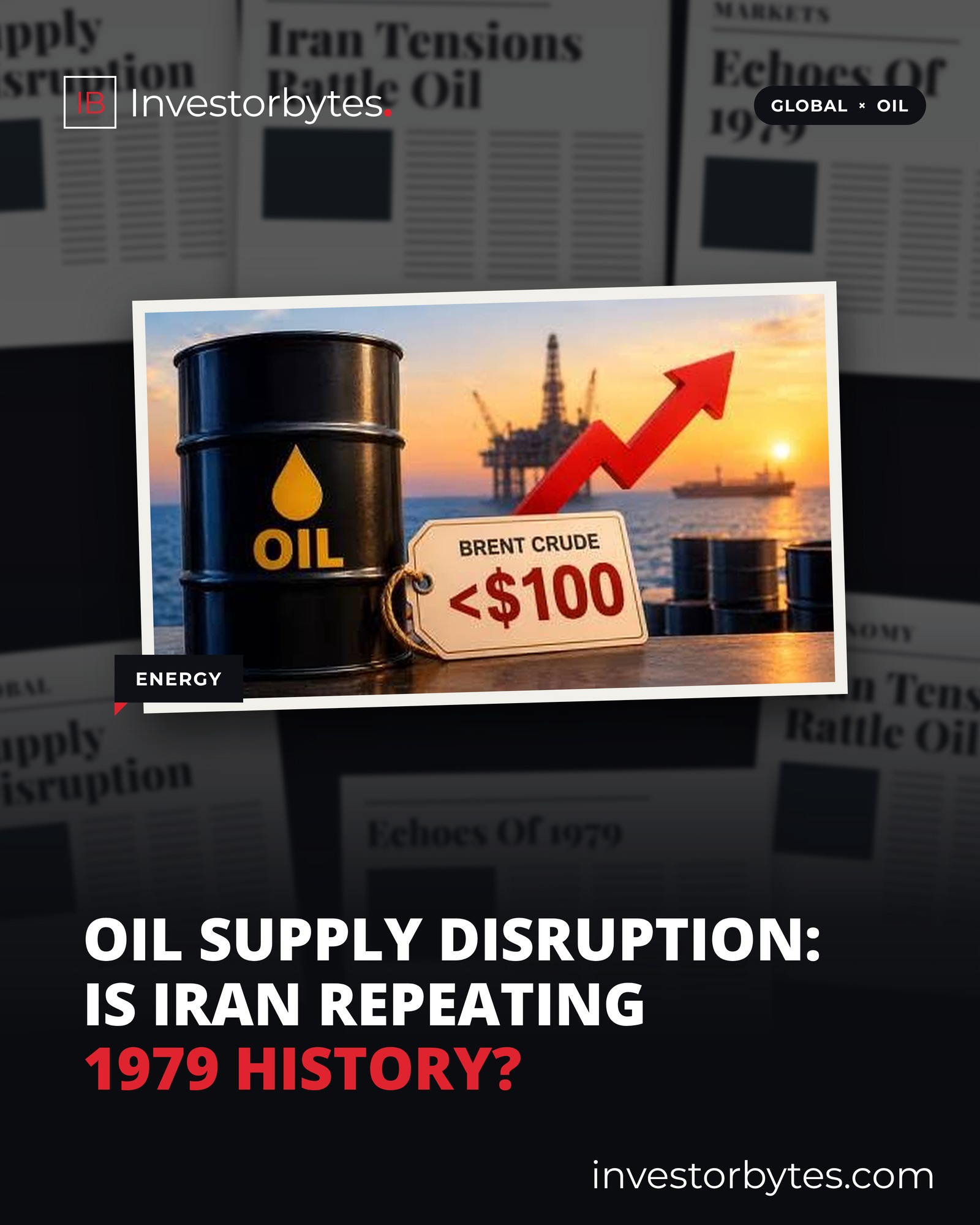
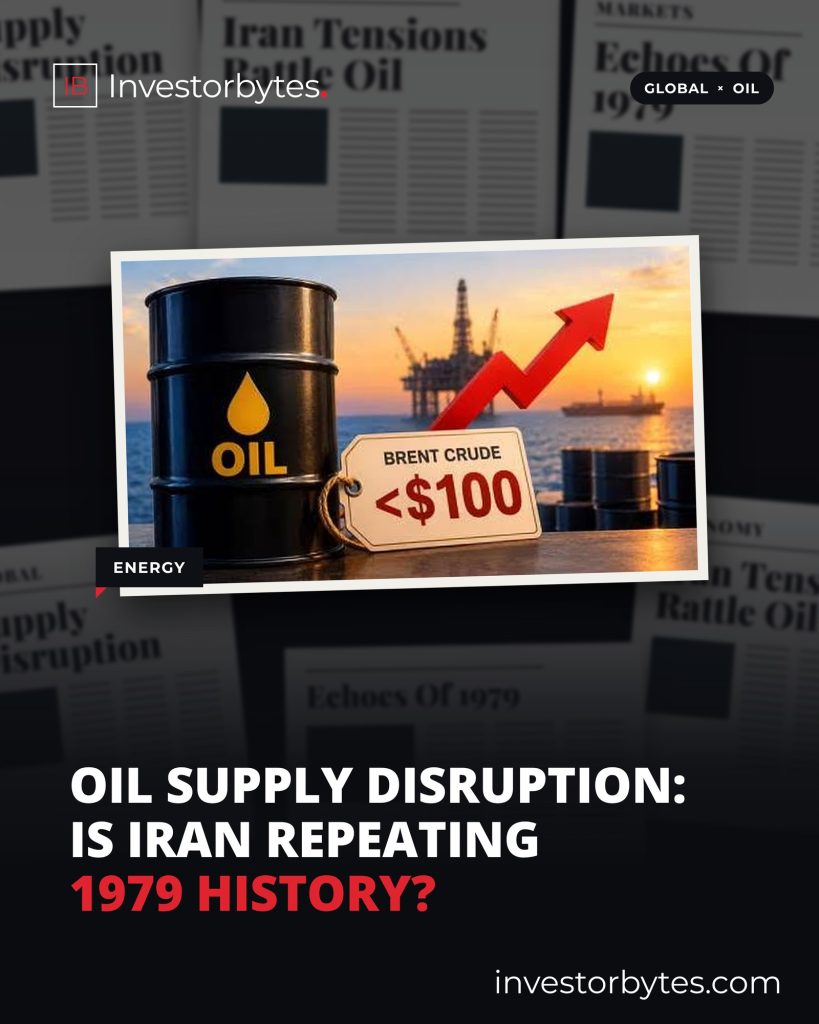
The global energy market is living through an extraordinary moment. The International Energy Agency has described the oil supply disruption triggered by the war involving Iran as the largest in the history of the global oil market. For traders, governments and consumers, the obvious question is whether the world is reliving the turmoil of the late 1970s, or whether this crisis will prove shorter and shallower than its historical echo suggests.
Christopher Stiegeler, a director at the brokerage EBC Financial Group, explored that question in World Finance’s conversation with EBC Financial Group. His assessment is sobering on the numbers, but his most important insight concerns something harder to measure: the role of fear itself in driving markets.
The Scale of the Oil Supply Disruption
According to Stiegeler’s current estimates, roughly 10 million barrels of oil per day are being lost to the market, compared with about 20 million barrels per day that flowed before the conflict from the affected supply routes. Losing around half of that volume represents a shock of unprecedented magnitude in absolute terms, which explains why the IEA has reached for such strong language.
At the centre of the crisis, once again, is the Strait of Hormuz. The narrow waterway between Iran and the Arabian Peninsula is the world’s most important oil chokepoint, linking the producers of the Gulf to buyers in Asia, Europe and beyond. Any threat to shipping there reverberates instantly through tanker rates, insurance premiums and benchmark crude prices. Alternative export routes exist, including pipelines that bypass the strait, but their capacity is limited and cannot fully replace seaborne flows.
Echoes of the 1979 Iranian Revolution
Stiegeler draws a direct comparison with 1978 and 1979, when strikes and political upheaval surrounding the Iranian Revolution took significant volumes of oil off the market. That episode helped produce the second great oil shock of the decade, following the Arab oil embargo of 1973, and contributed to a period of high inflation, recession and painful monetary tightening across much of the developed world.
The striking lesson Stiegeler highlights is that the barrels lost in 1979 were not the whole story. Fear became an economic force in its own right. Buyers rushed to secure supplies and build inventories, governments and companies scrambled for alternatives, and panic amplified the physical shortfall. In many economies, queues at petrol stations became a defining image of the period. The price response was far larger than the underlying supply loss alone might have justified.
Why Traders Are Watching the Future, Not the Present
That psychological dimension is very much present today. Stiegeler notes that oil traders, including EBC’s own clients, are less focused on how much crude is available right now than on what supply will look like next week, next month and beyond. Expectations about future scarcity drive positioning, hedging and inventory decisions, which in turn shape current prices.
This is where geopolitics and economics merge. Every diplomatic statement, military development or shipping incident in the Gulf feeds directly into price forecasts. A credible sign of de-escalation can knock several dollars off a barrel in a single session, while a fresh attack on infrastructure can send prices sharply higher. In such an environment, the oil market behaves less like a conventional commodity market and more like a real-time barometer of political risk.
From the Oil Field to the Consumer
If crude prices remain elevated, the effects will spread well beyond energy markets. Stiegeler points to the obvious pressure points: higher petrol and diesel costs for motorists and hauliers, rising expenses for manufacturers that rely on energy and petrochemical inputs, and heavier jet fuel bills for airlines. Sooner or later, those costs are passed on to consumers in the form of higher prices for goods, travel and services.
The global distribution of that pain is uneven. Major energy importers in Asia and Europe are especially exposed, while producers outside the conflict zone may benefit from higher revenues. Emerging economies that import fuel and borrow in dollars face a particularly difficult combination of rising import bills and pressure on their currencies. Central banks, meanwhile, must weigh the inflationary impulse against the risk of choking growth.
Financial markets are already reflecting these crosscurrents. Energy shares and the currencies of oil exporters tend to benefit when crude rises, while airlines, chemical producers and consumer-facing businesses often come under pressure. Safe-haven assets such as gold typically attract inflows when geopolitical risk spikes. Bond markets face a more complicated calculation, balancing the inflation threat from higher energy costs against the possibility that an extended oil supply disruption tips major economies toward recession. These shifting relationships make diversification and careful risk management especially important for investors with exposure across asset classes.
Temporary Risk Premium or Lasting Shock?
For markets, the key question, as Stiegeler frames it, is whether current prices reflect a temporary geopolitical risk premium or a deeper structural shock comparable to the late 1970s. The distinction is vital. A risk premium can evaporate quickly once tensions ease and shipping resumes, leaving those who bought at the peak nursing losses. A structural shock, by contrast, would reshape inflation, interest rates and growth for years.
There are reasons to think today’s world is better equipped than that of 1979. Many countries hold strategic petroleum reserves created precisely in response to the 1970s crises, the global economy uses less oil per unit of output than it did half a century ago, and energy sources have diversified. Yet the sheer scale of the current oil supply disruption means those buffers are being tested as never before, and strategic stocks can only bridge a gap for a limited period.
Conclusion
History rarely repeats itself exactly, but it often rhymes. The Iran war has revived memories of 1979, not only because of the lost barrels but because fear is once again shaping prices as powerfully as physical supply. Whether this oil supply disruption becomes a defining economic shock or a painful but passing episode will depend on how long the Strait of Hormuz remains under threat and how quickly confidence can be restored. Until then, volatility is likely to remain the market’s constant companion.
https://investorbytes.com/wp-admin/post.php?post=26582&action=edit