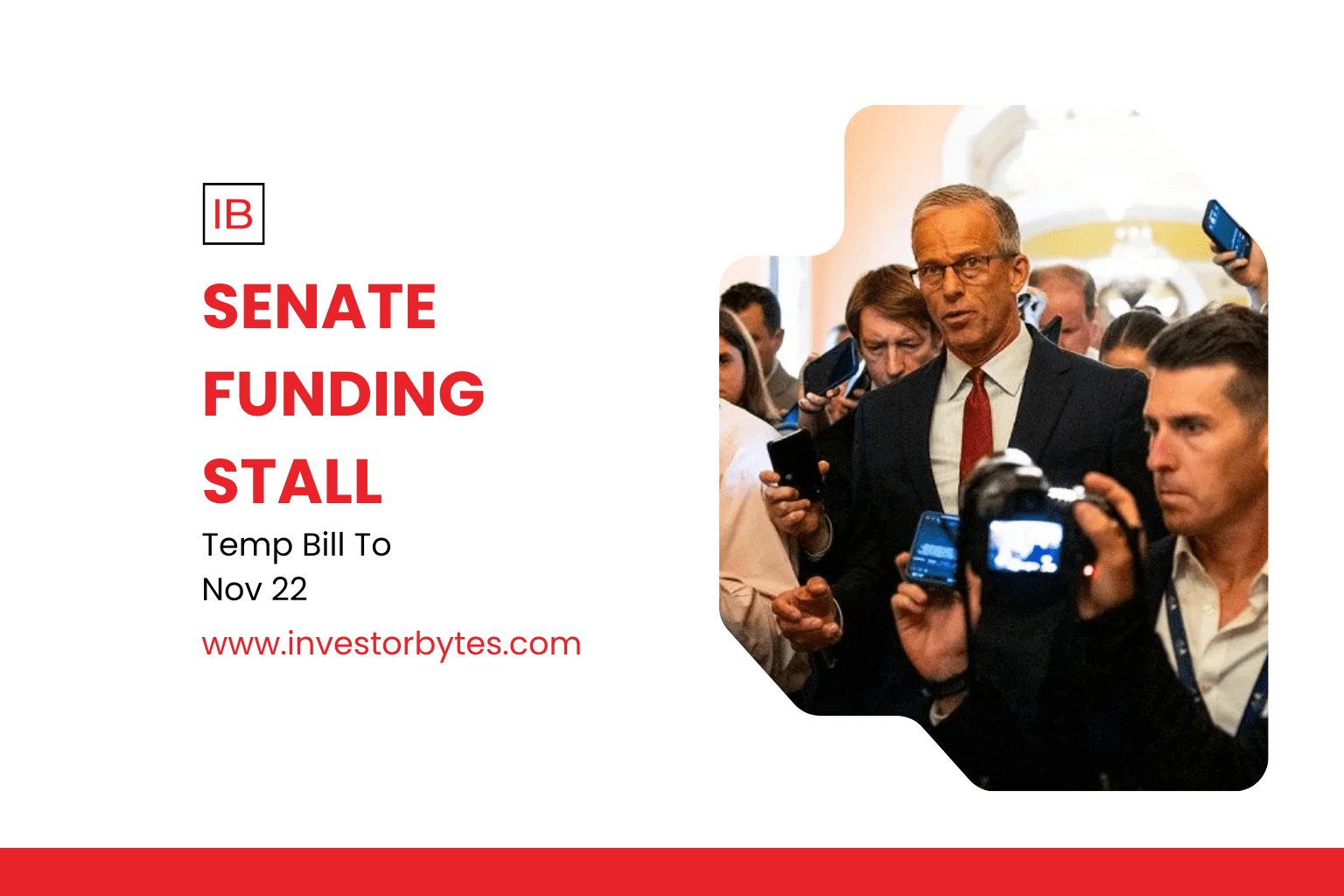
The U.S. Senate’s funding impasse stretches into its 38th day, with Republicans rejecting Democrats‘ latest proposal for a clean continuing resolution through January 30, 2026, in exchange for a one-year extension of Affordable Care Act tax credits that would cap premiums for 14 million enrollees. Senate Majority Leader John Thune’s 14th procedural vote on the House-passed bill—extending funding to November 21 without healthcare offsets—fell short 51-44, as Democrats invoked the filibuster, demanding protections for SNAP and Medicaid amid mounting shutdown fallout. The stalemate, now eclipsing the 2019 record, has furloughed 2.3 million federal workers, delayed $22 billion in Q4 GDP, and triggered 950 flight cancellations weekly due to air traffic controller shortages.
Behind closed doors, appropriations chair Susan Collins and ranking member Patty Murray broker a potential compromise: a bipartisan CR to March 15, bundled with $18 billion in disaster aid for Midwest floods, but Trump’s Truth Social veto threats—insisting on ACA repeal riders—stall progress. The White House’s absence from talks amplifies tensions; Press Secretary Karoline Leavitt insists on “fiscal responsibility,” yet internal memos reveal $16 billion in contingency funds for military pay, leaving civilian agencies like the IRS and EPA at 20% staffing. Consumer confidence plunges to 89.2 on the Conference Board index, the lowest since 2022, as small businesses report 15% loan denial spikes from SBA closures.
SNAP teeters: A Rhode Island federal judge’s November 6 order mandates full $8.9 billion November benefits by November 10, tapping $5.2 billion in USDA reserves and tariff revenues, but the 1st Circuit’s partial stay delays rural distributions, affecting 9 million recipients. States counter: New York’s $650 million infusion covers urban EBT reloads, while Texas sues for access to $4.1 billion in unallocated funds. Aviation strains intensify—FAA’s 12% controller reduction grounds 1,400 daily flights, with Southwest slashing 200 routes—prompting a GAO audit projecting $2.8 billion in airline losses.
Bipartisan fatigue mounts: 22 GOP senators, including Lindsey Graham, urge Thune to “end the charade,” floating a standalone $120 billion defense bill to unlock partial funding. Democrats, led by Chuck Schumer, decry “GOP hostage-taking,” citing 420,000 power outages from understaffed FEMA. Polls show 72% blame-sharing between parties, with Trump’s approval at 37% on economy. Whispers of a Sunday session grow, but filibuster reform odds sit at 28% per whip counts.
Economic models darken: JPMorgan slashes Q4 growth to 1.6% from 2.2%, forecasting 0.4% inflation rebound from supply snarls. Retail holiday prep halts—Walmart delays $1.2 billion in inventory—as 1.1 million contractors face unpaid bills. Resilience glimmers: Private donors pledge $280 million for federal aid, and California’s $140 million bridge loans sustain 45,000 workers.
This stall unveils not vote’s veto, but governance’s durable dance—veiled veils of 38 days from filibuster’s fence, where policy’s artistry yields reinvention’s radius in funding’s majestic march.