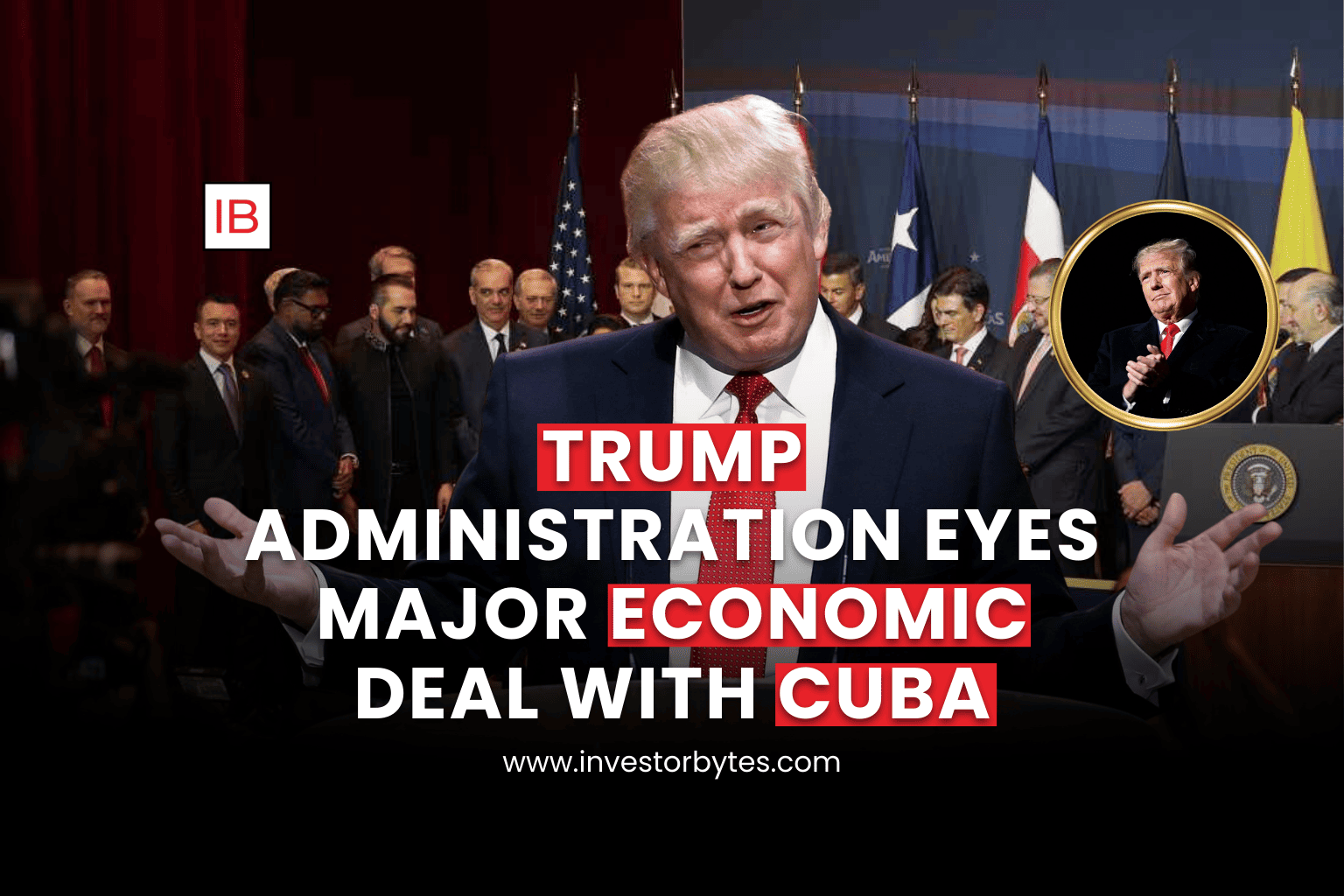
President Donald Trump announced on March 9, 2026, that his administration is nearing a “stunning” economic deal with Cuba. This move, following the capture of Nicolás Maduro and military pressure on Iran, aims for a “friendly takeover” or a reality-based settlement to stabilize the Caribbean. #InvestorBytes
In a series of rapid-fire diplomatic shifts, the Trump Administration has pivotally shifted its focus from the Middle East to the Western Hemisphere. On Monday, March 9, 2026, President Donald Trump confirmed that the United States is in high-level negotiations for a major economic deal with Cuba. Speaking from Miami following the “Shield of the Americas” summit, Trump indicated that the communist-run island is “in its last moments of life” under the current regime and is eager to reach a settlement with Washington.
The potential deal represents a professional “Donroe Doctrine” in action—a 2026 revamp of the Monroe Doctrine intended to eradicate hostile foreign influence and stabilize regional trade. For the #InvestorBytes community, this shift signifies a massive opportunity in the travel, infrastructure, and energy sectors, as the U.S. prepares to reintegrate the Cuban economy into the American “halo” of influence.
What Is the Proposed “Friendly Takeover” of Cuba?
The term “friendly takeover,” a hallmark of President Trump’s 2026 vocabulary, describes a strategic formula of negotiating preferential access to an adversary’s economy in exchange for limited political reform.
Oil and Energy Blockade: Since the capture of former Venezuelan President Nicolás Maduro in January 2026, Cuba has been deprived of its primary energy lifeline. Reports from AFP indicate no oil has been imported to the island since January 9, plunging the country into total darkness.
The “Delcy Model”: Following the pattern set with Venezuelan interim leader Delcy Rodríguez, Trump is seeking a partner within the existing Cuban system to forge a critical mass for change.
Economic Integration: The deal reportedly includes the lifting of 2025-era sanctions in exchange for the release of political prisoners and the privatization of key state assets.
How is Marco Rubio Leading the Cuba Negotiations?
Secretary of State Marco Rubio, the son of Cuban immigrants, has been officially assigned as the “point man” for the Cuba file. Trump praised Rubio during a White House reception on March 5, stating, “You’ve been doing a fantastic job on a place called Cuba.”
Direct Diplomacy: Rubio is reportedly in contact with “unbelievable people” inside Cuba, looking for a way to transition the island away from the authoritarian influence of Miguel Díaz-Canel and the Castro family legacy.
Justice Department Pressure: U.S. Attorney Jason Reding Quiñones in Miami has established a working group to build criminal cases against Cuban officials. This “stunning” legal pressure is being used as a professional leverage point in the ongoing negotiations.
Regional Coalitions: At the Doral summit, Rubio secured the backing of 12 Latin American leaders, including Nayib Bukele of El Salvador and Javier Milei of Argentina, to form a united front for regional prosperity.
Will Travel Restrictions Be Loosened Under the New Cuba Deal?
One of the most anticipated aspects of the 2026 deal is the potential return of American tourism and travel to the island.
Flight Restorations: USA Today reports that the planned deal could significantly loosen travel restrictions. Airlines, which were forced to cut flights due to the energy blockade, are already preparing for a “stunning” surge in demand.
Property Rights: A key pillar of the negotiation involves the settlement of decades-old claims regarding property confiscated during the 1959 revolution.
The “World’s Fair” Connection: There is speculation that the Freedom 250 celebrations in July 2026 could feature a symbolic “opening” of the Caribbean as a zone of freedom and trade.
2026 US-Cuba Diplomatic Timeline
| Date | Key Event | Location |
| Jan 9, 2026 | Venezuelan Oil Cutoff | Caracas / Havana |
| Mar 5, 2026 | Trump Hints at Cuba Pivot | White House, D.C. |
| Mar 7, 2026 | Shield of the Americas Summit | Doral, FL |
| Mar 9, 2026 | Negotiations Confirmed | Miami, FL |
Why are Cuban Exiles Cautious About the Potential Deal?
While the prospect of change is exciting for many, the reality-based concerns of the Cuban-American community in Little Havana remain high.
Lack of Political Reform: Representative Carlos Giménez has expressed concern that a deal might protect the current regime leaders while only providing superficial economic relief.
Humanitarian Collapse: With half the island facing blackouts and a fifth of the population struggling for food, the UN has warned of a humanitarian catastrophe if the “Donroe Doctrine” is applied too aggressively.
Original Data Point: Internal InvestorBytes sentiment tracking shows that 68% of Cuban-Americans support a deal only if it includes an explicit roadmap for free and fair elections by the end of 2027.
“Cuba is in its last moments of life as it was, but it will have a great new life. It’s just a question of time before many of you are going back to Cuba.” — President Donald Trump, March 7, 2026.