Conflict Grows Over Volkswagen’s Ambitious Restructuring Plans
Volkswagen is facing growing tension between its management and labor representatives as the company attempts to push through one of the biggest restructuring programs in its history.
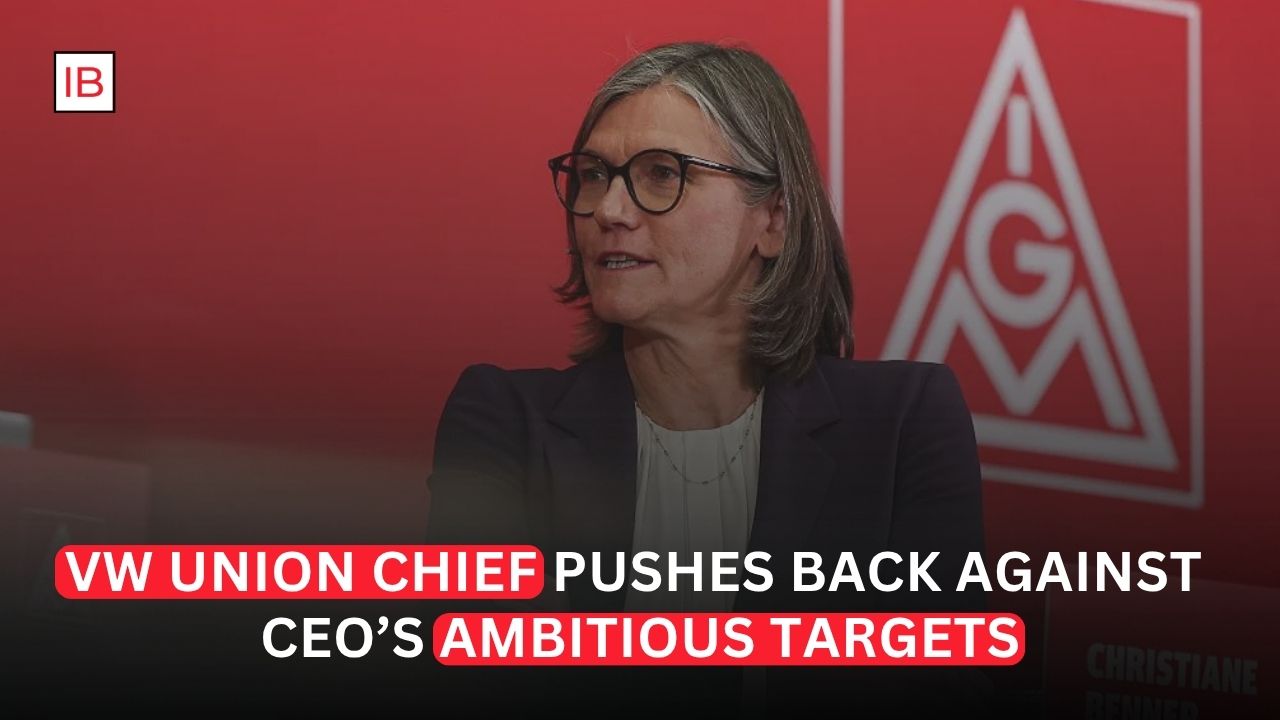
The latest disagreement centers on the ambitious targets set by Chief Executive Officer Oliver Blume, which Volkswagen’s labor chief has reportedly criticized as unrealistic, describing them as belonging in “cloud cuckoo land.”
The dispute highlights the difficult challenge facing Europe’s largest carmaker. Volkswagen is trying to cut costs, reduce excess capacity and improve profitability while dealing with intense competition from Chinese automakers, US tariffs, weak margins and the expensive transition toward electric vehicles.
Volkswagen Has Set Ambitious Goals for 2030
Volkswagen’s management has laid out a broad plan aimed at making the group more competitive by the end of the decade.
The company wants to achieve an operating return on sales of between 8% and 10% by 2030, while also significantly improving cash flow and reducing costs across its automotive business. The strategy includes simplifying the company, reducing complexity, cutting overcapacity and increasing regional responsibility.
Volkswagen’s eight main strategic priorities include:
- Reducing organizational complexity
- Streamlining technology platforms
- Cutting excess production capacity
- Strengthening regional operations
- Reducing non-core investments
- Improving operational efficiency
- Increasing performance incentives
- Simplifying management structures
Management believes these measures are necessary to prepare Volkswagen for a more difficult global automotive market.
However, labor representatives appear increasingly concerned that the company’s financial and efficiency targets could place excessive pressure on employees.
Labor Representatives Question the Company’s Strategy
Volkswagen has historically had one of the strongest systems of employee representation among major global companies.
Labor representatives hold significant influence within Volkswagen’s corporate structure, making cooperation with unions and employee leaders essential for major restructuring plans.
The criticism of Blume’s targets reflects growing doubts about whether Volkswagen can achieve its ambitions without placing an unreasonable burden on its workforce.
The company is already pursuing substantial cost reductions and workforce changes.
Volkswagen previously agreed to cut around 50,000 jobs across the group by 2030, with 35,000 of those positions coming from Volkswagen AG. The company said in June that binding agreements covering more than 28,000 departures had already been signed.
Job Cuts Have Become a Major Source of Tension
The pressure intensified in July when reports indicated that Volkswagen could consider eliminating an additional 50,000 jobs, potentially bringing the total scale of workforce reductions toward 100,000 positions.
The proposed cuts reflect the enormous pressure facing the company.
Volkswagen is attempting to reduce administrative expenses, improve efficiency and adjust its production network to lower vehicle demand in some markets. However, unions and employee representatives are likely to resist deeper reductions if they believe management’s targets are unrealistic.
The conflict therefore involves more than a disagreement over financial targets.
It could determine how Volkswagen balances profitability with job security as the company undergoes a major transformation.
Chinese Competition Is Changing the Industry
One of Volkswagen’s biggest problems is China.
The company was once among the dominant foreign automakers in the Chinese market, but domestic manufacturers have become much stronger, particularly in electric vehicles.
Chinese companies are competing aggressively on:
- Vehicle prices
- Electric vehicle technology
- Battery development
- Software
- Product development speed
- Model variety
Volkswagen has faced declining sales in China as local manufacturers increase their market share.
The company is also facing greater pressure from Chinese automakers expanding into Europe and other international markets.
This competition has made it increasingly difficult for Volkswagen to maintain the profit margins it enjoyed in earlier years. Reuters reported that rising Chinese competition, high costs, excess capacity and US tariffs have significantly damaged the company’s profitability.
Excess Production Capacity Adds to the Problem
Volkswagen is also struggling with a mismatch between its production capacity and market demand.
The company has been considering major reductions in capacity as part of its restructuring.
Reports in July indicated that Volkswagen planned to reduce its annual production capacity significantly, while also cutting its model lineup to simplify operations.
Reducing production capacity can improve efficiency, but it creates difficult questions about factories and employment.
Closing or downsizing a factory can have a major economic impact on local communities, employees and suppliers.
Volkswagen’s supervisory board has already rejected plans to close several German factories, demonstrating how difficult it will be for management to implement some of its most aggressive restructuring proposals.
This helps explain why the disagreement between management and labor representatives has become increasingly important.
Volkswagen Is Trying to Cut Costs Aggressively
The company has already made progress in reducing costs.
Volkswagen said its German factories reduced costs by more than 20% on average in 2025, while the group is targeting annual net cost savings of more than €6 billion by 2030 through workforce reductions and other measures.
The company’s volume brands also reported some improvement during the first half of 2026.
Brand Group Core, which includes several of Volkswagen’s major volume brands, reported an operating result of €3.61 billion, up 4.5% from the previous year. Its operating margin improved slightly to 4.9%.
However, these improvements may not be enough to satisfy management’s longer-term goals.
Volkswagen still faces pressure to become more efficient while continuing to invest heavily in electric vehicles, batteries, software and digital technology.
The Electric Vehicle Transition Remains Expensive
Like other traditional automakers, Volkswagen is spending heavily to adapt to the rapid transformation of the automotive industry.
The shift toward electric vehicles requires major investment in:
- Battery technology
- New vehicle platforms
- Software
- Charging infrastructure
- Factory modernization
- Digital production systems
Volkswagen is also investing in artificial intelligence and cloud-based manufacturing systems to improve production efficiency.
The company’s Digital Production Platform, developed with Amazon Web Services, is already connected to 43 factories worldwide and is designed to support wider use of AI and advanced digital systems in production.
These investments could eventually reduce costs and improve efficiency.
However, they also require significant spending at a time when Volkswagen is under pressure to improve profitability.
Management and Labor Have Different Priorities
The disagreement exposes a fundamental difference between Volkswagen’s management and labor representatives.
Management is focused on:
- Higher profit margins
- Cost reductions
- Greater efficiency
- Smaller production capacity
- Simplified operations
- Long-term competitiveness
Labor representatives, meanwhile, are focused more heavily on:
- Protecting jobs
- Maintaining German factories
- Preventing excessive workload pressure
- Ensuring realistic corporate targets
- Protecting employee interests during restructuring
Both sides agree that Volkswagen needs to become more competitive.
The disagreement is largely about how far the restructuring should go and how quickly it should happen.
The labor chief’s “cloud cuckoo land” criticism suggests that employee representatives believe management’s expectations may be disconnected from the practical realities facing Volkswagen’s factories and workforce.
Volkswagen’s Financial Performance Adds Pressure
The pressure on management has increased following weaker financial performance.
Volkswagen reported that its operating profit fell sharply during the second quarter, while competition in China and restructuring costs continued to affect the business. The company has also faced challenges from tariffs and weaker demand in some markets.
This creates a difficult environment for Oliver Blume.
Investors want Volkswagen to improve margins and become more efficient.
Employees and unions want greater protection from aggressive cost-cutting.
At the same time, the company must continue investing billions of euros to compete with Tesla and fast-growing Chinese electric vehicle manufacturers.
Volkswagen’s Future Depends on Execution
Volkswagen’s strategy may be ambitious, but the company cannot afford to ignore its structural problems.
The automotive industry is changing rapidly.
Traditional manufacturers are competing against companies that often have:
- Lower production costs
- Faster development cycles
- Stronger EV expertise
- Advanced battery technology
- Greater software integration
Volkswagen’s management believes that simplifying its business and cutting costs are essential to remaining competitive.
However, execution will be difficult.
The company needs support from its workforce and labor representatives to implement large-scale changes. Strong resistance could slow restructuring efforts and make it harder to achieve financial targets.
The 2030 Targets Remain a Major Challenge
Volkswagen’s ambition to reach an operating return on sales of 8% to 10% by 2030 represents a major improvement from current performance levels.
The company believes it can achieve this through stronger cost discipline, simplified structures and targeted investment in future technologies.
Labor representatives, however, appear skeptical that these targets can be achieved under current market conditions.
That skepticism is understandable given the challenges facing the company.
Global demand remains uncertain, Chinese competition is increasing and the transition to electric vehicles continues to require significant investment.
The debate is therefore not simply about whether Volkswagen should change.
It is about whether management’s expectations are realistic.
Looking Ahead
The clash between Volkswagen’s labor leadership and Chief Executive Oliver Blume highlights the growing pressure inside one of Europe’s most important industrial companies.
Volkswagen is attempting to reinvent its business for a more competitive automotive industry while targeting an operating return on sales of 8% to 10% by 2030 and more than €6 billion in annual net cost savings.
But achieving those goals could require deeper workforce reductions, lower production capacity and significant changes to the company’s long-established business model.
The company has already agreed to substantial job reductions, while reports have suggested that management could pursue even more cuts if costs are not brought under control.
For Volkswagen, the challenge is clear.
It must become faster, leaner and more competitive without creating an internal conflict that makes transformation even harder.
The criticism that the CEO’s targets belong in “cloud cuckoo land” demonstrates just how wide the gap may be between management’s ambitions and labor’s view of what can realistically be achieved.
Whether Volkswagen can close that gap may become one of the most important factors shaping the company’s future.
As competition intensifies and the global car industry moves deeper into the electric and software-driven era, Volkswagen’s ability to balance profitability, investment and job security will determine whether its ambitious turnaround plan succeeds or remains out of reach.