Before Leopold Aschenbrenner’s AI-focused hedge fund Situational Awareness was forced to hand its entire public stock portfolio to Ken Griffin’s Citadel this week, the 25-year-old fund manager first attempted to sell off private company stakes, including his prized holding in Anthropic, in a bid to raise cash and avoid the very outcome he ultimately couldn’t escape.
A Meteoric Rise Meets a Brutal Reversal
Aschenbrenner, a former OpenAI researcher who left the company in 2024, built Situational Awareness into one of the most closely watched funds in the AI investing world. The fund’s name and thesis drew directly from his widely circulated 165-page essay predicting an imminent explosion in AI capabilities requiring massive expansion of chips, data centers, and electricity generation. That thesis paid off spectacularly at first, with the fund posting a 439% gain in the first half of 2026 alone and growing to as much as $45 billion in assets at its peak.
The reversal came just as swiftly. A steep selloff in AI infrastructure stocks throughout July, including sharp declines tied to disappointing results from chipmaker SK Hynix, hammered the fund’s leveraged positions. By the time the dust settled, Situational Awareness had shrunk to roughly $24 billion in assets, and its prime brokers, reportedly including Goldman Sachs, JPMorgan Chase, and Bank of America, had issued margin calls the fund could not meet through its public holdings alone.
Attempting to Sell Private Stakes First
Before ultimately handing its public equity book to Citadel, Aschenbrenner reportedly explored selling stakes in private companies held by the fund, most notably its holding in Anthropic, valued by the Financial Times at roughly $5 billion. That private stake represented one of the fund’s most defensible assets, given that private valuations aren’t subject to the same daily mark-to-market pressures that had triggered margin calls on the fund’s public positions.
A spokesman for the firm has firmly denied that Situational Awareness was marketing its Anthropic stake, calling the claims “not accurate.” Whether that reflects a deal that fell through or a decision to hold the position once other options emerged remains unclear. What is clear is that the fund ultimately chose to preserve its Anthropic holding rather than part with it, even as it gave up its entire public portfolio instead.
The Citadel Deal
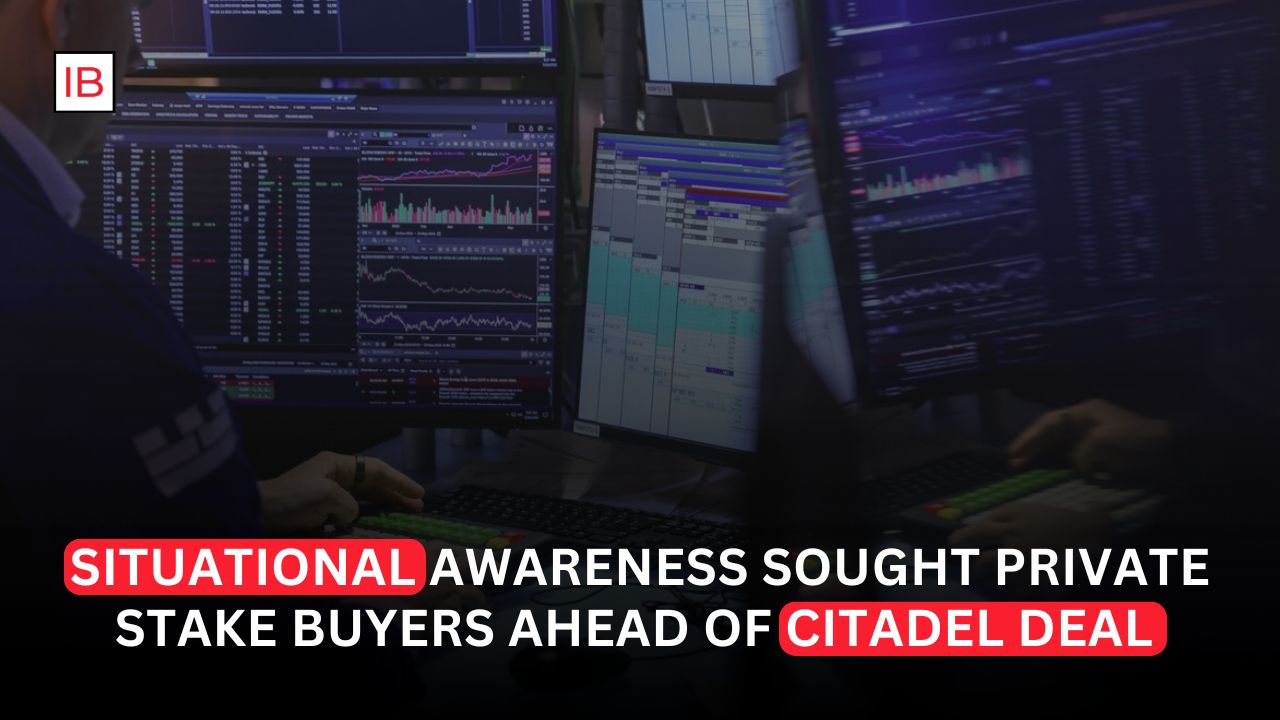
With the private stake sale apparently not materializing in time, Situational Awareness turned to its public equity holdings, pegged by the Financial Times at roughly $16 billion before the transaction. Citadel agreed to absorb the bulk of that portfolio in a single block trade, a deal first reported by CNBC and later confirmed by the Wall Street Journal, with Reuters subsequently reporting that Citadel financed part of the purchase using its own borrowing from prime brokers.
The transaction reflects a pattern Griffin’s firm has followed before, stepping in to acquire assets from leveraged players forced into rapid unwinds. Notably, Citadel’s own portfolio already included some of the same AI infrastructure bets held by Situational Awareness, suggesting Griffin, like Aschenbrenner, is betting the sector eventually recovers.
What’s Left of the Fund
Following the sale, Situational Awareness retains its private company holdings, with the roughly $5 billion Anthropic stake standing as by far its most significant remaining asset. Industry observers have noted the irony here: the fund effectively continues on as what amounts to an Anthropic holding company with a hedge fund still attached, given how dominant that single position now is within its remaining portfolio.
The personal timing of the unwind has added an unusual layer to the story, with Aschenbrenner reportedly getting married this weekend. He is engaged to Avital Balwit, chief of staff to Anthropic CEO Dario Amodei — an added irony given that the Anthropic stake is the one asset his fund fought hardest to hold onto.
Why This Matters for the AI Trade
The episode has become a closely watched test case for the broader AI investment thesis that made Aschenbrenner famous in the first place. Just days before the forced sale, he had sent investors a letter describing the July AI stock selloff as one of the most attractive buying opportunities since early 2025, inviting them to commit fresh capital by August 1. That capital never arrived in time, and the leverage that had amplified his fund’s gains on the way up ultimately amplified its losses just as dramatically on the way down.
What Comes Next
With its public portfolio now gone and its private Anthropic stake intact, Situational Awareness faces a fundamentally different future as a smaller, less leveraged investment vehicle. Aschenbrenner is reportedly still seeking fresh capital from investors and lenders to rebuild the fund’s public market presence, though whether he can restore the confidence that once made Situational Awareness one of the most talked-about names in AI investing remains an open question.