In a historic display of corporate confidence, the “Big Four” tech titans—Amazon, Alphabet, Meta, and Microsoft—have collectively committed to spending $650 billion on AI infrastructure in 2026.
This capital expenditure (Capex) blitz represents a 60% year-over-year increase from 2025 and is roughly equivalent to the entire annual budget of the Indian government. While the companies are betting on a “winner-takes-all” AI revolution, Wall Street is growing increasingly nervous about the immense cash burn and the timeline for actual returns on investment.
The Big Four: 2026 Spending Breakdown
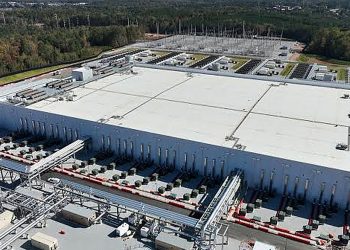
The spending is concentrated on “picks and shovels”: massive data centers, high-end server clusters, and specialized AI chips like NVIDIA’s H-series and custom internal silicon.
| Company | 2026 Projected Capex | Strategic Focus |
| Amazon | $200 Billion | Expanding AWS capacity; custom chips (Trainium/Graviton); robotics. |
| Alphabet | $185 Billion | Gemini integration across Search/YouTube; Google Cloud scaling. |
| Meta | $135 Billion | Superintelligence Labs; Llama 4/5 training; AI-driven ad personalization. |
| Microsoft | $120 Billion | Scaling the Azure-OpenAI partnership; global data center footprint. |
Market Impact and Investor Anxiety
Despite record revenues, the announcement of this $650 billion bill triggered a significant market selloff in early February 2026, wiping out nearly $1 trillion in market capitalization across the sector.
Cash Flow Concerns: Analysts at Morgan Stanley and Bank of America have warned that Amazon may face negative free cash flow for the first time in years, while Alphabet’s free cash flow could plummet by 90% due to the infrastructure spend.
The “Moat” Argument: CEOs like Andy Jassy (Amazon) and Sundar Pichai (Alphabet) argue that the risk of under-investing is greater than the risk of over-investing. They view this as the “end game” for cloud and compute dominance.
Efficiency vs. Headcount: The massive Capex has coincided with continued workforce reductions. Companies are shifting budget from human capital to GPUs, signaling a “second priority” for employees compared to server infrastructure.
The Infrastructure Ecosystem
The “Big Tech” spend is creating a massive revenue tailwind for the companies building the physical and digital backbone of the AI era.
NVIDIA & TSM: As the primary provider of AI accelerators, NVIDIA is the most direct beneficiary, with its customers now having committed to more spending than the entire U.S. energy sector.
Energy Demand: The scale of the $650 billion spend is straining global power grids. Microsoft’s electricity demand for AI is projected to surge 600% by 2030, leading to massive deals for nuclear and renewable energy.
Venture Capital Shift: While “hyperscalers” spend on infrastructure, VC interest is shifting toward “AI productivity beneficiaries”—companies that use this expensive infrastructure to generate tangible ROI in sectors like healthcare and finance.
“Four companies are not spending $600 billion for a passing fad. AI is not a bubble; it’s a revolution. And it is very early.” — Daniel Newman, CEO of Futurum Group, Feb 2026