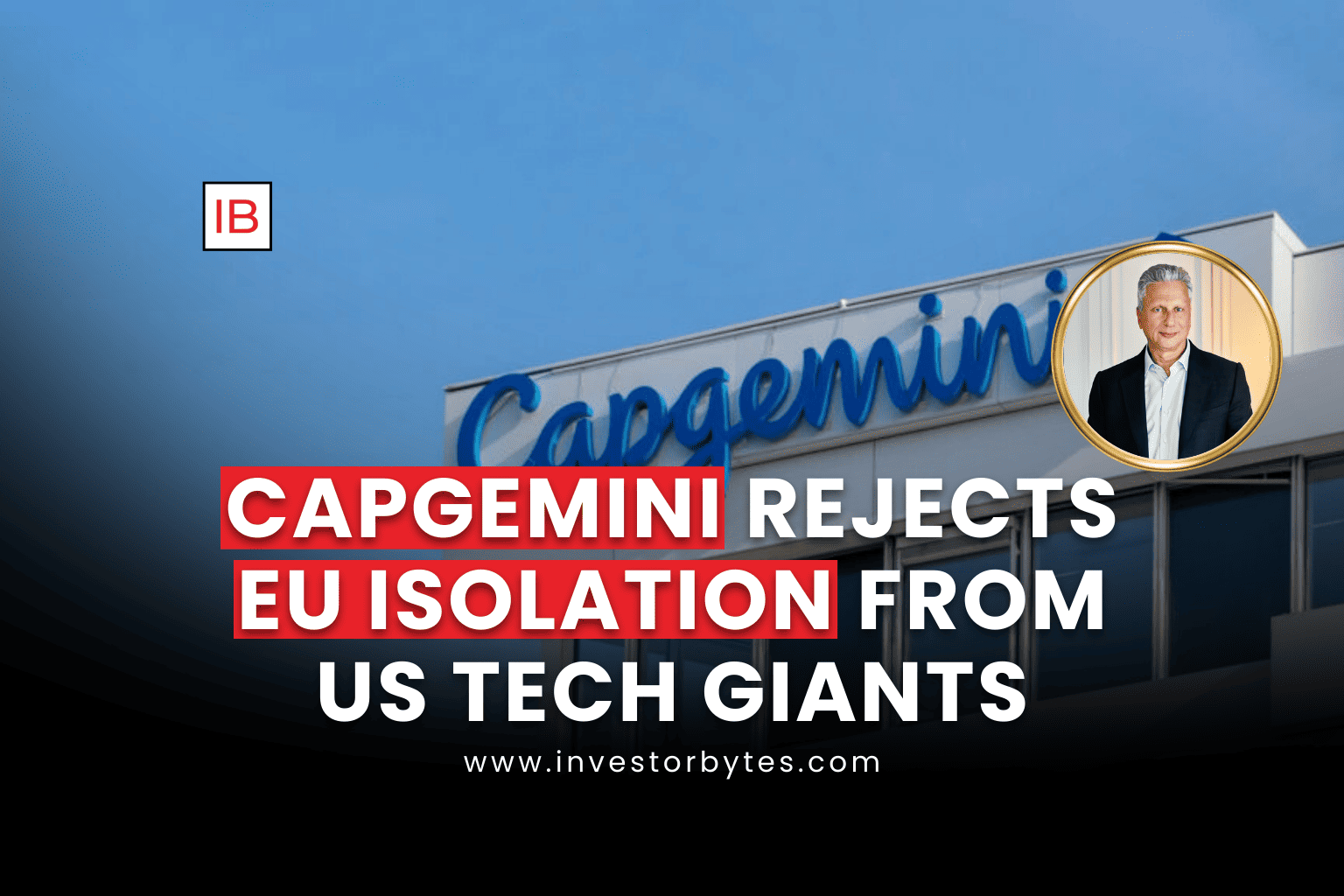
In mid-February 2026, Capgemini CEO Aiman Ezzat emerged as a leading voice against “digital isolationism,” dismissing calls for absolute European technological sovereignty as unrealistic. Speaking during the company’s FY 2025 earnings call on February 13, Ezzat argued that Europe must prioritize rapid AI adoption and “resilient interdependence” with U.S. hyperscalers like Google and Microsoft to remain globally competitive.
The Four-Layer Sovereignty Framework
Ezzat introduced a strategic model to de-escalate the “emotional” debate around tech sovereignty, breaking it down into four distinct layers:
Data Sovereignty: Control over where data is stored and who accesses it. (Status: Achieved)
Operational Sovereignty: The ability to run systems independently of foreign interference. (Status: Achieved)
Regulatory Sovereignty: The power to establish and enforce digital laws like the GDPR. (Status: Achieved)
Technological Sovereignty: Independence in hardware, foundational cloud, and AI chips. (Status: Dependent)
Ezzat maintains that while Europe “controls three out of the four,” total autonomy at the technological layer is currently impossible due to the multi-decade lead of U.S. giants. He warned that attempting to “decouple” would slow tech adoption and “further deplete the competitiveness of European industry.”
Strategic Partnerships for 2026
Capgemini is practicing this “pragmatic sovereignty” through several key initiatives aimed at building a “European stack” on top of global infrastructure:
Microsoft Sovereign Cloud: On February 11, Capgemini and Microsoft detailed a new operating model that embeds compliance and resilience directly into enterprise cloud architectures, allowing EU firms to use Azure while maintaining local regulatory control.
The “Scenario-Based” Approach: Ezzat advocates for sovereignty that matches the use case. For mission-critical government data, higher isolation is required; for general enterprise AI, the performance of U.S. models is essential.
Mistral AI Integration: Capgemini is increasingly partnering with local champions like France’s Mistral to provide the “intelligence layer,” while still utilizing AWS or Google Cloud for the underlying compute power.