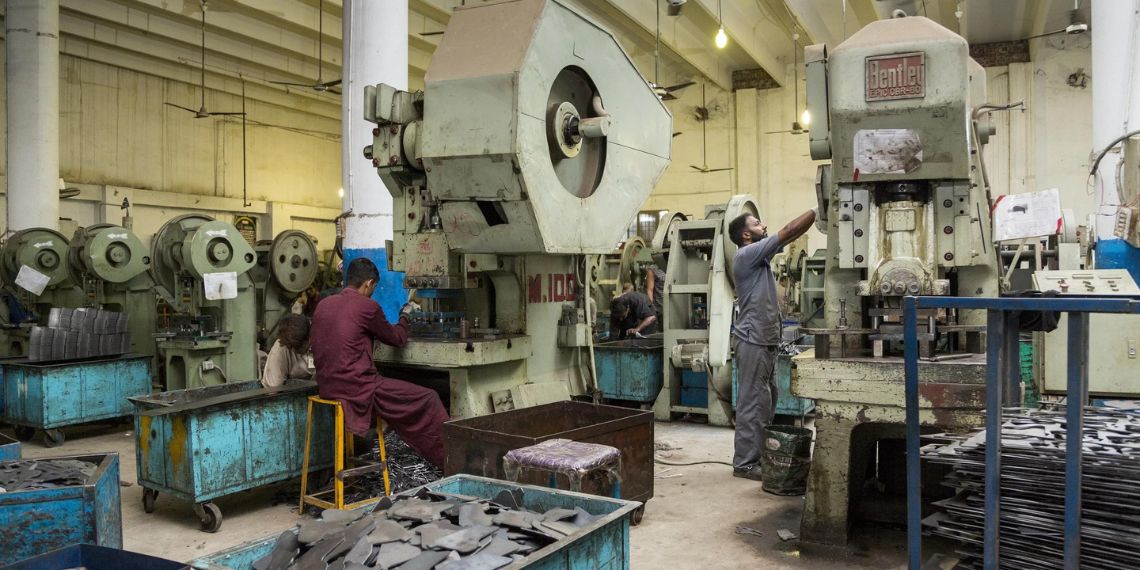
- The HSBC Flash India PMI Report indicates that the private sector had a significant increase in production in June after a decline in pace in May. Manufacturing companies had faster business growth than their service industry competitors. S&P Global’s statistics revealed a marginal rise in overall employment as a result of higher total new orders and foreign sales.
- In May, the Composite Output Index was 60.5; in June, it was 60.9. But the current gain is part of a pattern that has been consistent over the last 12 months, not an exception.
- According to Maitreyi Das, Global Economist at HSBC, “the composite flash PMI ticked up in June, supported by rises in both the manufacturing and service sectors, with the former recording a faster pace of growth.”
- The index tracks monthly variations in the total production of the service and industrial sectors. These indexes are weighted averages of similar PMIs for services and manufacturing. According to official GDP statistics, weights represent the sector’s proportional size. The monthly survey of private sector businesses yields information on the present and future state of the firm, and this information is the source of the Purchasing Managers’ Index (PMI).
- Production growth for manufacturers of things has been higher than that of service providers since February. By the conclusion of the first quarter, there had been a comprehensive improvement at the sector level as shown by the manufacturing PMI, which increased from 57.5 in May to 58.5 in June.
- Companies in the private sector ascribed this to increased demand and fresh commercial successes.
- There was a rise in new export orders for the twenty-second month in a row. The study found that exports, especially in the service sector, had increased from Africa, Asia, Australia, the Americas, Europe, and the Middle East.
- June saw a minor slowdown in new export orders, but the growth rate was still the second-fastest since the series started. Consequently, capacity constraints materialized in June, prompting companies to raise their workforce levels to the highest degree in more than eighteen years,” Das said.
- The attempts to satisfy increased production demands and remove backlogs resulted in a rise in employment creation. It was the quickest rate of employment creation in more than eighteen years. Both manufacturing and service firms had stronger aggregate job growth, with a greater acceleration among the former.
- Manufacturers were also motivated to buy more inputs to employ in manufacturing processes by positive trends in demand.
- The slight improvement in vendor performance indicates that suppliers supplied products on time even with the increase in buy amounts.
- The study observed a little decrease in completed product inventories relative to the build-up of pre-production inventory.
- June saw a minor decrease in input cost inflation, but it remained high due to rising labor and material expenses. Manufacturing companies were able to charge their consumers more for their products.
Source:
fortuneindia