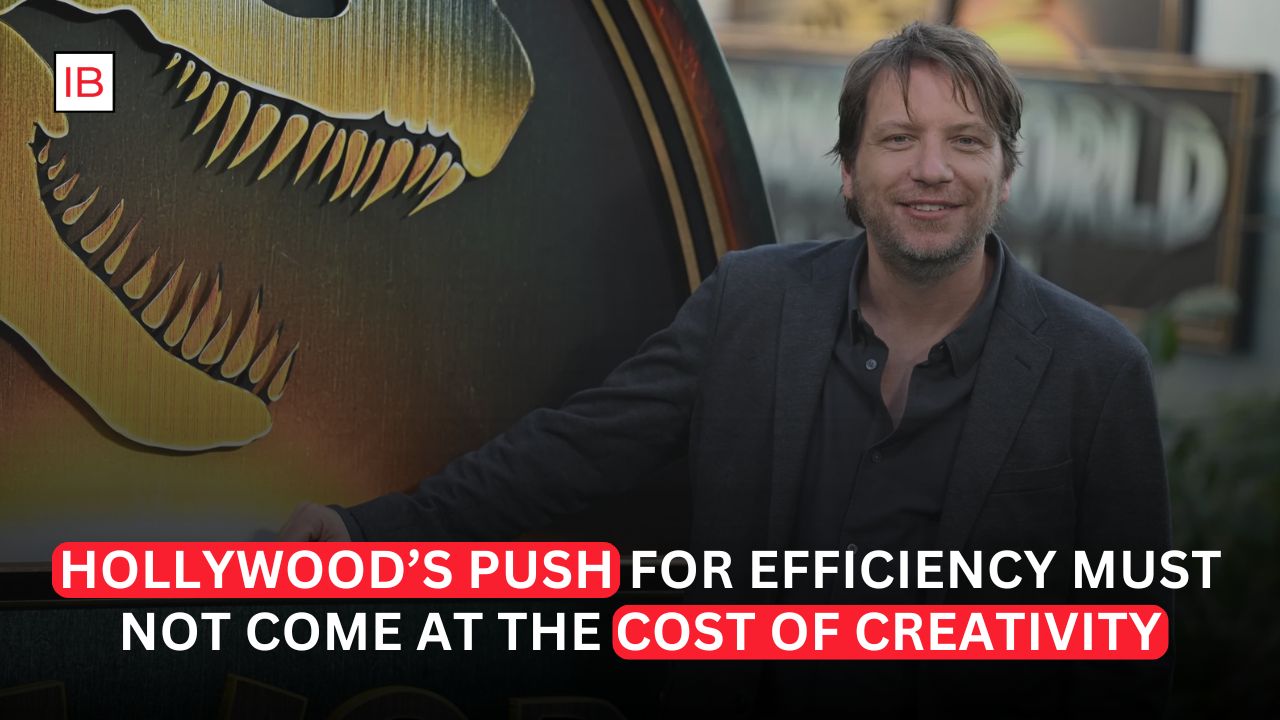
Franchise Filmmaking Is Becoming Increasingly Difficult for Directors With Distinct Creative Visions
Gareth Edwards’ departure from the next Jurassic World movie is more than another Hollywood “creative differences” story. It highlights a broader problem facing filmmakers who take control of major studio franchises: they are expected to deliver their own vision while operating inside increasingly powerful corporate and intellectual-property systems.
Edwards, who directed Jurassic World Rebirth, has left the sequel after reportedly differing creatively with Universal Pictures and Amblin Entertainment. The studio is now searching for another filmmaker to take over the project.
The timing is particularly striking because Rebirth was a major commercial success. The 2025 film earned roughly $869 million worldwide, giving the long-running dinosaur franchise another substantial box-office result.
Yet even after delivering a successful movie, Edwards was unable to remain attached to the next installment.
That tells us something about the changing relationship between Hollywood studios and directors.
Success Does Not Guarantee Creative Control
Edwards is hardly an inexperienced filmmaker.
He directed Monsters, Godzilla, Rogue One: A Star Wars Story and The Creator before taking on Jurassic World Rebirth.
His appeal to studios has always been closely connected to his ability to combine large-scale visual effects with a distinctive personal style.
That makes his exit particularly interesting.
Hollywood increasingly relies on established franchises because they provide recognizable characters, built-in audiences and global marketing opportunities.
But franchise filmmaking comes with limitations.
The studio owns the intellectual property.
Producers protect continuity.
Executives consider release schedules.
Actors have contractual commitments.
Marketing departments want recognizable elements.
And audiences expect a certain experience.
A director therefore enters the project with authority—but rarely with complete freedom.
Jurassic World Has Already Seen This Problem
Edwards is not even the first director to leave the latest Jurassic World project.
David Leitch was originally attached to direct Jurassic World Rebirth before departing over creative differences. Edwards subsequently took over.
Now Edwards has left the sequel.
Two directors departing projects within the same franchise for similar reasons is difficult to dismiss as coincidence.
The franchise has long maintained a small group of constants.
Steven Spielberg remains an executive producer, while Frank Marshall continues as a key producer. Screenwriter David Koepp, who wrote the original Jurassic Park, also returned for Rebirth and is writing the sequel.
Those figures provide continuity.
But they can also make it difficult for a new director to completely redefine the franchise.
The Director Becomes a Piece of a Larger Machine
Modern blockbuster filmmaking increasingly resembles corporate project management.
A studio may hire a director because of their style, reputation and previous successes.
But once production begins, dozens of competing interests enter the process.
The director must satisfy the studio.
The producers must protect the budget.
The actors need schedules that work.
Visual-effects companies need deadlines.
Marketing teams need footage.
Distribution teams need a firm release date.
And the franchise itself needs to maintain its identity.
That means the director’s job is no longer simply to make the best movie possible.
The director must make the movie within an enormous network of commercial constraints.
For some filmmakers, that arrangement works.
For others, it eventually becomes impossible.
Edwards Was an Unusual Choice for Jurassic World
Edwards’ background makes his involvement in the franchise especially revealing.
His breakthrough film, Monsters, was made on a tiny budget with a remarkably small crew.
He subsequently directed much larger projects but retained a reputation as a filmmaker interested in visual experimentation and technological innovation.
The Creator was particularly important to that identity.
Edwards has also spoken enthusiastically about artificial intelligence and its potential role in filmmaking.
His willingness to experiment with new production technologies illustrates the kind of independent creative thinking that made him attractive to Hollywood studios in the first place.
But that same independence can create friction when a filmmaker enters an established franchise.
The AI Question Adds Another Layer
Edwards’ recent public comments about generative AI have attracted attention because of the timing of his departure.
He has argued that AI could become an important filmmaking tool and has experimented extensively with the technology.
Steven Spielberg, meanwhile, has publicly expressed strong reservations about replacing human creative judgment with AI.
That philosophical difference has prompted speculation that AI could have contributed to the creative disagreement surrounding the Jurassic World sequel.
However, there is no confirmed evidence that AI was the reason Edwards left.
The official explanation remains creative differences, and industry reports have not established a specific dispute. It would therefore be premature to treat the AI disagreement as the cause.
Still, the contrast illustrates a larger tension inside Hollywood.
The industry is trying to determine how much creative authority should remain with individual artists as technology, budgets and franchise demands become increasingly powerful.
Hollywood Wants Original Voices—Until They Become Too Independent
There is an irony in the studio system.
Hollywood wants directors with distinctive voices.
Those filmmakers can make franchises feel fresh.
But studios also want predictability.
They want a movie that fits the brand.
They want characters to behave consistently.
They want a certain tone.
They want recognizable imagery.
And they want to minimize financial risk.
The result is a contradiction.
Studios recruit directors for their individuality and then ask them to operate within increasingly narrow boundaries.
That can work when everyone shares the same vision.
When they do not, the phrase “creative differences” often becomes the exit door.
Franchise Movies Are Too Valuable to Be Truly Experimental
The financial stakes explain much of this.
A major Jurassic World movie can cost hundreds of millions of dollars once production and marketing are included.
A studio cannot approach such an investment like an independent film.
Executives have shareholders and financial targets to consider.
A director may want to take a dramatic creative risk.
The studio may see that same risk as an unnecessary threat to a valuable global brand.
That tension is unavoidable.
And as budgets rise, the studio’s willingness to accept creative uncertainty generally falls.
The Franchise Is the Real Star
There is another important development in modern Hollywood.
Audiences increasingly recognize franchises more strongly than directors.
People go to see Jurassic World because they know the brand.
The same is true of Marvel, DC, Star Wars and many other major properties.
Directors matter, but they are often secondary to the intellectual property.
That changes the balance of power.
If a director leaves, the studio can search for another.
The franchise remains.
The actors may remain.
The screenplay may remain.
The production machinery remains.
The director is therefore replaceable in a way that the franchise itself is not.
But Constant Director Changes Have Risks
There is a downside.
A director is supposed to provide a movie with a coherent identity.
Constant changes can make a franchise feel manufactured rather than creatively driven.
That can contribute to audience fatigue.
The Jurassic World series has already gone through several filmmakers, including Colin Trevorrow, J.A. Bayona and Edwards.
Each brought a different sensibility.
That variety can be useful.
But if filmmakers are repeatedly replaced because they disagree with studio priorities, the movies may become increasingly shaped by corporate consistency rather than directorial vision.
Rebirth Proved the Formula Still Works
The commercial performance of Jurassic World Rebirth makes Edwards’ departure even more noteworthy.
The movie reportedly generated about $869 million globally, demonstrating that audiences remain willing to pay to see dinosaurs on the big screen.
The film also introduced a new cast led by Scarlett Johansson, Mahershala Ali and Jonathan Bailey, giving Universal the foundation for another series of films.
Those stars are expected to return for the sequel, while Koepp is already working on the screenplay.
In other words, the franchise has momentum.
Universal does not need to abandon the project.
It simply needs another director.
That is precisely what makes the situation such a good example of Hollywood’s modern director problem.
Directors Are Becoming More Replaceable
The business model increasingly treats directors as highly skilled executives within a larger production system.
They are important.
But they are not necessarily indispensable.
If a director’s vision becomes incompatible with the studio’s objectives, the studio can often replace that individual without abandoning the project.
For filmmakers, this creates a difficult choice.
Take the job and accept the restrictions.
Or reject the franchise and retain greater control over original work.
Edwards appears to be moving toward the latter option, with reports indicating he is expected to focus on original projects currently in development.
The Bigger Hollywood Problem
The problem extends well beyond Jurassic World.
As production budgets have grown and franchises have become increasingly valuable, Hollywood has become more risk-averse.
Original films are harder to finance.
Established intellectual property is easier to market.
Studios therefore increasingly want filmmakers to work inside existing worlds.
But the filmmakers who are most valuable are often precisely those who have developed distinctive voices outside those worlds.
That creates friction.
A director who is completely obedient may deliver a technically competent movie but fail to provide the creative spark that makes it memorable.
A director who pushes too hard may clash with the studio.
Hollywood is searching for the middle ground.
Looking Ahead
Gareth Edwards’ exit from the next Jurassic World movie is ultimately a reminder that successful franchise filmmaking depends on more than hiring a talented director.
The director has to fit into a complex ecosystem involving studios, producers, actors, intellectual-property owners, visual-effects companies and audiences.
Universal and Amblin have praised their experience working with Edwards on Rebirth, even as the filmmaker departs the sequel.
That suggests the split does not necessarily represent a disastrous relationship.
Sometimes a director and a studio simply want to make different movies.
But the frequency with which such disagreements occur reveals something important about modern Hollywood.
Studios want directors with strong creative identities, but they also want those directors to protect billion-dollar franchises.
Those objectives can coexist only when both sides agree on the boundaries.
The Jurassic World franchise has already demonstrated how difficult that balance can be.
David Leitch departed before Rebirth.
Edwards followed him out before the sequel.
Now Universal must find another filmmaker willing to inherit a franchise with enormous commercial expectations and powerful creative stakeholders.
The next director will have the benefit of an established cast, an existing screenplay and a proven audience.
But that also means the filmmaker will inherit a long list of expectations.
Hollywood’s director problem is therefore not that it lacks talented filmmakers. It is that the industry increasingly needs those filmmakers to be both distinctive artists and reliable managers of enormous corporate properties.
Those roles do not always fit together.
And when they don’t, the director is usually the easiest part of the equation to replace.