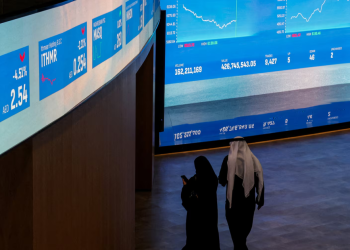
The international macroeconomic landscape entered 2026 with underlying momentum, but mounting geopolitical risks and supply chain friction are triggering fresh headwinds across international markets. According to the latest findings from UN Trade and Development (UNCTAD), the global economy faces new test as trade, energy, and commodity shocks spread across developing and developed nations alike.
UNCTAD’s Trade and Development Foresights 2026 report reveals that global GDP expansion is projected to ease from 2.9% in 2025 to 2.6% in 2026. As geopolitical instability replaces trade policy uncertainty as the primary driver of market anxiety, rising shipping costs, energy market volatility, and capital flight risk threaten to derail post-pandemic gains.
Investors, corporate strategists, and policy analysts evaluating shifting international supply corridors and macroeconomic policy moves can track continuous coverage in our stock market trends section.
The AI Trade Boom Masks a Broader Global Slowdown
While real merchandise trade appeared resilient through early 2026, UNCTAD analysis highlights that this growth rests on a narrow foundation. The rapid expansion in global trade value has been heavily concentrated in artificial intelligence (AI) hardware—such as semiconductors, high-performance data servers, and automatic data-processing machinery—primarily sourced from East Asia and North America.
Outside of AI infrastructure, traditional merchandise manufacturing, consumer goods, and industrial raw material volumes show distinct signs of slowing momentum. Overall real merchandise trade growth is forecast to drop sharply from 4.7% in 2025 to between 1.5% and 2.5% in 2026.
UNCTAD 2026 Global Economic Indicators:
• Global GDP Growth Projection: 2.6% in 2026 (down from 2.9% in 2025)
• Merchandise Trade Growth: Projected 1.5% – 2.5% (down from 4.7% in 2025)
• Growth Driver Disparity: AI hardware imports masking traditional trade deceleration
• Key Risk Trigger: Middle East geopolitical escalation driving shipping & fuel costs
To review how technology hardware providers, logistics carriers, and industrial manufacturing firms report quarterly performance under current trade conditions, check out our breakdown of the latest corporate earnings updates on InvestorBytes.
Food Security Emerges as a Systemic Financial Risk
Beyond manufacturing trade, UNCTAD emphasizes that agricultural supply chains face compounding financial pressures. Higher crude oil and natural gas prices have driven up fertilizer production costs, fueling persistent food price inflation across vulnerable low- and middle-income nations.
Crucially, food security is no longer viewed merely as a localized supply availability issue—it has evolved into a systemic financial stability concern. As global food trading firms face elevated financing and hedging costs, governments grappling with restricted fiscal budgets and high sovereign debt servicing costs are increasingly exposed to balance-of-payments crises.
Developing Country Vulnerabilities and Capital Outflows
- Exchange Rate Pressure: Local currencies across emerging markets face devaluation pressures relative to safe-haven assets.
- Elevated Borrowing Costs: Sovereign bond yields for frontier markets have increased, restricting international capital access.
- Fiscal Squeeze: Rising food and energy import bills force governments to expand subsidies at the expense of long-term infrastructure investment.
For a detailed analysis of how cloud technology, predictive logistics software, and agricultural technology platforms help stabilize modern supply chains, explore our report on tech stocks and AI infrastructure.
Building Long-Term Economic Resilience Through Transition
Despite rising geopolitical uncertainties, the UNCTAD report outlines strategic pathways for governments and private enterprise to mitigate future economic exposure. A central recommendation is accelerating capital deployment into renewable energy generation.
Because clean energy technologies offer increasingly cost-competitive power generation without exposure to international fossil fuel price volatility, diversifying energy grids provides both climate and macroeconomic protection. However, UNCTAD warns that renewable investment remains disproportionately concentrated in developed markets, leaving developing economies vulnerable to recurring fuel price spikes.
“The global economy is moving from an initial phase of supply disruptions and inflation into a more fragile period, where prolonged uncertainty could trigger shortages and wider financial stress,” warns the UNCTAD foresights report.
Summary: Navigating Geopolitical Uncertainty in 2026
As the global economy faces new test as trade, commodity, and credit market pressures intersect, policymakers and business leaders must prioritize diversification, predictable trade frameworks, and structural energy independence. By pairing targeted digital investments with robust financial safeguards, developing and developed markets can build the necessary resilience to navigate an increasingly fragmented global economy.
Disclaimer
The information provided in this article is for educational, journalistic, and informational purposes only and does not constitute formal financial, legal, or investment advice.