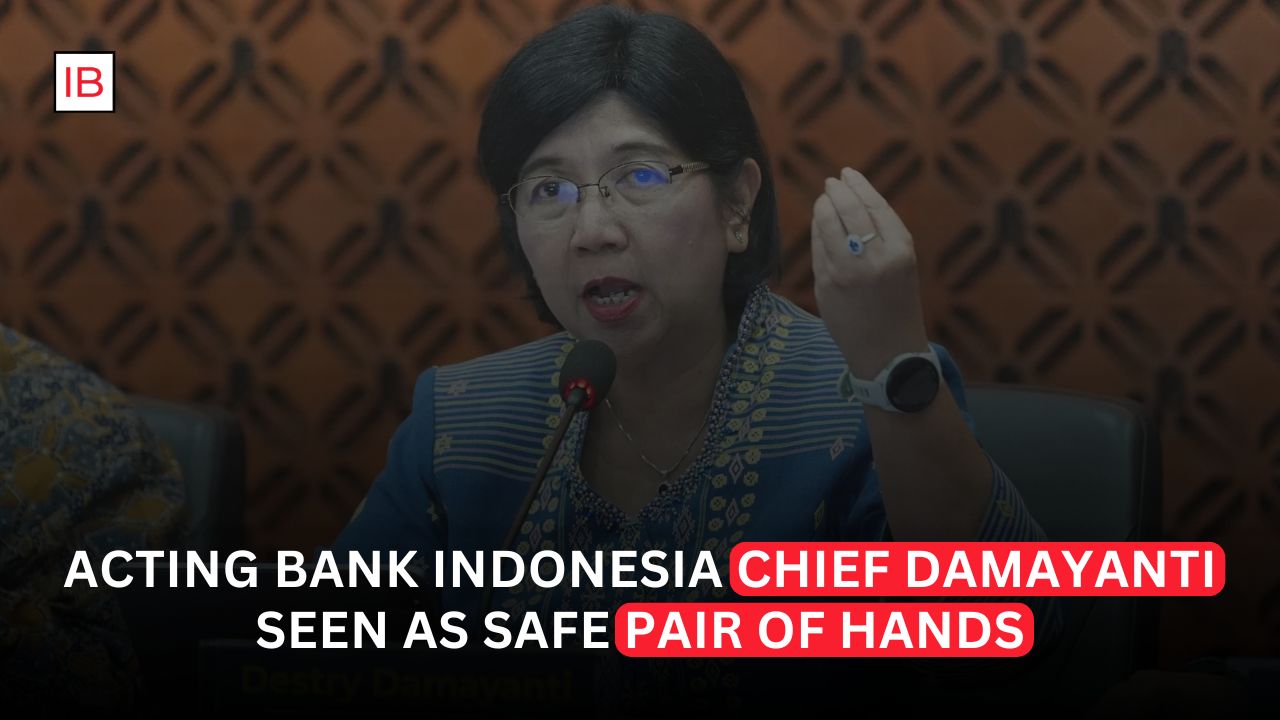
Indonesia’s financial markets are navigating a moment of unexpected uncertainty after Bank Indonesia Governor Perry Warjiyo abruptly resigned, but analysts say the appointment of veteran policymaker Destry Damayanti as acting governor may help calm investor nerves during the transition.
A Surprise Resignation
Perry Warjiyo’s exit was announced by State Secretary Prasetyo Hadi at a briefing in Jakarta, with officials citing unspecified personal reasons for the decision. The news came as a shock to markets, given that Warjiyo had long been viewed as a stabilizing force steering Southeast Asia’s largest economy through a turbulent stretch shaped by President Prabowo Subianto’s ambitious policy agenda. Indonesia’s currency, stocks and bonds all slipped following the announcement, reflecting investor unease over the sudden leadership change.
Angus Mackintosh, an ASEAN specialist at Aletheia Capital in Singapore, noted that the resignation was likely to be received negatively by markets given Warjiyo’s steady track record. Similarly, analysts in Jakarta warned that any perception of political interference in the selection of his eventual permanent successor could pose a far greater risk to institutional credibility than the resignation itself.
Damayanti’s Experience Offers Reassurance
Stepping into the role is Destry Damayanti, a trained economist born in 1963 who has served within Bank Indonesia’s senior leadership for years. She was appointed senior deputy governor in 2019 and reappointed to the position in 2024, giving investors a familiar face at the helm during a sensitive period. Her background overseeing monetary operations, financial markets and payment systems, along with her established voice on monetary policy and the rupiah, is seen as a key reason markets may avoid a sharper reaction to the leadership shake-up.
At a press conference in Jakarta, Damayanti sought to project continuity and stability, emphasizing that Bank Indonesia operates as a collegial body rather than depending on any single individual. She noted that the five members of the Board of Governors would continue to collectively carry out the central bank’s mandate, and pledged that the institution would maintain established mechanisms and international best practices while safeguarding rupiah stability, payment system integrity, and broader financial sector stability.
An Economy Already Under Pressure
The leadership transition arrives at a particularly delicate moment for Indonesia’s economy. The rupiah has weakened significantly this year, losing around 7% of its value since the Middle East conflict erupted in February, making it one of the worst-performing currencies in Asia. In response, Bank Indonesia has raised its benchmark interest rate by a full percentage point this year, bringing it to 5.75%, in an effort to defend the currency.
Indonesia’s position as a net oil importer has left it exposed to the surge in global energy prices tied to the conflict, even as the government has resisted passing on higher costs by keeping heavily subsidized fuel prices unchanged — a stance that has added further strain to public finances.
Despite these pressures, market reaction to the governor’s departure was described as relatively contained in the immediate aftermath, with stocks and the currency remaining comparatively stable in the hours following the announcement, according to a Jakarta-based economist. Still, analysts caution that the episode adds another layer of policy uncertainty at a time when the economy can ill afford additional volatility.
What Comes Next
Attention will now turn to how quickly Indonesia moves to appoint a permanent successor to Warjiyo, and how that selection process unfolds. Analysts widely agree that experience and credibility should be the deciding factors in choosing the next governor, warning that any appointment perceived as politically motivated could undermine confidence in the central bank’s independence far more than the current transition itself. Until that decision is made, Damayanti’s steady hand and institutional familiarity are expected to serve as an important anchor for investor confidence.