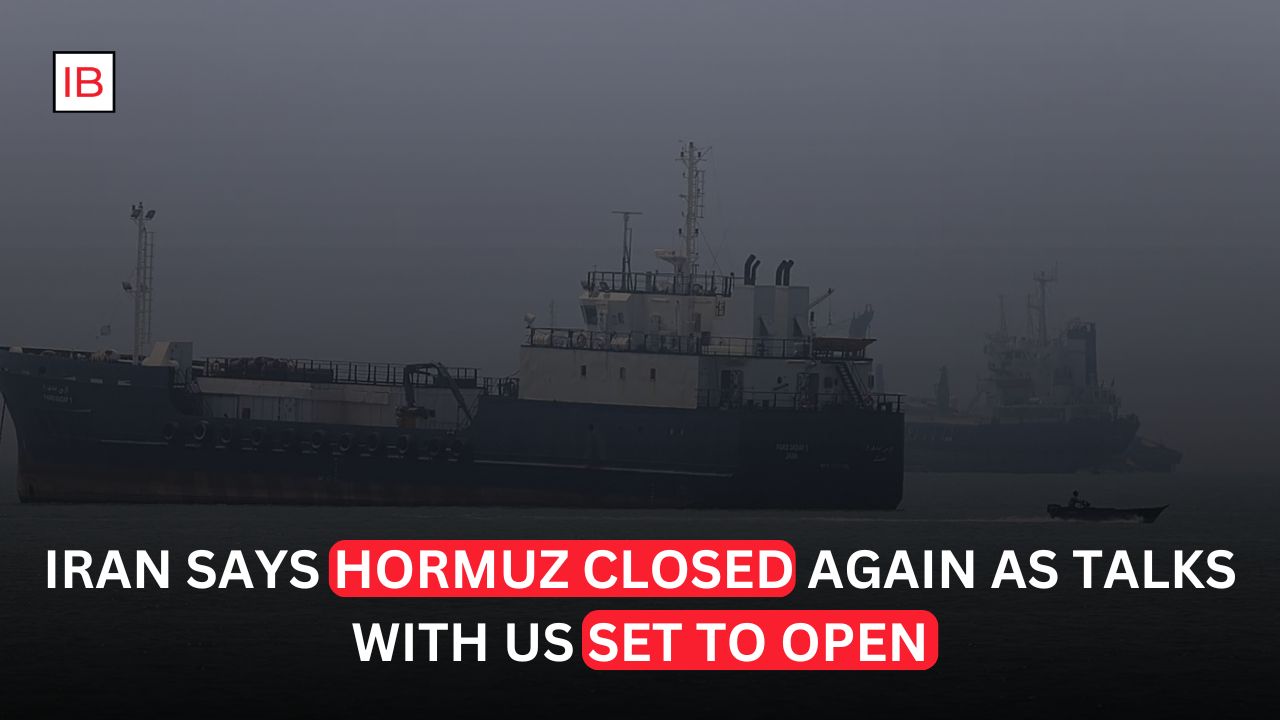
Move Raises Fresh Concerns Over Global Energy Supplies. Iran has announced the closure of the Strait of Hormuz, accusing the United States and Israel of violating a recently agreed ceasefire framework and escalating tensions through continued military operations in Lebanon.
The announcement was made by Iran’s Khatam al-Anbiya Central Headquarters and reported by state-affiliated media, including Tasnim and Mehr. Iranian officials described the closure as a response to what they called repeated breaches of the agreement that was intended to reduce regional tensions and reopen critical shipping routes.
Critical Waterway Faces New Uncertainty
The Strait of Hormuz is one of the world’s most important energy corridors, handling a significant share of global oil and liquefied natural gas exports.
Any disruption to traffic through the narrow waterway has the potential to affect global energy markets, shipping costs and fuel prices. The latest announcement immediately raised concerns among traders and governments monitoring regional stability.
Iran Blames Lebanon Violence
Iran linked its decision directly to recent Israeli airstrikes in southern Lebanon, which occurred despite a newly announced ceasefire between Israel and Hezbollah.
Tehran argues that the continued fighting demonstrates a failure by Washington and its allies to uphold commitments made under the broader peace framework. Iranian officials warned that the closure of Hormuz is only the “first step” and suggested additional measures could follow if tensions continue to escalate.
US Questions Whether Waterway Is Actually Blocked
Despite Iran’s declaration, American officials have cast doubt on whether shipping traffic has been physically halted.
US officials stated that they have not observed military activity indicating a complete blockade of the waterway. Reports suggest commercial vessels may still be moving through the region, creating uncertainty over the practical impact of Tehran’s announcement.
The differing accounts have left markets and shipping companies waiting for confirmation on the actual status of maritime traffic through the strait.
Threat to Fragile Peace Deal
The development represents the first major crisis since Washington and Tehran signed an interim agreement aimed at ending months of conflict and opening the door to future negotiations.
The agreement included plans for sanctions relief, renewed oil exports and discussions surrounding Iran’s nuclear program. Renewed tensions over Lebanon and Hormuz now threaten to complicate those efforts.
Diplomatic talks are expected to continue in Switzerland, where US and Iranian representatives are attempting to preserve the broader framework despite growing regional instability.
Energy Markets Watching Closely
Energy analysts warn that even the threat of disruption in Hormuz can influence oil prices and shipping markets.
The waterway remains essential for exports from major Gulf producers, making it one of the most strategically important maritime routes in the world. Any prolonged interruption could place pressure on global energy supplies and increase transportation costs.
Diplomatic Efforts Face Major Test
As tensions rise, diplomats are working to prevent the dispute from undermining the wider peace process.
Whether the Strait of Hormuz remains open, partially restricted or fully closed could become a key factor in determining the future of US-Iran negotiations and broader Middle East stability. For now, governments, energy companies and investors are closely monitoring developments as the region faces another critical moment.