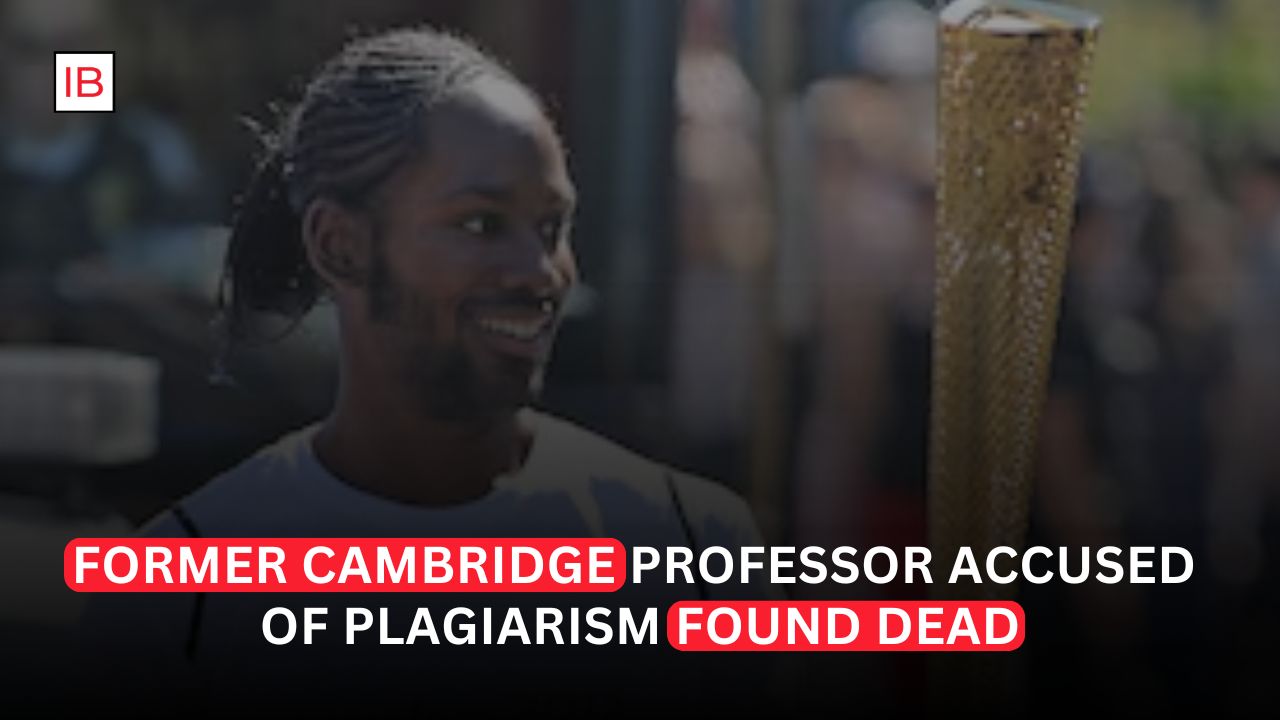
Jason Arday, the British sociologist who became the youngest Black professor in the history of the University of Cambridge, has died at 41, just days after resigning from the university amid intense scrutiny over allegations concerning his academic work and personal claims.
Police said Arday was found unresponsive at a property in Battersea, south London, on August 14. His death is being treated as unexpected but not suspicious, with an investigation underway.
A Remarkable Rise
Arday’s career had been unusually dramatic.
He became a professor at Cambridge in 2023 at just 37, after overcoming significant difficulties during childhood. He had reportedly been unable to speak until age 11 and learned to read and write at 18.
His academic work focused heavily on:
- Race and inequality
- Education
- Black experiences in British institutions
- Neurodiversity
- Social mobility
His appointment was widely presented as an important milestone for racial diversity in British academia.
Then His Career Unraveled
In 2026, allegations emerged that parts of Arday’s 2015 PhD thesis had been plagiarized.
He denied deliberate plagiarism, while acknowledging mistakes in his academic work. The scrutiny subsequently expanded beyond his thesis to other publications and claims about his professional and personal history.
Cambridge initially defended Arday, but later announced an investigation into the circumstances of his appointment and his time at the university. He resigned on August 5.
That sequence is important.
The controversy was no longer simply about one disputed academic passage.
It had become a broader question about how Cambridge evaluated his credentials and appointed him to a senior academic position.
The Academic Integrity Question
This is the part of the story that shouldn’t get lost amid the tragedy.
Universities depend heavily on trust.
A professor’s qualifications, research, publications and professional history are supposed to withstand scrutiny because academic institutions ultimately rely on the credibility of their scholarship.
Cambridge’s decision to launch an independent investigation therefore reflects a legitimate institutional question:
Were its procedures sufficiently rigorous when Arday was appointed?
The Financial Times reported that Cambridge’s review was intended to examine his appointment and whether the university needed to strengthen its processes for senior academic appointments and research misconduct.
But the Timing Makes the Story Exceptionally Sensitive
Arday died only nine days after resigning.
His family has said they believe a prolonged campaign of misinformation and harassment contributed to the circumstances surrounding his death. They have asked the media to stop pursuing the family.
That allegation should be treated as the family’s account, not an established finding about the cause of death.
Police have not described the death as suspicious, and the cause of death has not been publicly established.
That distinction matters.
It would be irresponsible to conclude that the controversy caused his death simply because the events occurred close together.
Cambridge Now Faces Two Separate Questions
The university has to deal with both:
1. What happened in Arday’s academic career?
and
2. How did Cambridge’s own processes respond to the allegations?
Those questions shouldn’t be conflated.
A rigorous investigation into academic misconduct is not inherently an attack on diversity.
Likewise, criticism of Arday’s work should not automatically be interpreted as evidence that diversity policies themselves are responsible for his downfall.
The institutional lesson should be about standards and due process.
The Diversity Debate Will Complicate Everything
Arday’s appointment had symbolic significance because he was Cambridge’s youngest Black professor.
His subsequent controversy is therefore likely to become ammunition in a much broader argument over:
- Diversity, equity and inclusion
- Academic standards
- Hiring practices
- Race in British academia
- Research integrity
- Institutional accountability
That’s unfortunate but predictable.
The danger is that Arday’s individual case becomes a proxy battle over issues much larger than the evidence actually establishes.
His Death Doesn’t Resolve the Allegations
This is another distinction worth making.
Arday’s death does not establish either side of the underlying academic dispute.
It doesn’t prove the allegations.
It doesn’t disprove them.
It doesn’t settle questions about Cambridge’s appointment process.
Those questions still require evidence and institutional investigation.
The appropriate response to the death is compassion; the appropriate response to academic allegations is due process and evidence.
The Broader Lesson for Universities
The episode exposes a difficult tension in modern academia.
Universities increasingly want to identify and promote people whose backgrounds have historically limited their access to senior positions.
That objective is legitimate.
But the answer cannot be lower standards.
The sustainable model is:
Broader access + rigorous verification + consistent standards.
If institutions weaken any one of those components, they risk damaging the very people they are trying to elevate.
What Happens Next
Cambridge’s investigation will be closely watched.
The university will need to establish:
- How Arday’s qualifications were evaluated
- Whether concerns were raised before his appointment
- How allegations were handled after they emerged
- Whether research-integrity procedures were adequate
- Whether changes to hiring or oversight are necessary
But the investigation now takes place without Arday being able to respond to its findings.
That makes careful evidence handling even more important.
The Bigger Picture
Jason Arday’s story had already become unusually complicated before his death.
He went from a remarkable personal journey and historic Cambridge appointment to intense public scrutiny over academic integrity and credibility, followed by his resignation and then his unexpected death.
The tragedy should not erase legitimate questions about academic standards.
But those questions should also not erase the fact that a 41-year-old man has died and left behind family, colleagues and friends.
The most defensible position is therefore the least sensational one:
Investigate the academic questions rigorously, avoid speculation about the cause of death, and give his family space to grieve.