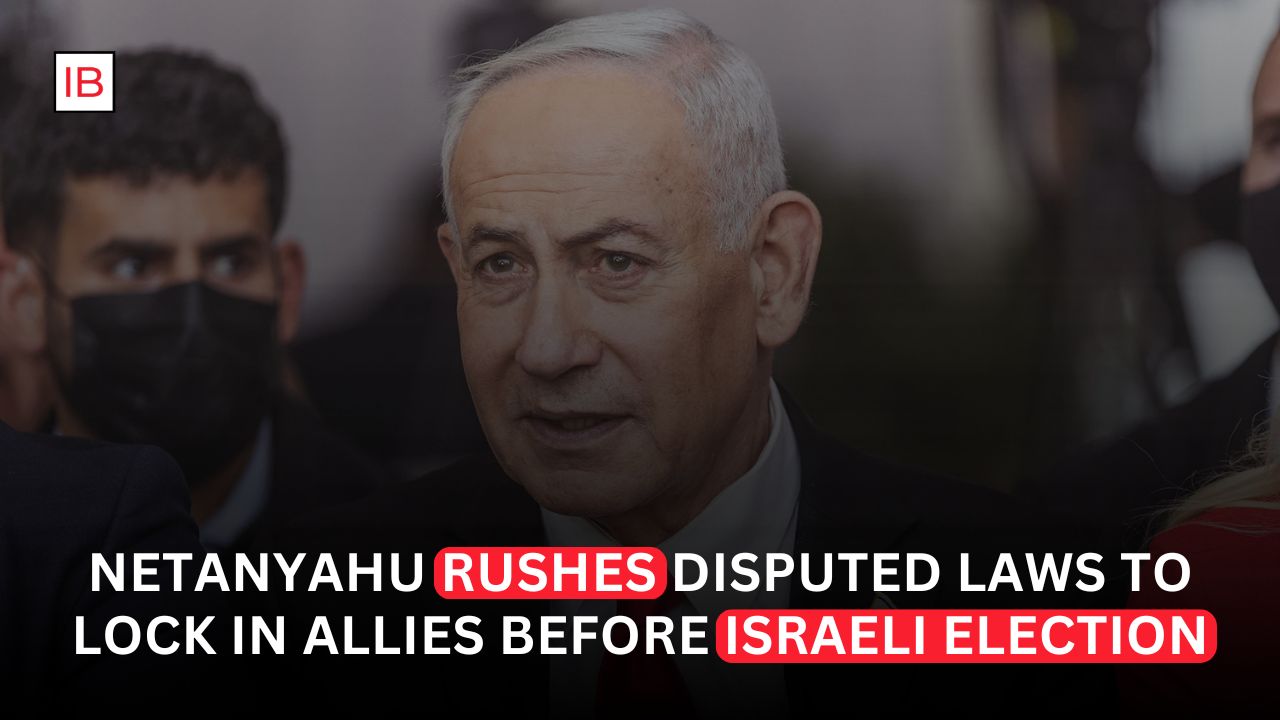
Prime Minister Moves to Strengthen Support From Religious Allies as Israel Prepares for a Pivotal National Vote
Israeli Prime Minister Benjamin Netanyahu is accelerating the passage of several controversial bills in an effort to solidify support from his right-wing and ultra-Orthodox coalition partners before Israel’s parliamentary election, scheduled for October 27, 2026. The legislative push comes as opinion polls suggest Netanyahu’s coalition faces a difficult electoral battle, making unity within the governing bloc increasingly important.
Coalition Unity Becomes Top Priority
With the election approaching, Netanyahu’s government is seeking to deliver on long-standing promises made to its religious and nationalist allies.
The legislative agenda focuses on:
- Military service exemptions for ultra-Orthodox Jews.
- Religious policy reforms.
- Measures sought by coalition partners.
- Preserving support among right-wing parties.
- Maintaining coalition stability ahead of the campaign.
Ultra-Orthodox Draft Exemptions at the Center of Debate
One of the most contentious measures involves legislation that effectively preserves military service exemptions for many ultra-Orthodox (Haredi) men.
Supporters argue the laws protect religious traditions and recognize Torah study as a core national value.
Critics contend the measures:
- Increase pressure on other Israelis serving in the military.
- Deepen divisions over equal national service.
- Come at a time when the military continues to face personnel shortages.
- Risk undermining public confidence in the conscription system.
Political Calculations Ahead of the Election
Analysts say the legislative push is designed to prevent fractures within Netanyahu’s coalition before campaigning intensifies.
The prime minister is attempting to:
- Keep religious parties aligned with Likud.
- Avoid defections within the governing coalition.
- Demonstrate that coalition agreements are being honored.
- Strengthen support among conservative voters.
The strategy reflects the importance of coalition politics in Israel’s parliamentary system, where maintaining alliances is often essential to forming and sustaining a government.
Opposition Criticizes Timing
Opposition leaders have accused Netanyahu of prioritizing coalition politics over broader national concerns.
Their criticism includes:
- Claims that the legislation serves political interests.
- Concerns about weakening institutional oversight.
- Objections to expanding exemptions during ongoing security challenges.
- Calls for broader reforms instead of last-minute legislative action.
The proposed measures have fueled intense debate within Israeli politics as election campaigning begins.
Election Expected to Be Highly Competitive
Recent opinion polls indicate the upcoming election could be one of Israel’s most closely contested in years.
Current political dynamics include:
- Strong competition between Netanyahu’s Likud and opposition parties.
- Growing prominence of former military chief Gadi Eisenkot.
- Coalition arithmetic expected to determine the next government.
- Continued importance of smaller religious and nationalist parties in coalition negotiations.
Looking Ahead
As Israel moves toward its October election, Netanyahu’s effort to pass key legislation underscores the central role coalition management plays in the country’s politics. By advancing measures sought by his right-wing and ultra-Orthodox partners, the prime minister aims to strengthen his alliance before voters head to the polls.
Whether these legislative victories translate into electoral success remains uncertain. With opinion polls showing a competitive race and coalition-building likely to remain decisive, the election is expected to shape Israel’s political direction and policy priorities for years to come.