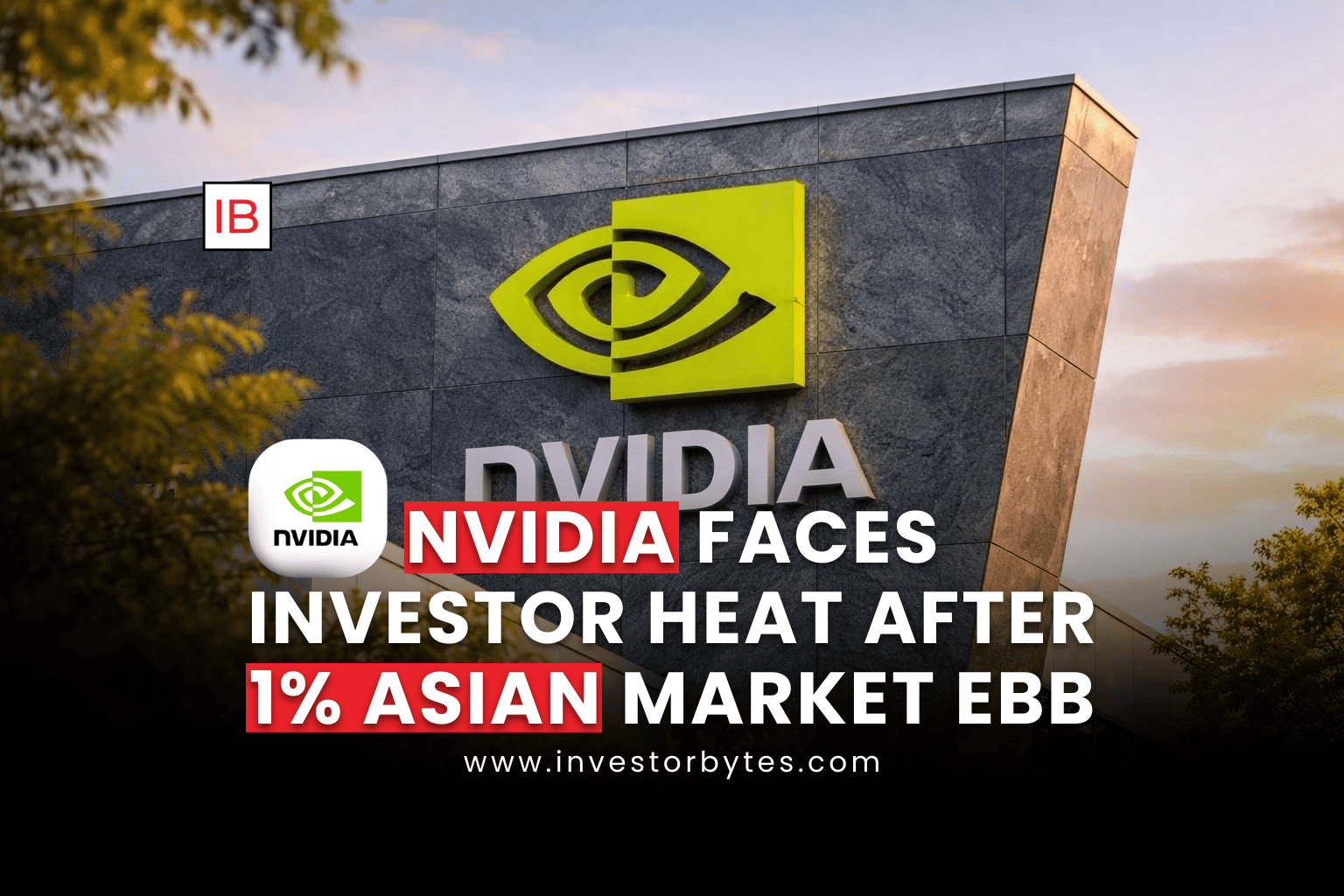
The semiconductor industry is processing a paradoxical week for Nvidia. Despite reporting a “blowout” fourth-quarter earnings report on February 25 that exceeded almost every Wall Street metric, the stock faced a sharp 5.46% decline on Thursday, closing at $184.89.
Investors are currently exhibiting a “perfection is not enough” mentality, with markets focusing less on past beats and more on the sustainability of the AI supercycle into 2027.
The Earnings Paradox: By the Numbers
Nvidia’s fiscal Q4 2026 results (ended January 25) were objectively stellar, yet the stock’s high valuation meant much of this success was already “priced in.”
| Metric | Result (Q4 2026) | Year-over-Year Growth |
| Total Revenue | $68.1 Billion | 📈 73.2% |
| Data Center Revenue | $62.3 Billion | 📈 75.0% |
| Adjusted EPS | $1.62 | 📈 82.0% |
| Net Income | $43 Billion | 📈 Nearly Double |
| Q1 2027 Guidance | $78.0 Billion | Expects ~77% Growth |
The “Next Big Thing”: Rubin and Agentic AI
CEO Jensen Huang is currently under pressure to prove that Nvidia’s growth is not peaking. To justify a $4.5 trillion market cap, Huang is pivoting the narrative from “hardware provider” to “AI factory architect.”
The Rubin Platform: Named after astronomer Vera Rubin, this next-generation, six-chip AI platform is in full production. It is designed to deliver 5x the computing power of previous models and is slated to ship to major hyperscalers like Amazon and Microsoft in the second half of 2026.
Agentic AI: Huang is doubling down on “agentic software”—AI that reasons and takes action rather than just generating text. He recently dismissed fears that AI will “kill” the software industry, calling the notion “illogical” and asserting that AI will instead become the primary tool for software development.
Physical AI & Robotics: At CES 2026, Huang showcased Alpamayo, an open reasoning model for autonomous vehicles, signaling Nvidia’s intent to dominate the robotics and self-driving sectors as the next multi-billion-dollar revenue stream.
Investor Concerns & Market Sentiment
The 1% “ebb” in Asian markets and the subsequent U.S. sell-off highlight three growing anxieties:
Customer Concentration: Two customers now account for 36% of total sales, increasing the risk if a “Big Tech” firm scales back capital expenditure.
China Overhang: While Nvidia received licenses to ship small amounts of H200 chips to China this month, the company’s outlook still assumes zero data center revenue from the region due to strict export controls.
The “Peak AI” Narrative: Analysts at Goldman Sachs and Morgan Stanley note that while demand for Blackwell and Rubin chips is “sold out” through 2026, investors are demanding “line-of-sight” into 2027 and 2028 to maintain current multiples.