America’s Defense Spending Is Too Important—and Too Large—to Be Shielded From Serious Budget Oversight
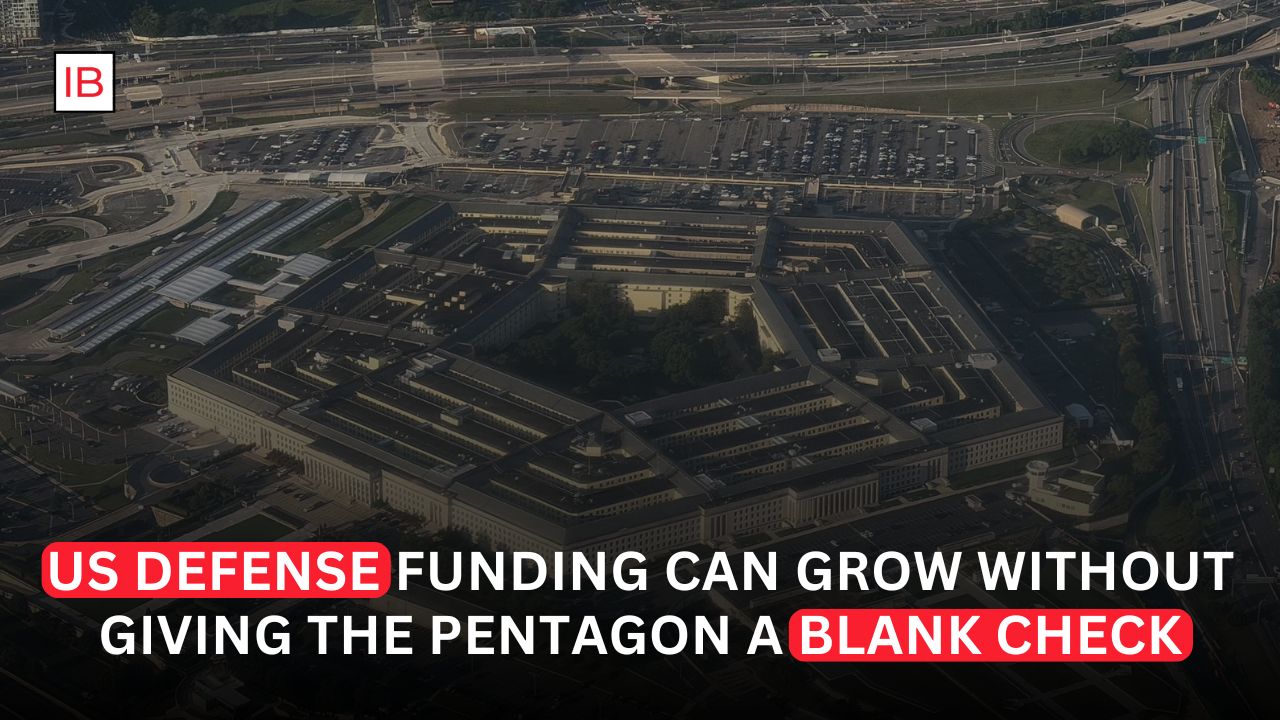
The Pentagon’s enormous budget should not be treated as a political blank check. As the Trump administration pushes for a historic expansion in defense spending, Congress has a responsibility to examine not only whether the United States needs a stronger military, but also whether taxpayers are receiving sufficient value for every additional dollar.
That argument is becoming especially relevant as the administration seeks roughly $1.5 trillion for national defense in fiscal 2027, a dramatic increase over previous spending levels. The scale of the proposal comes as the United States faces heightened security challenges and the financial consequences of military operations, including the war with Iran. Recent reporting has also highlighted growing frustration among lawmakers over the Pentagon’s handling of budget information.
The central issue is not whether America should maintain a powerful military.
It should.
The question is whether military power and fiscal discipline have to be competing goals.
They do not.
Defense Spending Requires More Than Political Loyalty
Defense spending has traditionally been one of the areas where Republicans and Democrats have been able to cooperate.
That bipartisan tradition matters because national security is supposed to transcend party politics.
But recent disputes over Pentagon budget negotiations have raised concerns that the process is becoming increasingly partisan.
Defense Secretary Pete Hegseth has faced criticism from Republican senators for excluding Democrats from certain classified briefings concerning the administration’s proposed military spending. Senators including Thom Tillis, Mike Rounds and Lisa Murkowski have argued that broader congressional involvement is necessary.
That criticism is important.
Even lawmakers who strongly support increased defense spending need access to information that allows them to determine whether proposed expenditures are justified.
A Bigger Budget Does Not Automatically Mean a Stronger Military
The Pentagon has legitimate reasons to seek additional funding.
The US military faces threats from China, Russia, Iran and other potential adversaries.
Modern warfare is also becoming more expensive.
Drones, missile defense, artificial intelligence, cybersecurity, satellites, precision weapons and advanced aircraft all require significant investment.
But simply adding money to the Pentagon’s budget does not guarantee that those priorities will be addressed effectively.
Congress needs to know where the money is going.
It needs to determine which programs actually improve military capabilities and which simply expand bureaucracy or preserve outdated systems.
That requires detailed scrutiny.
The Pentagon Has a Longstanding Audit Problem
Fiscal oversight is particularly important because the Defense Department has struggled for years to account for its finances.
The Pentagon has repeatedly failed to receive a clean financial audit, raising questions about whether it can accurately track its enormous collection of assets and liabilities.
That history makes congressional oversight more—not less—important when spending is being increased dramatically.
The argument is not that military spending is inherently wasteful.
It is that an institution responsible for hundreds of billions of dollars should be capable of demonstrating how those resources are being used.
Emergency Spending Makes Oversight Even More Important
The current debate is also taking place against the backdrop of emergency military spending.
The administration has sought additional funding connected to the Iran war and other defense requirements.
Earlier this year, lawmakers were already warning that the Pentagon was facing funding shortages as the conflict consumed resources. A proposed emergency package included tens of billions of dollars for military operations, weapons replenishment, cybersecurity and other priorities.
Emergency spending can be justified when national security requires immediate action.
But emergencies should not become a substitute for normal budgeting.
Congress must distinguish between temporary wartime costs and permanent increases in the Pentagon’s baseline budget.
The Danger of Putting Too Much Spending Outside the Regular Process
Another concern involves the way defense spending can be divided between regular appropriations and special budget mechanisms.
During congressional testimony in 2025, lawmakers questioned why some defense priorities were being placed into reconciliation rather than the traditional bipartisan defense-budget process.
One senator warned that moving a substantial share of defense funding into a partisan process could undermine the longstanding bipartisan approach to military spending.
That concern remains relevant.
Large, recurring defense programs should be evaluated through the regular budget process whenever possible.
If spending becomes separated from normal appropriations, lawmakers and taxpayers may have a harder time understanding the Pentagon’s true long-term financial requirements.
Strategy Should Come Before Spending
The most important question Congress can ask is simple:
What military strategy is this money supposed to accomplish?
A defense budget should follow a national-security strategy rather than create one.
If the United States wants to expand shipbuilding, lawmakers should understand how many ships are required, why they are needed and what the total lifecycle cost will be.
If the Pentagon wants more drones, Congress should examine whether the proposed systems are effective, how quickly they can be produced and whether cheaper alternatives exist.
If artificial intelligence is becoming central to military planning, lawmakers should understand the infrastructure costs, cybersecurity risks and expected battlefield benefits.
Every major spending increase should be tied to a measurable strategic objective.
Waste Is a National-Security Problem
Critics of defense oversight sometimes argue that scrutiny could weaken the military.
The opposite can be true.
Waste reduces military capability because money spent inefficiently cannot be spent elsewhere.
A dollar wasted on an unnecessary program is a dollar unavailable for ammunition, training, maintenance, personnel or advanced technology.
That means fiscal discipline is itself a component of national security.
The US cannot maintain military superiority indefinitely if its defense budget grows faster than its ability to manage the money.
Bipartisan Oversight Protects the Pentagon Too
There is also a political reason for bipartisan scrutiny.
A defense budget approved overwhelmingly by one party is more vulnerable to reversal when political control changes.
A budget built through bipartisan negotiation has greater legitimacy and greater durability.
Military planners need stability.
Weapons programs can take years or decades to develop.
Factories need predictable orders.
Service members need reliable funding.
Contractors need certainty.
A bipartisan budget can provide that stability better than a partisan spending package that becomes a political target after the next election.
Congress Has a Constitutional Role
The debate is also about the basic separation of powers.
Congress controls federal spending.
The executive branch can propose priorities, but lawmakers ultimately decide how taxpayer money is allocated.
That responsibility cannot simply be delegated to the Pentagon.
Members of Congress should therefore demand information even when the administration’s defense objectives broadly align with their own political views.
Oversight is not opposition.
It is part of the constitutional process.
The Iran War Changes the Equation
The ongoing conflict with Iran makes the fiscal question more urgent.
Military operations can rapidly consume ammunition, fuel, equipment and personnel resources.
The longer a conflict continues, the harder it becomes to distinguish between emergency requirements and structural changes to the defense budget.
Lawmakers therefore need a clear accounting of war-related expenditures.
They also need to know how much additional money will be required if operations continue.
Without that information, Congress risks approving spending based on incomplete assumptions.
Defense Spending and the Federal Deficit
The broader fiscal environment cannot be ignored.
The United States is already running enormous federal deficits.
Adding hundreds of billions of dollars to defense spending without addressing the long-term budget consequences creates another burden for future taxpayers.
That does not mean defense should be cut automatically.
It means defense spending should be considered alongside the country’s overall fiscal position.
Military strength ultimately depends on economic strength.
If federal debt and interest costs become increasingly difficult to manage, the government could eventually face constraints that affect national security itself.
The Pentagon Should Welcome Accountability
A well-managed Pentagon should have nothing to fear from serious congressional scrutiny.
If a program is necessary, officials should be able to explain why.
If a weapons system works, lawmakers should be able to see evidence supporting continued investment.
If a program is obsolete, Congress should have the ability to redirect the money.
And if emergency spending is genuinely necessary, the Pentagon should be able to demonstrate the urgency.
That process can make the military stronger.
Looking Ahead
The United States needs a powerful military, but military power cannot be measured simply by the size of the Pentagon’s budget.
America’s defense establishment is being asked to confront an increasingly complicated security environment involving advanced technology, great-power competition and multiple regional conflicts.
Those challenges may justify substantial additional spending.
But the larger the budget becomes, the stronger the case for independent and bipartisan oversight becomes as well.
Recent disputes over lawmakers being excluded from defense briefings demonstrate why the issue is becoming politically important. Republican senators themselves have warned that shutting Democrats out of the process could undermine the effort to secure congressional support.
The Pentagon’s history with financial audits adds another layer to the debate.
A department seeking unprecedented levels of funding should be able to explain precisely how that money will be spent and how the spending will improve America’s military capabilities.
Congress should therefore resist the temptation to treat defense spending as untouchable.
That does not mean Congress should micromanage military operations.
It means lawmakers should demand a clear connection between strategy, spending and results.
The best defense budget is not necessarily the biggest one. It is the one that produces the greatest military capability for the resources available.
That requires difficult choices.
Some programs will have to be prioritized.
Others may need to be canceled or reduced.
Procurement failures must be confronted.
Waste must be eliminated.
And the Pentagon’s financial systems must become more transparent and reliable.
Those decisions are too important to be left entirely to one political party.
Bipartisan fiscal scrutiny can actually strengthen America’s defense establishment by giving military spending greater credibility and durability.
The United States cannot afford to choose between national security and fiscal responsibility.
It needs both.
A strong military requires money—but a strong nation also requires confidence that its money is being spent wisely.
As Washington considers a defense budget approaching unprecedented levels, that principle should remain at the center of the debate.