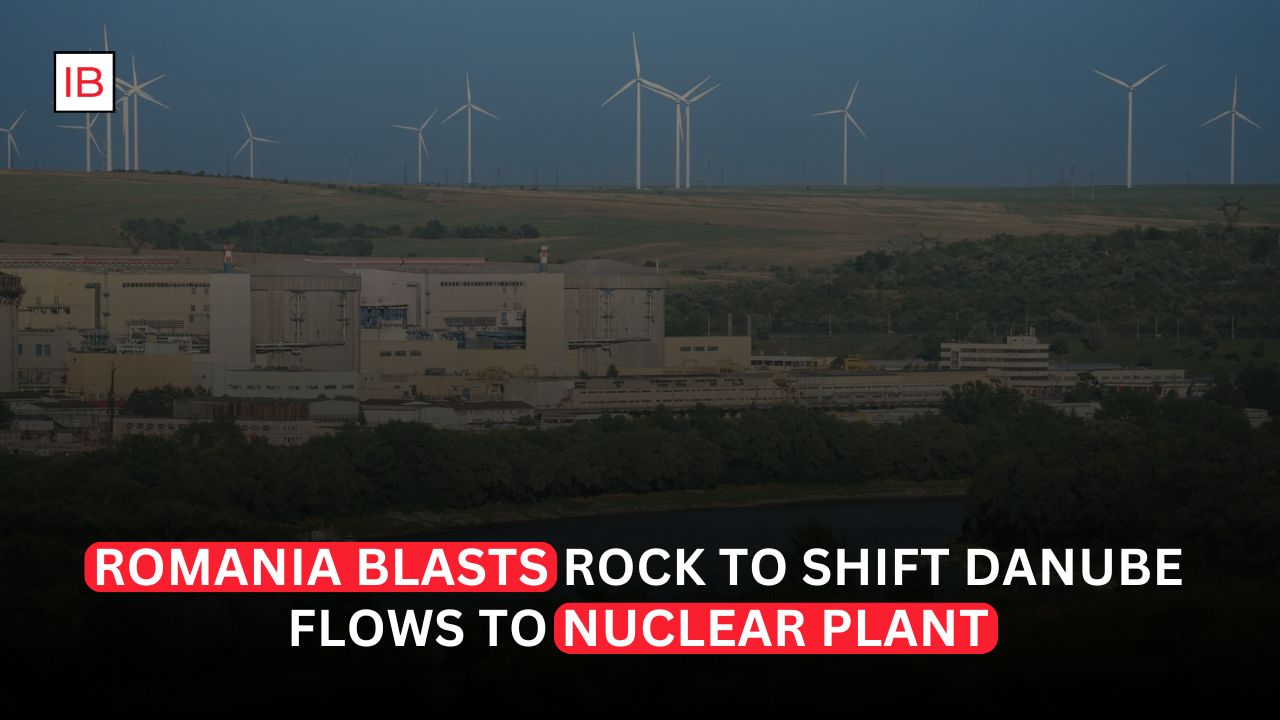
Romania’s military has resorted to detonating explosives on the Danube River in an unprecedented emergency operation to redirect water toward the country’s sole nuclear power plant, as a severe drought pushes river levels close to historic lows and threatens to force a full shutdown of the facility.
A Plant Already Losing Power
The Cernavoda Nuclear Power Plant has already shut down one of its two reactors as falling Danube water levels prevent adequate cooling of its equipment, a loss that has reduced Romania’s domestic energy production by roughly 10% at a moment when consumption is surging due to an ongoing heatwave. Unit 1 was taken offline earlier in the week, and officials have warned that continued declines in river flow could soon force the closure of the plant’s second reactor as well, threatening a further, more significant hit to the country’s electricity supply.
An Unprecedented Military Operation
More than 100 Romanian service members were deployed for the operation, which involves detonating a rock formation known as Parjoaia in the Danube’s Bala branch in order to redirect a larger share of the river’s flow toward the Old Danube channel that feeds the Cernavoda plant. An initial small test detonation was followed by a more powerful charge, but the first attempts failed to sufficiently break apart the rock after military engineers reportedly underestimated its density. The army returned on August 3 with a substantially larger charge, roughly 100 kilograms of explosives, doubling the force used in the previous day’s attempt.
Once the rock formation has been sufficiently fragmented, authorities plan to sink four barges loaded with a combined 500 tons of stone directly into the Bala branch, each vessel reportedly around 70 meters long, in order to partially block that channel and push a greater volume of water into the Old Danube toward the plant. Dredging operations have also begun in the sector to further improve water delivery to the facility.
Water Levels Approaching Historic Lows
The scale of the crisis is stark. According to Romania’s National Institute of Hydrology and Water Management, the Danube’s flow at the country’s entry point was expected to fall to around 1,400 cubic meters per second and remain near that level through August 9, compared with a long-term August average of approximately 3,900 cubic meters per second. Officials have said the river’s flow near Cernavoda has been dropping by two to three centimeters per day, with levels approaching the historic minimum recorded in 1985. A deputy director at Romania’s national water authority acknowledged that the operation was highly complex, while a naval rear admiral overseeing the effort expressed confidence that the renewed attempt would allow engineers to proceed with the next phase of the plan.
A Continent-Wide Drought Complicates the Response
Part of what makes the situation especially difficult is the broader drought affecting much of Europe this summer. The Danube flows through ten countries, and rainfall capable of meaningfully boosting the river’s volume has occurred only in Austria in recent weeks, with officials noting that additional flow generated there takes roughly two weeks to reach Cernavoda in eastern Romania. That lag means any near-term relief for the plant will need to come from the emergency engineering effort itself rather than from natural replenishment of the river.
Broader Emergency Measures
The severity of the situation prompted Romania’s government to declare a nationwide state of alert across its energy system for the entirety of August, following the drop in electricity production caused by the drought and record-low river levels. Romania has also sought emergency power imports from Ukraine and is preparing measures to restrict domestic electricity consumption if the situation continues to deteriorate, underscoring how directly the Danube’s low flow has begun threatening the country’s broader energy security.
What Comes Next
With the Danube’s flow expected to keep declining through at least early August and the plant’s cooling capacity described by officials as able to withstand only a handful of additional days at current trends, the coming days will be critical in determining whether Romania’s emergency intervention succeeds in keeping Cernavoda’s second reactor online. Should the engineering effort fall short, Romania could face a more significant energy shortfall just as regional demand remains elevated amid the ongoing summer heatwave.