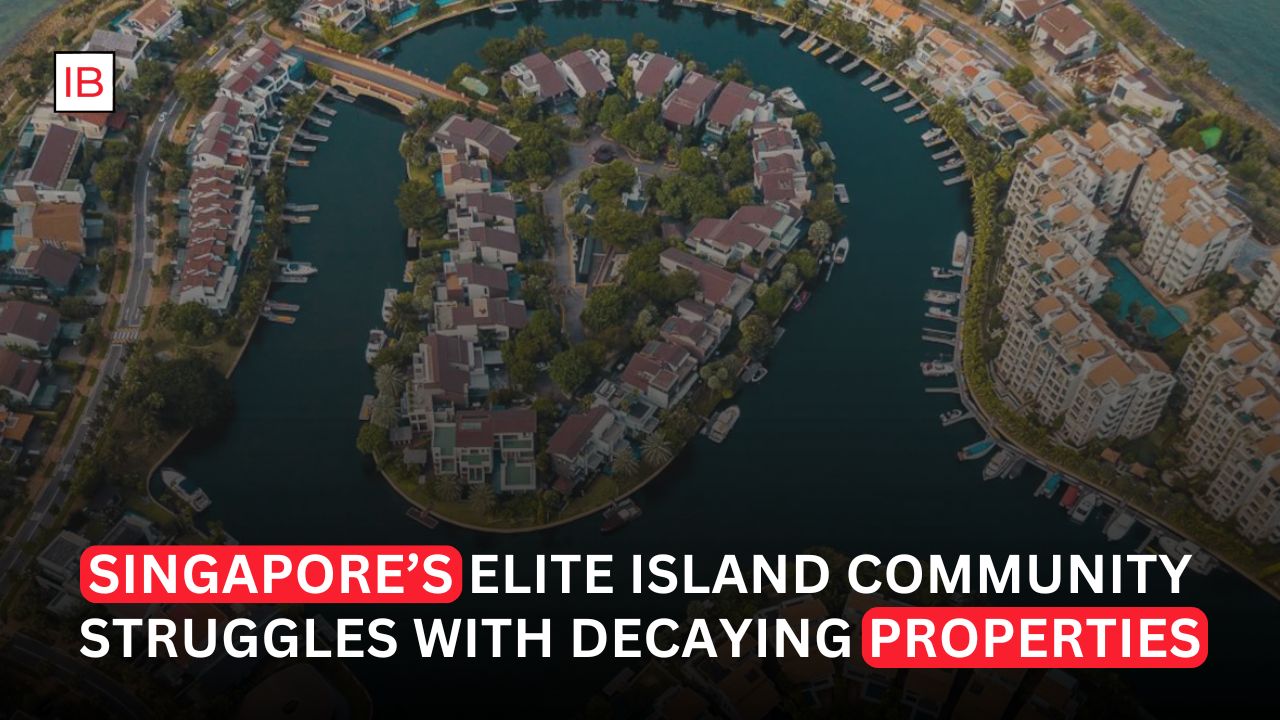
Once Touted as Asia’s Answer to Monaco, Waterfront Community Faces Aging Properties and Weak Demand
Singapore’s exclusive Sentosa Cove residential district, once promoted as Asia’s version of Monaco and a premier destination for the world’s wealthy, is facing a prolonged decline as aging luxury homes, falling demand, and changing investor preferences reshape the island community. Built to attract international millionaires with waterfront villas, private marinas, and resort-style living, the development has struggled to maintain its prestige after years of weak property prices and declining foreign buyer interest.
The downturn reflects broader changes in Singapore’s luxury property market. While prime residential districts on the mainland have largely recovered, Sentosa Cove has remained under pressure, with many homeowners experiencing substantial declines in property values since the market peaked more than a decade ago. Several houses now require significant renovation after years of limited investment and changing ownership patterns.
From Luxury Dream to Market Slowdown
When Sentosa Cove was launched in the early 2000s, it was designed as Singapore’s only neighborhood where foreigners could directly purchase landed homes.
The development offered:
- Waterfront villas.
- Private yacht berths.
- Golf course access.
- Resort-style amenities.
- Exclusive gated communities.
The project quickly attracted wealthy buyers from across Asia, Europe, and the Middle East, helping establish Sentosa Cove as one of Singapore’s most prestigious addresses. ()
Property Values Continue to Lag
Despite Singapore’s broader property market remaining resilient, Sentosa Cove has experienced years of underperformance.
Several factors have contributed to the slowdown:
- Declining foreign investment.
- Higher stamp duties on overseas buyers.
- Leasehold property structure.
- Aging luxury homes.
- Increased competition from mainland developments.
Many owners who purchased during the market’s peak have been forced to sell at significant losses, while others continue holding properties in hopes of a future recovery. ()
Foreign Buyer Demand Has Changed
Foreign investors were once the primary drivers of Sentosa Cove’s luxury housing market.
However, policy changes introduced over the past decade—including higher taxes on overseas property purchases—have significantly reduced international demand.
At the same time, affluent Singaporean buyers have increasingly preferred freehold landed homes located on the mainland rather than leasehold waterfront properties on Sentosa Island. ()
Aging Homes Require Investment
Another growing challenge is the condition of many luxury residences.
Some waterfront properties now require:
- Major renovations.
- Modern energy upgrades.
- New interior designs.
- Structural maintenance.
- Technology improvements.
The combination of aging homes and softer demand has reduced the attractiveness of the area for new buyers seeking modern luxury residences.
Lifestyle Advantages Remain
Despite its challenges, Sentosa Cove continues to offer features unavailable elsewhere in Singapore.
Residents still benefit from:
- Direct marina access.
- Waterfront living.
- Low-density neighborhoods.
- Resort environment.
- Close proximity to beaches and golf courses.
These unique characteristics continue attracting a niche group of high-net-worth individuals seeking privacy and luxury waterfront lifestyles.
Signs of Long-Term Renewal
Property analysts believe Sentosa Cove could eventually benefit from broader redevelopment initiatives across Sentosa Island.
Future improvements may include:
- New tourism attractions.
- Upgraded public infrastructure.
- Modern residential projects.
- Enhanced transport connectivity.
- Greater recreational facilities.
While these developments may improve the area’s appeal over time, analysts expect any recovery to be gradual rather than immediate.
Looking Ahead
Sentosa Cove’s evolution reflects how luxury real estate markets can change even in one of Asia’s strongest economies. Once viewed as Singapore’s ultimate waterfront destination for global billionaires, the enclave now faces the combined effects of aging infrastructure, shifting investor preferences, and tighter property regulations. Although its unique waterfront setting and exclusive lifestyle remain attractive, restoring the area’s former prestige will likely require significant reinvestment and renewed buyer confidence. ()
As Singapore continues modernizing its luxury property market, Sentosa Cove’s future may depend on balancing preservation of its exclusive identity with redevelopment that meets the expectations of a new generation of wealthy homeowners. Whether it regains its status as Asia’s premier luxury waterfront community will largely depend on how successfully it adapts to changing market dynamics while maintaining the exclusivity that originally made it famous.