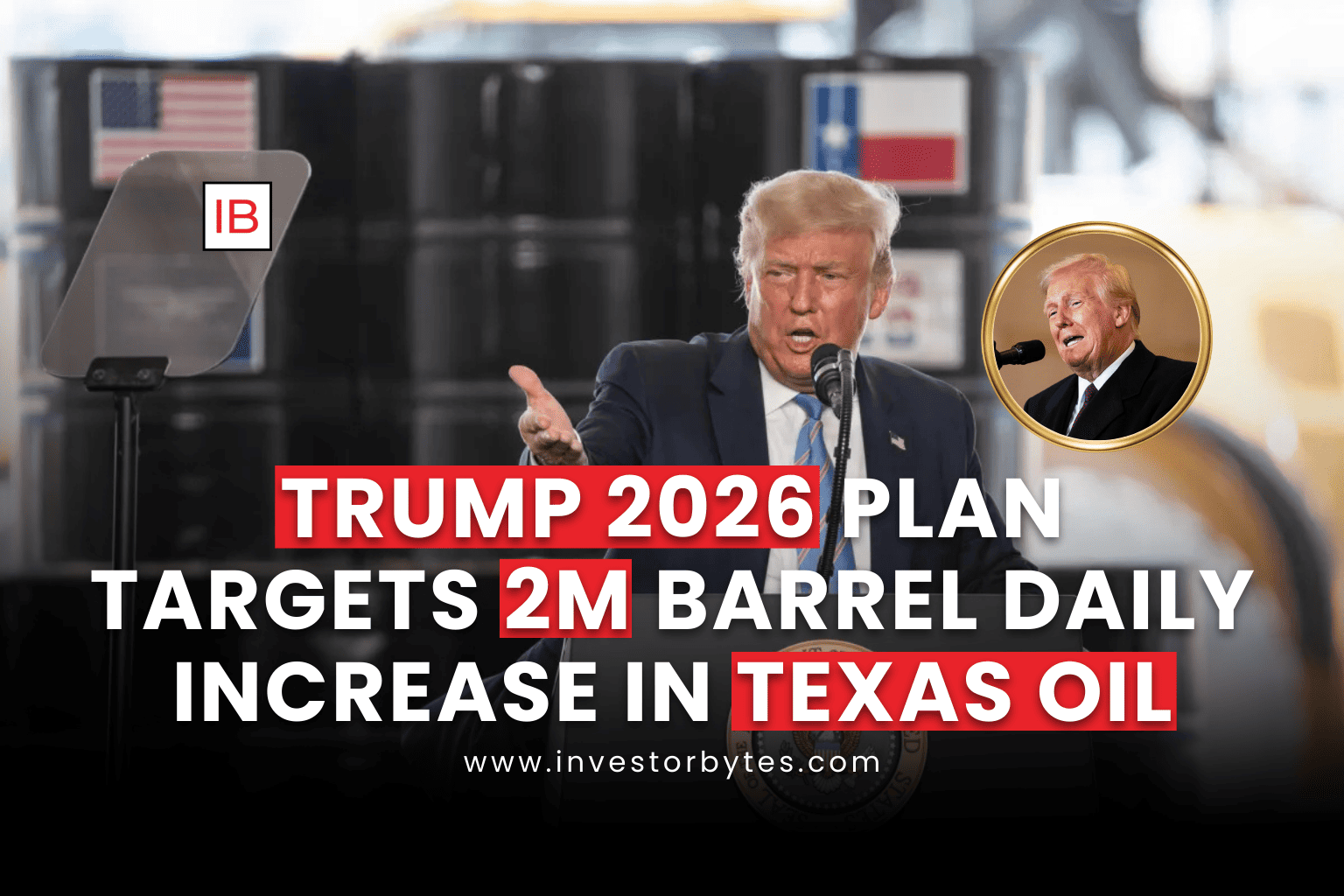
The energy landscape is reacting to President Donald Trump’s visit to Corpus Christi, where he unveiled the centerpiece of his “First in Energy” agenda. The plan aims to deregulate the domestic energy sector to facilitate a 2 million barrel per day increase in Texas oil production, primarily targeting the Permian Basin and coastal drilling sites.
While the administration champions this as a path to “Energy Dominance,” the global market response highlights a tug-of-war between domestic supply-side ambition and intense geopolitical volatility.
The “First in Energy” Pillar Strategy
The 2026 plan moves beyond simple rhetoric, focusing on three structural shifts intended to lower domestic costs and boost output:
Permitting Overhaul: Under Interior Secretary Doug Burgum, the administration is centralizing project approvals. New “Fast-Track” permits for the Permian Basin are designed to bypass previous environmental certification hurdles, aiming to reverse the 2025 stagnation where Texas production hovered around 5.8 million barrels per day.
LNG Expansion: In tandem with the visit, the Department of Energy authorized a 12% expansion in liquefied natural gas exports at the Cheniere Energy terminal in Corpus Christi, making it the second-largest LNG project in the U.S.
The “Drill-to-Tax” Incentive: Proposals include rapid cost recovery for new investments and the repeal of various green energy subsidies, shifting capital back toward traditional fossil fuel infrastructure.
Market Reaction: WTI vs. Brent Crude
Despite the promise of a massive supply increase, oil prices actually surged today as traders weighed long-term deregulation against immediate safe-haven demand.
| Benchmark | Current Price (Feb 27) | Daily Change | Market Driver |
| WTI Crude | $67.27 | 📈 3.2% | Inventory builds vs. Iran tensions |
| Brent Crude | $73.04 | 📈 3.1% | Geneva nuclear talk uncertainty |
Strategic Analysis: The Supply-Side Challenge
Global investors are assessing whether a 2M barrel increase is feasible without crashing the price floor.
The $50 Pivot: Trump has explicitly stated a goal of bringing oil down to $50 per barrel. However, economists warn that if prices fall below the $55 WTI breakeven point, shale operators in the Permian Basin may enter “survival mode,” potentially leading to Capex cuts and layoffs rather than production growth.
The “Superglut” Risk: The International Energy Agency (IEA) projects a global surplus of 3.7 million barrels per day in 2026. A 2M barrel surge from Texas could exacerbate this “Superglut,” posing a threat to the market share of OPEC+ members like Saudi Arabia and the UAE.
Geopolitical War Premium: Today’s 3% price spike is largely a “war premium” driven by stalled nuclear talks in Geneva. Analysts estimate this adds $8 to $10 to every barrel, masking the bearish impact of the domestic deregulation plan for now.