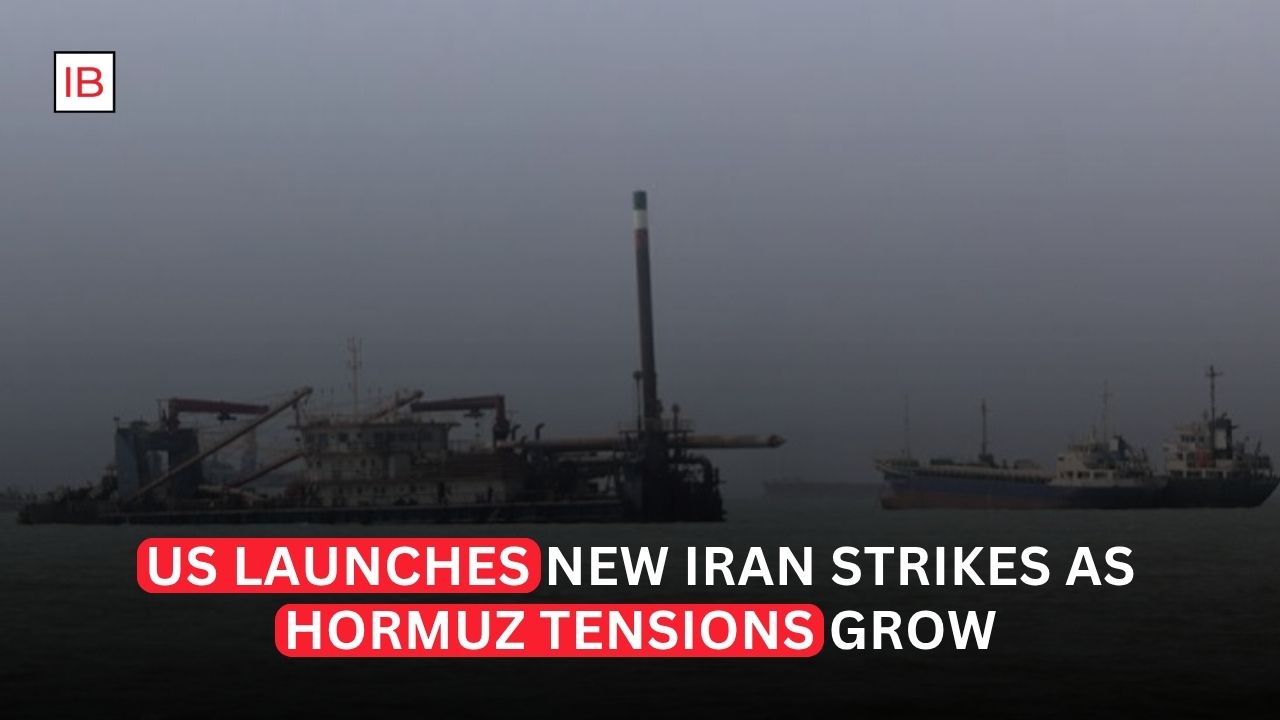
New Military Action Follows Attacks on Commercial Shipping. The United States has launched a new round of strikes against Iranian targets, escalating tensions around the Strait of Hormuz after recent attacks involving commercial shipping and American military personnel.
The latest operation marks a significant escalation in the conflict, with US forces targeting positions linked to Iran’s Islamic Revolutionary Guard Corps. US Central Command said the strikes followed attempted attacks on commercial vessels in the Strait of Hormuz and against American service members deployed in the region.
Fighting Intensifies Around Hormuz
The renewed strikes come just days after US forces targeted Iranian rocket launchers on Larak Island. Iran responded by launching missiles toward US military sites in Jordan, further increasing concerns about a broader regional confrontation.
Tensions have continued to rise around the Strait of Hormuz, one of the world’s most important energy shipping routes. Both Washington and Tehran have accused each other of escalating the situation, while commercial shipping has faced increasing security risks.
Tanker Attacks Raise Security Concerns
The latest military escalation follows reports that two oil supertankers carrying Saudi crude were struck by projectiles while attempting to transit through the Strait of Hormuz.
The incidents occurred within minutes of each other, highlighting the growing danger facing commercial vessels operating in the region. No casualties were immediately reported, but the attacks added fresh pressure to an already volatile shipping environment.
Shipping companies and energy traders are closely monitoring the situation as continued attacks could further disrupt oil and gas supplies from the Gulf.
Oil Prices Rise as Conflict Returns
Global oil prices moved sharply higher as investors reacted to the renewed fighting and the growing threat to energy shipments through the Strait of Hormuz.
Brent crude climbed above $94 a barrel during Tuesday’s trading, while US crude prices also increased as concerns grew that further military action could lead to prolonged supply disruptions.
Analysts warn that continued instability could increase shipping and insurance costs while keeping a risk premium on global energy prices.
Iran Calls on US to Respect Previous Agreement
Iran has called on Washington to honour commitments made under a previous interim agreement aimed at reducing hostilities.
Iranian officials have indicated that Tehran could respond positively if the United States returns to its earlier commitments. However, the latest exchange of strikes has raised doubts about whether diplomatic efforts can prevent the conflict from escalating further.
The conflict had recently shifted toward economic pressure and sanctions, but the latest military action suggests that direct confrontation has once again become a major factor in US-Iran relations.
Risk of Wider Regional Conflict Grows
The fresh strikes have increased concerns that the conflict could spread beyond Iran and the Strait of Hormuz.
With US forces remaining heavily deployed across the region and Iran continuing to maintain pressure around key shipping routes, further attacks could quickly trigger additional retaliation. President Donald Trump has also warned that the United States could take further action if Iran responds to the latest strikes.
For now, the situation remains highly volatile. The latest US strikes have ended hopes of a return to calm and placed the Strait of Hormuz back at the center of a growing military and energy crisis.