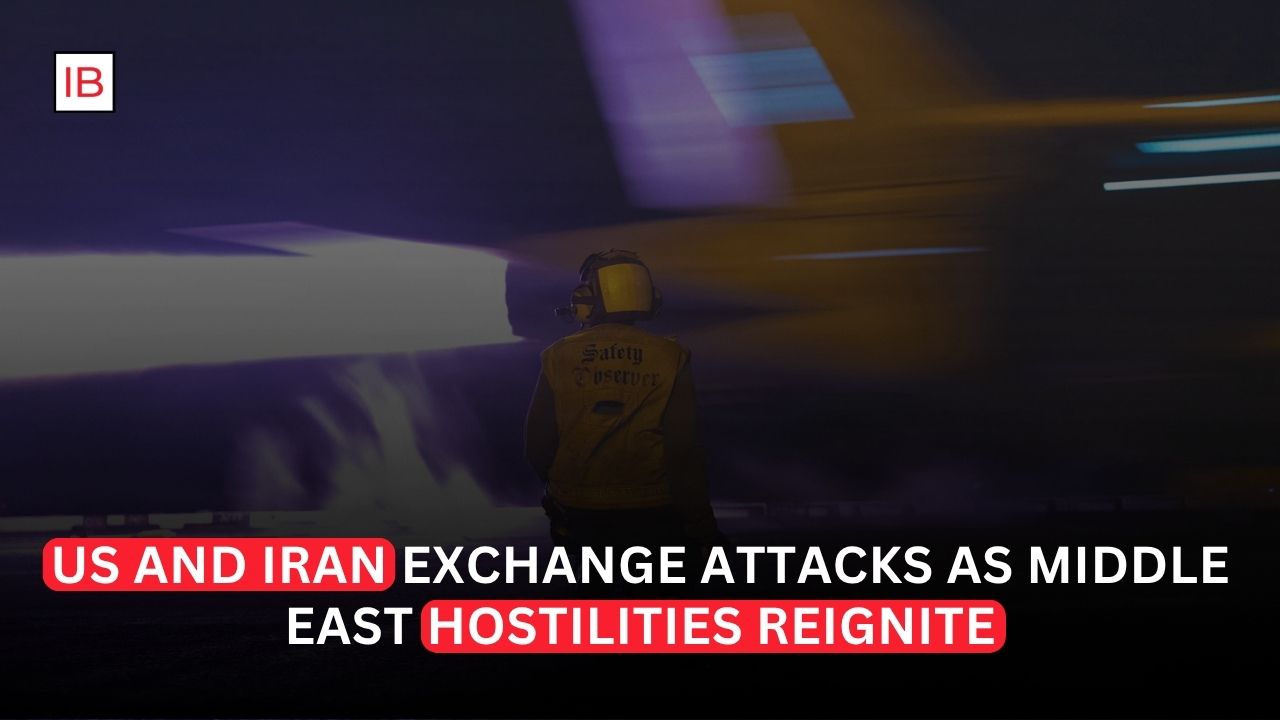
First US Attack on Iran in Weeks Raises Fears of Renewed Escalation. The United States carried out strikes against Iranian rocket launchers on Sunday, targeting military equipment that US officials said was being prepared to deploy sea mines into the Strait of Hormuz.
The operation marked the first known US military strike against Iran since late July, ending weeks of relative calm as Washington and Tehran remain locked in a prolonged conflict. US Central Command said Iranian Revolutionary Guard forces were preparing to launch rockets carrying sea mines into the strategically important waterway.
Larak Island Targeted
The US military struck two Iranian launchers located on Larak Island, near the Strait of Hormuz. According to US officials, the launchers were being prepared for an operation that could have threatened commercial shipping through the waterway.
The United States had recently completed efforts to clear sea mines from international shipping routes in the strait. Washington has repeatedly warned Iran that any attempt to place new mines in the waterway would face an immediate military response.
Iranian state media reported that the attack caused deaths and injuries among military personnel and civilians. Iran’s Revolutionary Guard condemned the strike and warned that Tehran would respond.
Iran Retaliates Against US Bases
Iran responded to the US operation by launching ballistic missiles toward American military positions in Jordan.
Jordanian authorities said its air defenses intercepted eight missiles that entered the country’s airspace. No major damage was immediately reported, but the retaliation raised concerns that the latest exchange could trigger a wider escalation across the region.
The exchange represents the first direct US-Iran military confrontation in more than a month and comes after weeks of relative restraint between the two sides.
Strait of Hormuz Remains at the Center
The latest confrontation is closely linked to the Strait of Hormuz, one of the world’s most important energy shipping routes.
Before the war, roughly one-fifth of global oil consumption passed through the waterway. Traffic remains significantly below normal levels because of security concerns, attacks and restrictions linked to the conflict.
US officials have maintained that the strait is open, but the number of vessels passing through remains far below pre-war levels. Any renewed disruption could place additional pressure on global energy supplies and shipping markets.
Oil Prices Rise After Strikes
Global oil prices moved higher following the US attack as traders assessed the possibility of renewed disruptions in the region.
Brent crude climbed above $90 a barrel, while US crude also gained as investors became increasingly concerned that further military action could threaten oil and gas shipments through the Strait of Hormuz.
The renewed tensions could also increase transportation and insurance costs for companies operating in the region.
Washington Had Shifted Toward Economic Pressure
The strikes came only days after the Trump administration indicated that it intended to rely more heavily on economic pressure rather than continued military operations to force Iran toward an agreement.
US officials have been preparing additional sanctions against Iranian financial networks and entities supporting Tehran’s economy. The administration is also facing concerns over depleted military stockpiles following months of conflict.
The latest strike could therefore represent a significant change in Washington’s approach if further military operations follow.
Risk of Wider Conflict Increases
Iran has warned that the US attack will have consequences, while Washington has indicated that it will continue monitoring Iranian military activity around the strait.
With both countries maintaining military forces in and around the region, another round of attacks could quickly expand beyond the immediate area. Regional governments and international shipping companies are closely watching developments because further escalation could affect energy supplies and global markets.
For now, the latest exchange has ended a month-long lull in direct US-Iran fighting and created fresh uncertainty over whether diplomatic efforts can prevent the conflict from escalating further.